For an Irish truck driver heading into Europe, a well-equipped cabin is a working office, a place to rest and a lifeline when a journey goes wrong.
A missing document, flat phone or empty supply of tachograph paper can quickly turn a routine delivery into a problem. Packing properly before leaving the yard helps drivers handle inspections, ferry crossings, unexpected delays and nights away from home.
The starting point is a practical checklist, agreed with the transport manager and checked before every international trip.
Keep documents together and within reach
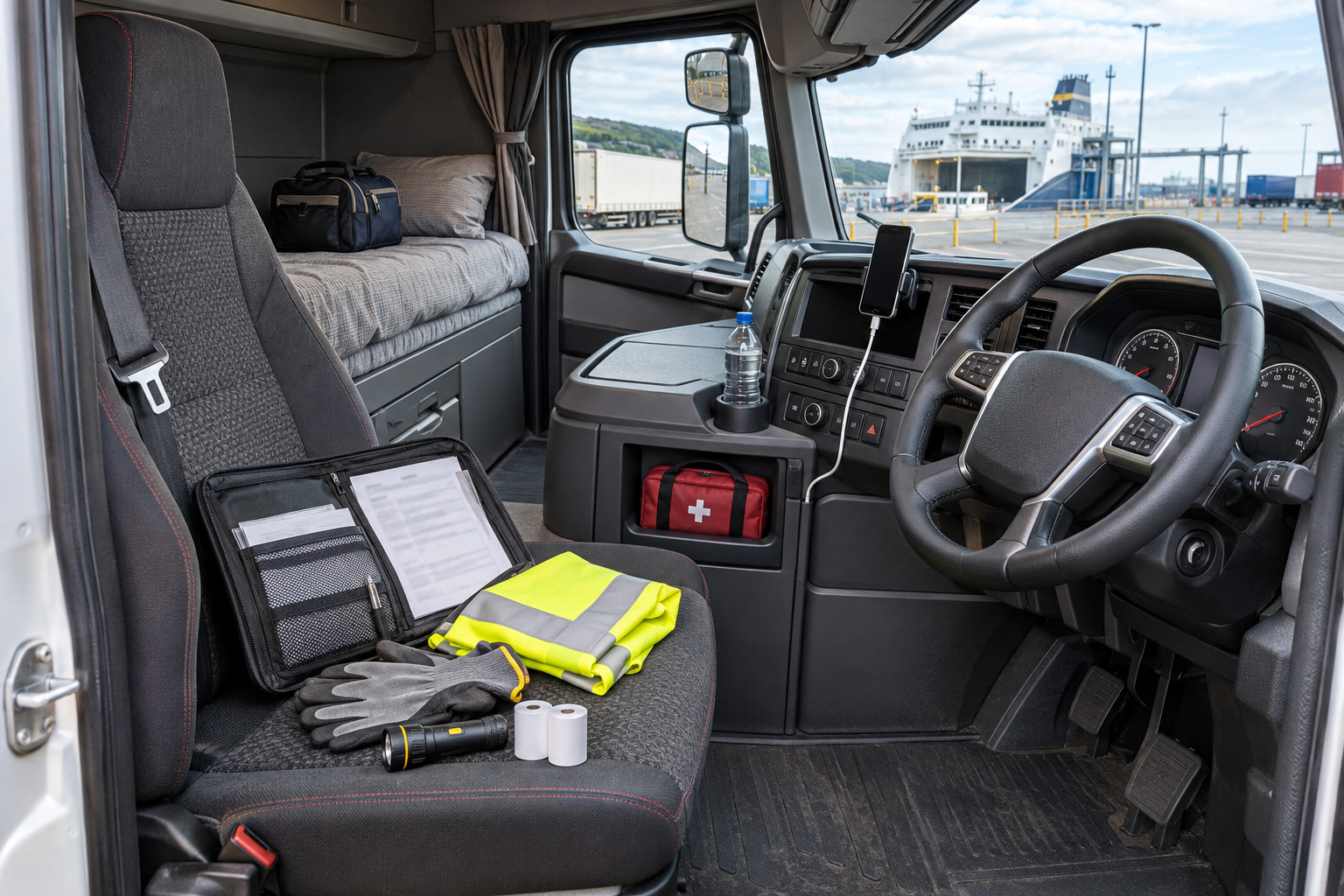
Use a secure, organised folder for the paperwork needed for the driver, vehicle and load. Before departure, check that it contains the documents applicable to the journey, including:
- Valid driving licence, Driver CPC card and tachograph driver card.
- Passport and any entry or work documents required for the driver’s nationality and route.
- Vehicle and trailer documentation, insurance details and relevant operator licensing documents.
- Consignment notes, delivery instructions and customs or transit references where applicable.
- Any permits, dangerous goods documents or other paperwork required for the particular operation.
Check expiry dates before travelling. Save backup copies securely, but do not assume a photograph on a phone replaces an original document where one is required.
For trips using the British landbridge, confirm that the paperwork covers the entire journey, including transit through Great Britain.
Give the tachograph its own checklist
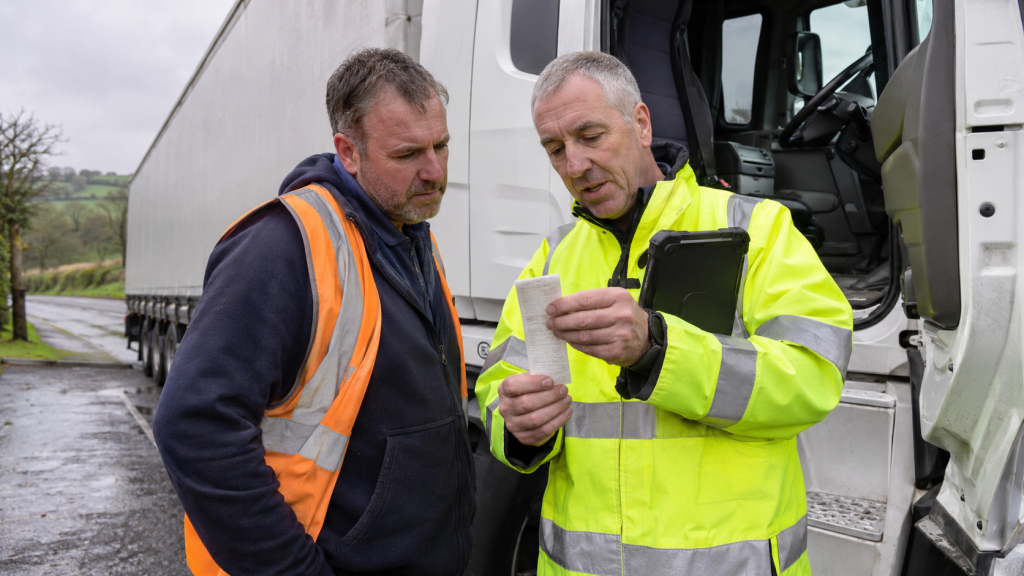
Carry spare printer rolls suitable for the fitted tachograph, along with pens and a safe place to retain printouts.
Drivers subject to EU tachograph rules must be able to produce the required activity records for the current day and the preceding 56 days. Drivers who change vehicles or use different recording systems should check that their records remain complete. Mobility and Transport
Know how to operate the unit fitted to the truck, including manual entries and any applicable ferry or train settings. Resolve uncertainties with the transport manager before departure.
Put safety equipment where it can be reached
Keep a high-visibility vest within reach of the driving seat so it can be put on before stepping outside.
A sensible basic kit includes:
- Warning equipment appropriate to the countries being visited.
- A stocked first-aid kit.
- A suitable, securely mounted and maintained fire extinguisher.
- Torch or head torch, with spare batteries or a charging lead.
- Work gloves, safety footwear and weatherproof clothing.
- Any additional personal protective equipment required by customers or loading sites.
Equipment requirements vary by country, vehicle and operation. The operator should check the rules for every country on the route, including countries crossed only in transit.
If a breakdown occurs, prioritise personal safety. Do not enter a live traffic lane or expose yourself to traffic to retrieve equipment or attempt a repair.
Make navigation suitable for a truck
Use navigation configured for the vehicle’s actual height, weight, length and any relevant restrictions. Check those settings when changing trailers or loads.
A navigation device is an aid: road signs, restrictions and safe judgement still govern the journey.
Keep delivery addresses, site contacts and access instructions available offline. Confirm the correct HGV entrance before approaching an unfamiliar premises, particularly in town centres or industrial estates with restricted access.
A compact road atlas can provide a useful backup when mobile coverage or navigation fails.
Carry dependable communications and payment options
Pack the correct charging leads, a compatible vehicle charger and a charged power bank. Check the cab’s socket voltage before connecting equipment.
Save key numbers in the phone and keep a written copy:
- Transport office and out-of-hours contact.
- European breakdown provider and insurer.
- Ferry operator or booking agent.
- Collection and delivery contacts.
- Fuel card and payment card assistance.
Across the EU, 112 connects callers to emergency services free of charge. Be ready to give the road number, direction of travel, nearest junction or kilometre marker, and your location. ECAS 112.IE
- Every key deadline: diesel rebate, fuel excise, carbon tax
- Tick-box checklist for tacho, CVRT, CPC & operator licence
- Where drivers get caught at RSA roadside checks
Check fuel card coverage, toll arrangements and payment limits before leaving. Carry an agreed backup payment method and modest emergency cash, stored discreetly.
Pack for delays as well as deliveries
A missed sailing, prolonged loading slot or road closure can leave a driver waiting much longer than expected.
Carry drinking water and a reserve of food that keeps safely without refrigeration. Where a fridge is fitted, check that it works before departure.
Useful personal supplies include toiletries, a towel, shower footwear, spare clothing, warm layers and waterproofs. Keep essential medication accessible, in its original packaging, with any supporting documentation required for the journey.
Secure food containers, bottles and bags so they cannot slide under the pedals or become projectiles during sudden braking.
Make proper rest possible
Clean bedding, a suitable pillow and effective curtains can make nights away more manageable. Check the bunk, cab ventilation and heating before starting a longer trip, and report defects promptly.
Never use a portable fuel-burning stove, barbecue or improvised heater inside the cabin.
Drivers and operators must also plan accommodation correctly. Under EU rules, regular weekly rest of at least 45 hours cannot be taken in the vehicle; suitable accommodation with sleeping and sanitary facilities is required. European Commission
Comfort equipment cannot compensate for an unrealistic schedule. Raise parking and rest concerns early.
Keep a separate ferry bag
Irish drivers using direct continental services or the British landbridge should prepare a small bag containing travel documents, medication, phone charger, toiletries and a change of clothes.
Take it when leaving the vehicle. Do not rely on being able to return to the freight deck during the crossing.
Keep booking references and check-in instructions accessible without needing a mobile signal.
Protect the cab and the load
Keep valuables out of sight and lock the cab whenever leaving it. Follow the operator’s parking, seal-checking and vehicle security procedures, particularly around ports and border crossings.
Report signs of tampering, damaged seals or suspicious activity immediately. Do not confront anyone or enter a potentially unsafe trailer.
Inside the cabin, keep the windscreen, mirrors and camera views clear. Secure loose equipment and leave steps, exits and the pedal area unobstructed.
The final check before leaving the yard
Before departure, ask: Could I deal with a roadside inspection, a breakdown, an unexpected overnight stop and a flat phone using what is already in this cab?
If the answer is no, address the gap before travelling. Replenish supplies after each trip and record defects while they are fresh in mind. A cabin checklist earns its place by being checked and updated, not simply carried in the glovebox.