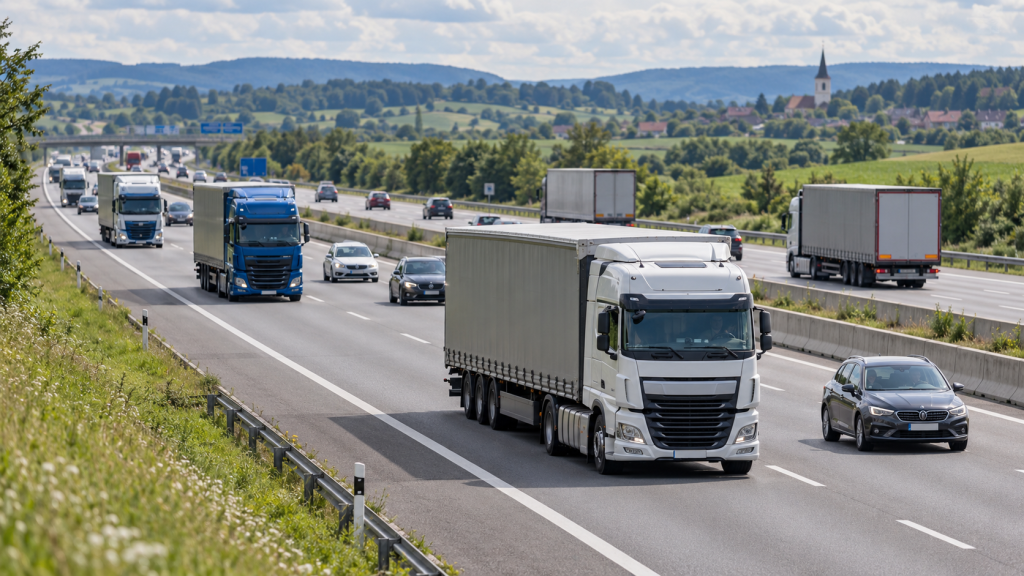
When Minister for Climate, Environment, Energy and Transport Darragh O’Brien addresses the Irish Road Haulage Association Annual Conference in Killarney this weekend, Ireland’s hauliers will be looking for more than warm words about the importance of the industry.
They need answers. More importantly, they need action.
The IRHA Annual Conference on 4th and 5th September comes at a critical moment for Irish road transport, with fuel costs, taxation, regulation, decarbonisation, driver shortages and competitiveness all placing increasing pressure on licensed operators.
The Government’s recent decision to postpone the planned reintroduction of excise duty from 1st September was welcome and demonstrated what can be achieved when Government listens to the industry.
But postponement is not a long-term transport policy.
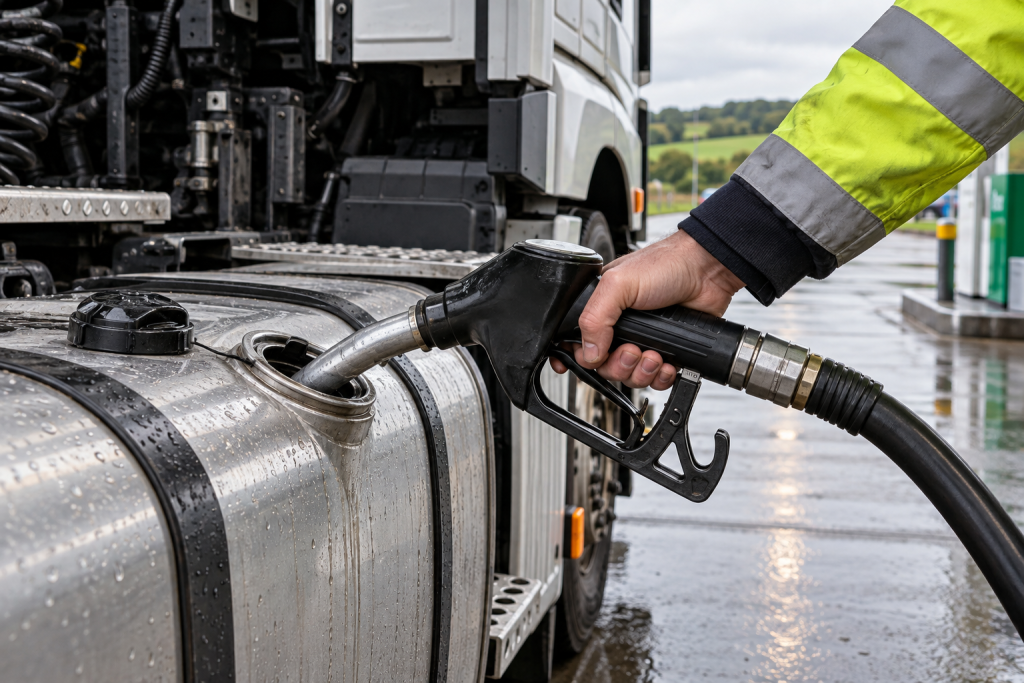
Hauliers need certainty on diesel
The immediate priority must be fuel.
Earlier this year, the Government introduced substantial temporary fuel supports, including excise reductions, an enhanced Diesel Rebate Scheme and the Road Transporters Support Scheme, in response to rapidly escalating energy costs.
Those interventions acknowledged something that policymakers cannot now conveniently forget: diesel remains the lifeblood of Irish road freight.
For the vast majority of Irish HGV operators, there is currently no commercially viable, readily available replacement capable of doing everything a diesel truck does.
Electric and alternative-fuel trucks will undoubtedly play an increasingly important role, but purchase price, charging infrastructure, range, payload considerations and residual-value uncertainty remain significant barriers.
Government cannot tax operators away from diesel before giving them a realistic alternative.
Protect the competitiveness of Irish haulage
Minister O’Brien should also use Killarney to set out how the Government intends to protect the competitiveness of licensed Irish hauliers.
Ireland is an island economy on the edge of Europe. Almost everything sitting on a supermarket shelf, arriving at a factory or leaving one of our ports depends at some stage on road transport.
When the cost of haulage rises, that cost does not disappear. It travels through the supply chain and ultimately reaches businesses and consumers.
Supporting a competitive haulage industry is therefore not simply about supporting truck operators. It is about protecting Ireland’s wider economy.
A realistic road to decarbonisation
The industry also needs clarity on decarbonisation.
Hauliers understand that transport emissions must fall. Many operators are already investing heavily in newer, cleaner Euro VI vehicles, improved aerodynamics, fuel-efficient tyres, telematics and driver training.
But the transition must be technologically and economically realistic.
Government policy should incentivise operators to invest in cleaner technology rather than simply penalising them for continuing to use diesel when viable alternatives are unavailable.
That means meaningful purchase supports for zero-emission HGVs, a national heavy-duty charging strategy, adequate charging infrastructure at depots and along key freight corridors, and support for renewable and transitional fuels where they can deliver genuine emissions reductions.
Above all, the Government needs to recognise that the decarbonisation timetable for a 44-tonne truck cannot simply mirror that of a passenger car.
Ireland needs drivers too
There is another issue that cannot be ignored in Killarney: people.
Ireland needs a sustainable pipeline of professional HGV drivers.
An ageing workforce, recruitment difficulties and the cost and complexity of entering the profession threaten the industry’s ability to meet future demand.
Government, industry and training bodies need to make professional driving an accessible and attractive career, with clearer pathways for young people and greater support for training and licensing.
Without drivers, the most sophisticated trucks and ambitious transport strategies in the world will not keep Ireland’s supply chains moving.
Time for delivery
Minister O’Brien will not be the only politician hearing these concerns in Killarney.
Minister of State Seán Canney TD will also attend, along with Michael Healy-Rae TD, Carol Nolan TD, Cynthia Ní Mhurchú MEP and Seán Kelly MEP.
That political presence gives the IRHA and its members an important opportunity to put the realities of operating an Irish haulage business directly before those making decisions in Dublin and Brussels.
And there should be no shortage of subjects for discussion.
Fuel taxation, the Diesel Rebate Scheme, future carbon costs, decarbonisation, driver shortages, infrastructure, regulation and the competitiveness of Irish operators all demand attention.
The Government has already demonstrated during this year’s fuel crisis that it can act when circumstances require it.
Now the industry needs something more permanent.
Ireland needs a coherent long-term policy that recognises road haulage as critical national economic infrastructure and supports operators through the transition to lower-carbon transport rather than undermining their competitiveness along the way.
When Minister O’Brien stands before Ireland’s hauliers in Killarney on Saturday evening, the industry will be listening carefully.
The message he will hear in return should be equally clear:
Irish hauliers are ready to play their part in Ireland’s economic and environmental future – but Government must give them the costs, infrastructure, technology and policy certainty that make that future commercially possible.