Ireland’s road haulage sector plays a vital role in keeping businesses, farms, construction sites and communities supplied with the goods and services they depend on every day. Whether transporting machinery, modular buildings, agricultural equipment or abnormal loads, HGV drivers frequently operate in environments where electrical infrastructure is present, writes Claire Mulholland, ESB Networks Public Safety Manager
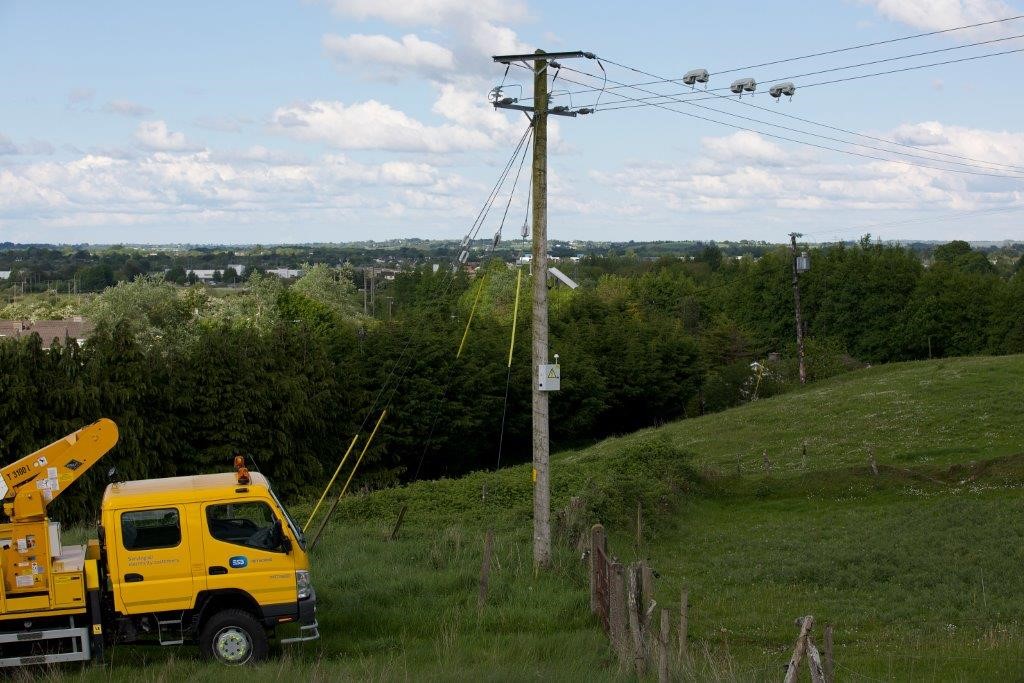
While overhead electricity lines and electrical equipment are a familiar part of the landscape, the risks they present can often be underestimated. Every year, ESB Networks responds to incidents involving vehicles and machinery coming into contact with overhead electricity lines. These incidents can have serious consequences, including severe injury, loss of life, damage to equipment, network outages and disruption to local communities.
For HGV drivers and transport operators, awareness and planning are critical to ensuring everyone gets home safely at the end of the day.
Understand the Risk
Direct contact with an overhead electricity line is not necessary for a dangerous electric shock to occur. Electricity can “arc” or jump through the air when equipment comes too close to live conductors.
This risk is particularly relevant when transporting:
- Excavators and plant machinery
- Telehandlers and loaders
- Cranes and lifting equipment
- Agricultural machinery
- High-sided trailers
- Modular buildings
- Steel structures
- Wind turbine components
- Abnormal or oversized loads
What may appear to be a safe clearance from the cab can quickly become unsafe when road levels change, suspension moves, equipment shifts in transit or tipping bodies are raised.
Plan Before You Move
One of the most effective control measures is advanced journey planning.
Transport operators should assess the entire route before moving any high load. This is especially important when transporting loads that could approach overhead electricity lines at bridges, road crossings, farm entrances, industrial sites or construction projects.
Before commencing a journey:
- Know the maximum transport height of the vehicle and load.
- Verify dimensions after loading, not before.
- Consider route restrictions and overhead electricity line hazards.
- Identify locations where overhead electricity lines traverse roads or site entrances.
- Ensure drivers understand the planned route and associated hazards.
- Avoid last-minute route changes where possible.
For abnormal load movements, engagement with the relevant authorities and stakeholders during planning can significantly reduce risk.
Look Up and Look Out
Drivers are trained to focus on the road ahead, mirrors, pedestrians and other vehicles. However, when entering construction sites, quarries, farms or industrial premises, it is equally important to look up.
Overhead electricity lines can be difficult to see depending on weather conditions, background terrain and lighting.
Drivers should be particularly vigilant when:
- Entering unfamiliar sites
- Reversing vehicles
- Positioning trailers
- Delivering plant or machinery
- Raising tipping bodies
- Unloading oversized equipment
- Using mounted cranes or HIABs
The simple habit of checking for overhead wires before commencing any manoeuvre can prevent a potentially life-changing incident.
Special Care When Tipping Loads
Tipping operations present one of the most significant risks for HGV drivers.
When tipping:
- Conduct a visual assessment of the area.
- Confirm that no overhead electricity lines are present.
- Establish safe tipping zones away from electrical infrastructure.
- Lower the body immediately if visibility becomes restricted.
- Stop work if there is any uncertainty about clearance.
- Remember to lower the body when tipping is completed.
What to Do if Contact Occurs
Despite good planning, incidents can still happen. Knowing how to respond can save lives.
If your vehicle comes into contact with an overhead electricity line:
Stay in the Cab
The safest place is usually inside the vehicle.
Do not touch any external metalwork and do not attempt to leave the cab unless there is an immediate threat such as fire.
- Every key deadline: diesel rebate, fuel excise, carbon tax
- Tick-box checklist for tacho, CVRT, CPC & operator licence
- Where drivers get caught at RSA roadside checks
Call for Help
Contact ESB Networks immediately on the 24/7 emergency number 1800 372 999.
Provide your location and explain that a vehicle has made contact with an overhead electricity line.
Keep Others Away
Warn people to stay well clear of the vehicle and any fallen wires.
Electricity may spread through the ground around the point of contact.
A minimum distance of at least 10 metres should be maintained from the vehicle, line and surrounding area.
Exit Only in Extreme Emergency
If you do need to leave the vehicle:
- Open the cab door fully.
- Jump clear without touching the vehicle and ground simultaneously.
- Land with both feet together.
- Shuffle or hop away, keeping your feet together until you are 10m clear of the danger area.
This procedure should only be used when remaining in the vehicle presents a greater risk than leaving it.
Working Around ESB Networks Infrastructure
In addition to overhead lines, HGV drivers may encounter:
- Electricity poles
- Substations
- Stay wires
- Underground electricity cables
These assets form part of the national electricity network and can be damaged by vehicle impacts or excavation activities.
Drivers delivering to construction and utility sites should ensure:
- Designated traffic routes are followed.
- Vehicle movements are controlled by competent site personnel.
- Exclusion zones around critical electrical infrastructure are respected.
- Ground conditions are suitable before positioning heavy vehicles.
Where excavation works form part of a delivery operation, underground electricity cables should be identified before any ground disturbance takes place.
Contact dig@esb.ie to receive maps of underground electricity cables in the planned work area.
Building a Safety Culture
The most effective safety measure is a workplace culture where electricity hazards are actively considered before work begins.
Transport companies should ensure that:
- Drivers receive electrical hazard awareness training.
- Near misses are reported and investigated.
- Vehicle operators understand emergency procedures.
- Route planning considers electrical infrastructure risks.
- Supervisors reinforce safe behaviours during site operations.
A few minutes of planning can prevent a lifetime of consequences.
A Shared Responsibility
By planning routes carefully, remaining alert to overhead electricity lines, understanding emergency procedures and maintaining safe working practices, HGV drivers can significantly reduce the risk of serious incidents.
The message from ESB Networks is simple: Look Up, Look Out and always remember to Stay Safe Stay Clear.