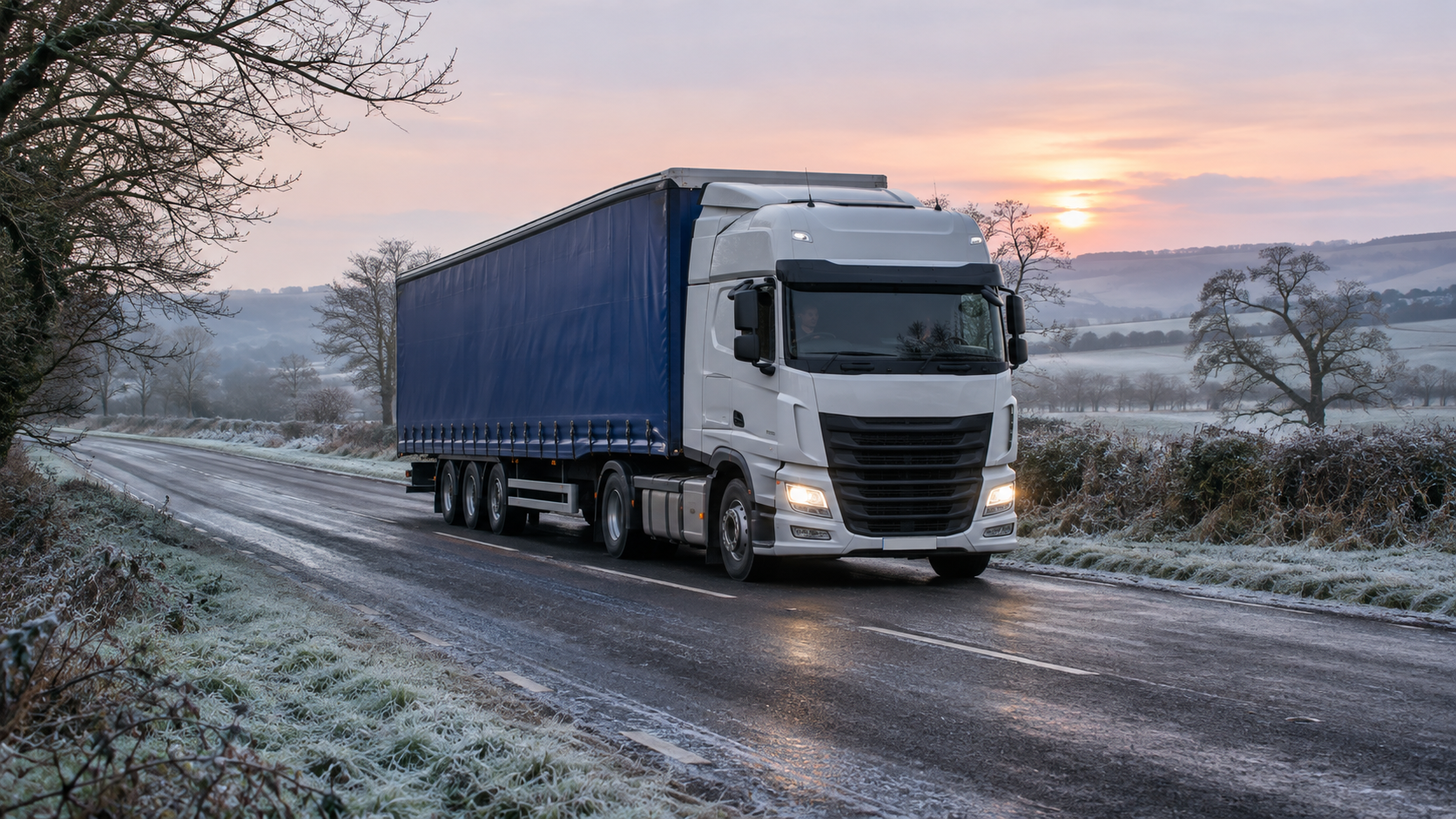
With frost and ice forecast for the coming days, HGV drivers are being advised to allow extra time for vehicle checks, reduce speed and be prepared to delay journeys when frost and ice make roads unsafe.
For Irish hauliers, winter planning needs to cover the full delivery route, including depot exits, rural access roads and customer premises. A delivery schedule should allow drivers to respond to deteriorating conditions without pressure to continue.
The Health and Safety Authority’s winter guidance advises employers to review how they manage driving in adverse weather, including emergency arrangements for drivers who become stranded.
Check conditions before departure
Check weather forecasts and traffic information before leaving, and review conditions during scheduled stops. The HSA recommends using major routes where possible, allowing additional journey time and changing or delaying travel where appropriate.
Transport managers should also establish whether delivery sites can be accessed safely. An accessible main road does not establish that a customer’s entrance or unloading area is safe.
Agree how drivers will report delays and who will decide whether a delivery should be postponed.
Clear the vehicle properly
The Road Safety Authority’s standing winter advice calls for snow and ice to be removed before departure. Clear windows and mirrors fully using suitable de-icing equipment; hot water can crack a windscreen.
Snow or ice falling from a vehicle can obstruct vision or endanger other road users. Where an HGV or trailer cannot be cleared safely from ground level, arrange suitable equipment and a safe system of work rather than improvising access to the roof.
Include lights, tyres, wipers, washers and demisting equipment in pre-departure checks. Report defects before setting off.
- Every key deadline: diesel rebate, fuel excise, carbon tax
- Tick-box checklist for tacho, CVRT, CPC & operator licence
- Where drivers get caught at RSA roadside checks
Slow down and leave more space
The RSA advises drivers to avoid abrupt steering, harsh braking and sudden acceleration in snow and ice. Increase the gap to traffic ahead and avoid following another vehicle’s tail-lights as a guide through poor visibility.
Use dipped headlights, and use fog lights when conditions require them, switching them off when visibility improves. Allow additional space for pedestrians, cyclists and motorcyclists.
The RSA also highlights the additional exposure of high-sided trucks to strong winds accompanying wintry conditions. Follow vehicle-specific guidance and training when operating braking and driver assistance systems.
Take care outside the cab
Winter risks continue when the truck stops. The RSA warns that frost and ice can cause falls when drivers enter or leave a cab, even where a surface does not appear particularly slippery.
Check steps and the ground before climbing down, use the handholds and wear suitable footwear. Loading areas and walkaround inspection routes also need attention.
Carry warm clothing, a torch, food, water and a charged phone in case of delays. If conditions become unsafe, stop somewhere suitable, contact the transport office and reassess the journey before continuing.