When diesel costs climb, the next planned service is an opportunity to tackle fuel waste. From an underinflated trailer tyre to a compressor that runs too often, HGVIreland.com looks at six checks technicians can build into the job card, and how fleets can measure the results.
A fleet manager notices that one tractor is using more diesel than it did last month. The driver is covering much the same route, the loads are broadly comparable and the truck is due in for a service. That gives the workshop something specific to investigate. Are the trailer tyres holding pressure? Is a brake slow to release? Has the engine started carrying out more frequent diesel particulate filter regenerations?
Those questions are easier to answer if the technician can see the fuel figures before the vehicle arrives. Ask the fleet for recent consumption, the routes and loads involved, and details of any repairs or changes in trailer allocation. A rise after a suspension repair points towards a different set of checks from a rise that coincides with a switch to urban deliveries. Six areas deserve particular attention, starting with the components that determine how freely the truck and trailer roll.
1. Check cold tyre pressures across the combination
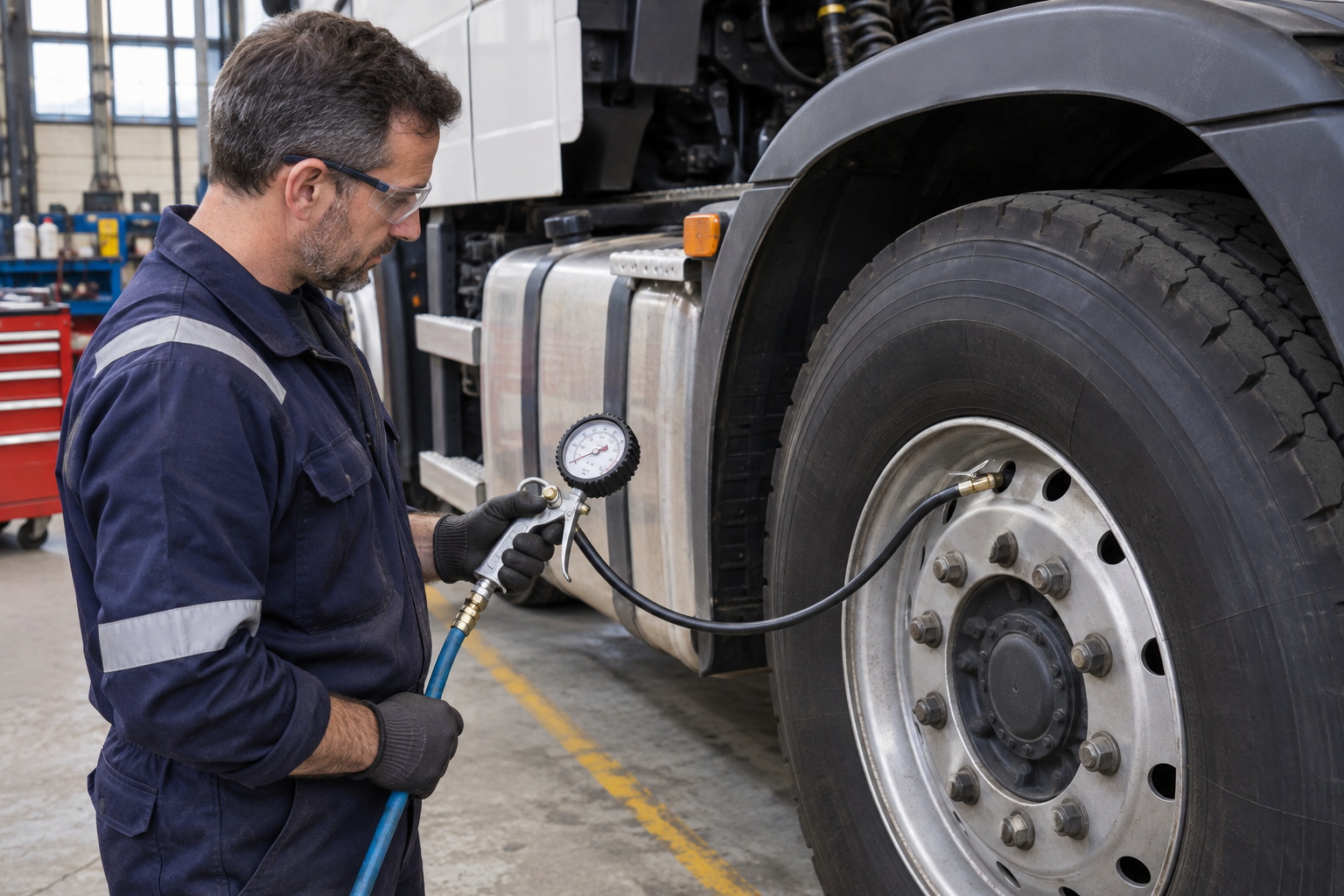
Tyre pressure is one of the simplest items to check and one of the easiest to overlook on a busy fleet. A tractor may visit the workshop regularly while the trailers it pulls circulate between depots. Even when the steer and drive tyres are correctly inflated, underinflated trailer tyres add rolling resistance and can accelerate wear. Inner tyres on twin-wheel assemblies belong on the job card too.
Use a calibrated gauge and take readings with the tyres cold. Set pressures using the relevant manufacturer’s guidance for the tyre fitment, axle load and application. Where loading varies significantly or the fleet is unsure what its axles typically carry, axle weights can help establish suitable pressure targets. Record the readings before adjustment so the workshop can spot repeat offenders at the next inspection.
A tyre that repeatedly comes in low deserves a closer look. Inspect the valve and extension, the tread and the wheel for the source of pressure loss. Where a tyre pressure monitoring system is fitted, review repeat alerts alongside the workshop readings. A dated record attached to the trailer’s own fleet number makes it easier to follow a defect when the trailer moves between tractors or depots.
2. Investigate brakes that are slow to release
A dragging brake makes the engine work against resistance every time the vehicle moves. It can also generate heat and accelerate wear. If a driver reports that the truck feels sluggish, or the technician sees uneven pad wear or signs of overheating at one wheel end, include brake release in the investigation. Check the trailer as well as the tractor.
Use the vehicle or axle manufacturer’s inspection procedure to determine why the brake is slow to release. Depending on the design, the fault could be in the calliper, the actuation mechanism or the air system. If work has recently been carried out at that wheel end, check the repair history and verify the release and operation of the brake after rectification. Treat binding as a roadworthiness defect and deal with it promptly.
Ask the driver when the symptom occurs. A report that the vehicle feels held back after several stops, or only when coupled to a particular trailer, helps the technician narrow the search. Record the axle and wheel position against the correct vehicle or trailer so the next technician can trace any recurrence.
3. Measure alignment on the tractor and trailer
A tractor can steer straight and still be pulling a trailer whose axles are out of alignment. When wheels scrub as the combination travels, the operator pays for it in tyre wear as well as diesel. Feathering across the tread, repeated wear at one wheel position, a kerb strike or recent steering or suspension work are all reasons to investigate.
Start by checking for wear, damage or play in steering and suspension components. Then measure the relevant geometry against the manufacturer’s specifications. On a multi-axle trailer, the position of the axles relative to one another matters as well as how the trailer tracks behind the tractor. Save the before-and-after readings so the fleet can see what was corrected and check whether the wear pattern returns.
For a fleet that shares trailers across several tractors, record tyre wear and alignment against the trailer number. That can help explain why a fuel complaint appears on more than one tractor, or why it follows a combination the fleet uses on a particular route. Where the workshop outsources alignment, ask for the measurement report and keep it with the service history.
- Every key deadline: diesel rebate, fuel excise, carbon tax
- Tick-box checklist for tacho, CVRT, CPC & operator licence
- Where drivers get caught at RSA roadside checks
4. Find air leaks that keep the compressor working
An air leak can waste diesel by making the compressor replenish pressure more often. Frequent compressor cycling or an unusually fast pressure drop gives the workshop a starting point. Volvo Trucks identifies trailer couplings as a particular area to check, especially where tractors and trailers are coupled and uncoupled regularly.
Carry out the air-system test under the conditions and limits specified by the manufacturer. Check the couplings, lines and fittings, and pay attention to defects that appear only with a trailer attached. If the complaint follows a particular combination, test it coupled as presented and then isolate the source using the approved procedure. Retest after the repair and record the result. That closes out the defect and gives the fleet a useful reference if the complaint returns.
5. Investigate repeat DPF regenerations and check service specifications
Active regeneration of a diesel particulate filter uses fuel to raise exhaust temperature. A change in how often it occurs warrants investigation. The vehicle’s work matters here. A truck that has moved from long-distance runs to short urban drops may show a different regeneration pattern. Ask about duty cycle changes and interrupted regenerations, then review the fault codes and regeneration history before deciding what to test.
Follow the manufacturer’s diagnostic procedure to check whether the readings point to a sensor fault, excess soot loading or a filter that needs attention. If the vehicle repeatedly returns with the same complaint, compare its history across visits. That gives the technician a better basis for investigating the cause than a single reading or a single regeneration event.
Use the service visit to verify the engine, gearbox and axle lubricant approvals as well. Viscosity matters to efficiency, but the correct choice depends on the vehicle and the manufacturer’s approval. Mixed fleets can have similar-looking trucks with different requirements. Listing the approved specification against the vehicle record makes it easier for the technician and parts counter to get it right at the next service.
6. Match the cab deflector to the trailer
For tractors doing regular motorway work, inspect the roof deflector and fairings as part of the service. Check the deflector setting against the trailer height using the vehicle manufacturer’s guidance. Look for damaged or missing fairings, particularly after body repairs or when a tractor takes on a different trailer. The airflow depends on the combination, including the gap between the cab and trailer.
Where tractors regularly switch between low trailers and tall box bodies, ask the fleet which pairing covers most of the motorway kilometres. That gives the workshop a basis for checking the setting. Record the trailer configuration used when the deflector was set so the fleet can review it if the tractor changes duties.
Put a figure on the work
Add the six checks to the service job card and record what the technician found, what was corrected and when. Then compare consumption in litres per 100 km over several comparable runs. Account for payload, route, trailer type and idle time. A heavily loaded motorway run and a day of stop-start deliveries will produce different figures even when the truck is in the same mechanical condition.
Consider a truck covering 120,000 km a year at 30 L/100 km. It uses 36,000 litres of diesel annually. A sustained, measured reduction of 2% would save 720 litres a year. At an illustrative diesel cost of €1.60 per litre, that equates to €1,152 per truck per year. Use the fleet’s own fuel price and measured consumption to work out the value of the repairs.
Start at the next planned service. Pick a truck with a documented rise in consumption, bring in the trailer it usually pulls, and record the condition of both before making adjustments. Give the fleet the findings alongside the service report and review the figures after several comparable runs. The same records can help the workshop spot an alignment problem, a slow puncture or a recurring air leak earlier the next time.