persistently high diesel prices combine with motorway toll increases scheduled to take effect on 1 January 2027.
With diesel remaining one of the largest expenses for transport businesses, the prospect of higher toll charges is adding to concerns about the cost of moving goods around Ireland.
The Irish Road Haulage Association (IRHA) has called for Government intervention over the planned toll increases, warning that the additional financial burden will ultimately affect the wider economy.
For hauliers, the problem is not simply the cost of filling a truck or paying a motorway toll. It is the cumulative effect of rising operating expenses, including insurance, wages, vehicle maintenance, tyres, finance and regulatory compliance.
And with further changes to diesel taxation expected during 2027, operators face considerable uncertainty when calculating transport rates and negotiating contracts.
Diesel remains a major financial burden
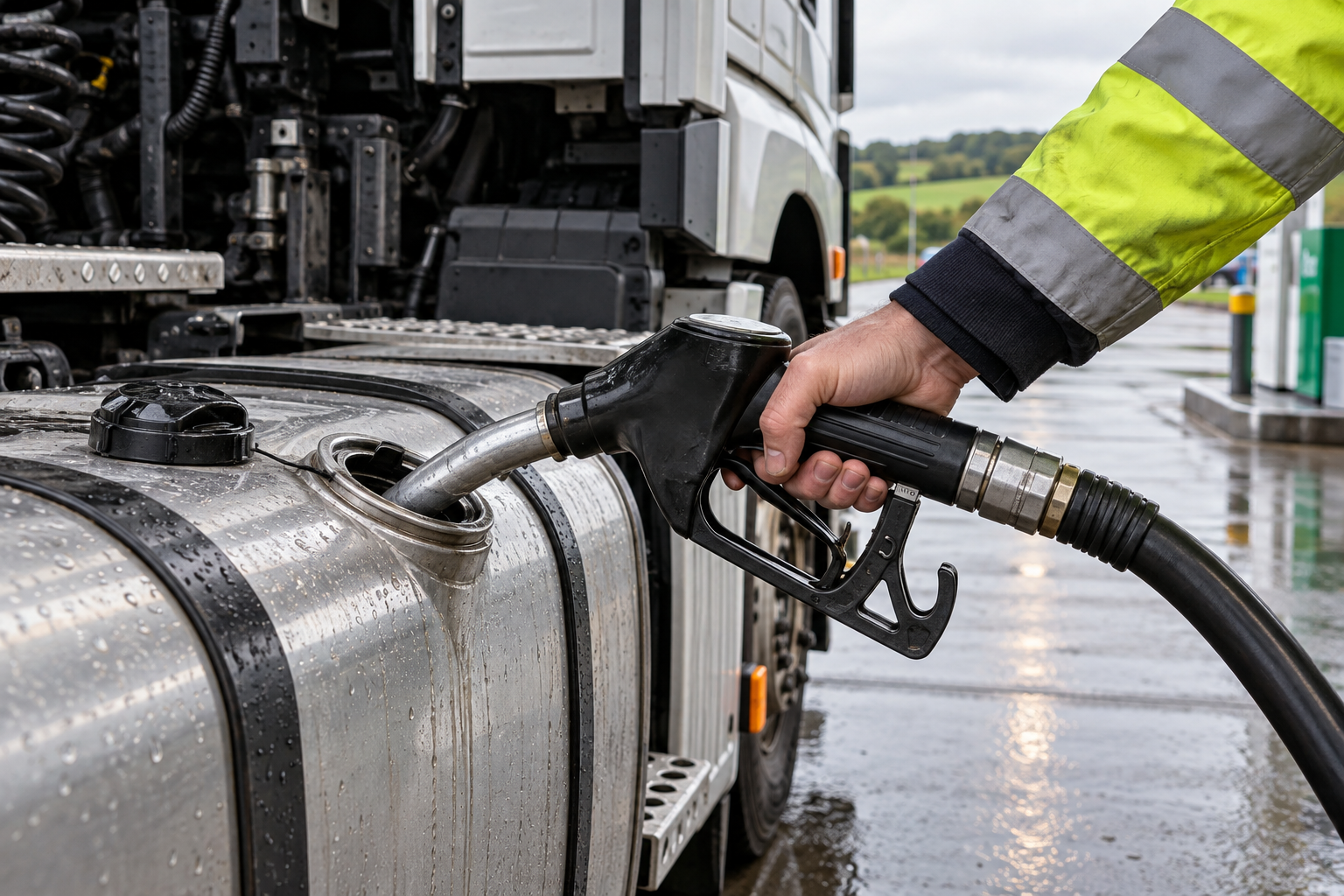
Despite periods of falling international crude oil prices, diesel remains expensive for Irish transport operators.
According to AA Ireland’s November fuel price survey, the average retail price of diesel stands at approximately €2.13 per litre.
At that price, a heavy goods vehicle consuming 30 litres per 100 kilometres would incur gross diesel costs of almost €64 for every 100 kilometres travelled.
For a truck covering 120,000 kilometres annually, the gross retail-equivalent fuel bill would exceed €76,000.
Commercial operators may benefit from bulk purchasing arrangements, VAT recovery and the Diesel Rebate Scheme, but the figures demonstrate the scale of fuel expenditure facing the industry.
Even relatively small fluctuations in diesel prices can have a significant impact on operating costs.
A five-cent increase per litre would add €1,800 annually to the fuel bill of a truck consuming 36,000 litres.
Multiply that across a fleet of 20 trucks and the additional expenditure rises to €36,000 a year.
For smaller operators, who may have limited scope to negotiate fuel prices or adjust freight rates, such increases can be particularly difficult to absorb.
Motorway toll increases add to the pressure
Transport Infrastructure Ireland (TII) has announced revised toll charges for 2027, with increases scheduled to take effect from 1 January.
The increases reflect the annual adjustment mechanism linked to inflation and will affect several tolled motorway routes used by commercial vehicles.
On the M50, heavier HGVs face increases of approximately 20 to 30 cent per passage, depending on their classification and payment arrangements.
While an increase of 30 cent may appear relatively modest, the additional expense quickly accumulates for operators making multiple journeys each day.
A truck making two chargeable M50 passages daily over 250 working days would incur an additional €150 annually from a 30-cent increase.
Across a fleet of 20 trucks following the same pattern, the additional annual toll expenditure would amount to €3,000.
That is before accounting for increases on other tolled routes or any additional journeys.
For hauliers operating between Dublin Port, distribution centres, warehouses and regional destinations, motorway tolls are an unavoidable element of daily transport costs.
The €39,000 double hit facing a 20-truck fleet
The combined effect of higher fuel prices and toll charges becomes particularly clear when the figures are applied to a typical medium-sized haulage operation.
Consider a fleet of 20 trucks, each covering 120,000 kilometres annually and averaging 30 litres of diesel per 100 kilometres.
Each truck would consume approximately 36,000 litres of diesel annually, giving a total fleet consumption of 720,000 litres.
A five-cent increase in the price of diesel would add €36,000 to the fleet’s annual gross fuel bill.
If those same 20 vehicles each make two M50 toll passages daily over 250 working days, a 30-cent increase per passage would add another €3,000.
- Every key deadline: diesel rebate, fuel excise, carbon tax
- Tick-box checklist for tacho, CVRT, CPC & operator licence
- Where drivers get caught at RSA roadside checks
That produces a combined additional annual cost of €39,000, based on these illustrative assumptions.
The figure is not a forecast of diesel price movements. It demonstrates the sensitivity of fleet costs to relatively small increases in fuel and toll charges, before accounting for VAT recovery, rebates or commercial fuel discounts.
IRHA calls for action on rising transport costs
The IRHA has challenged the January toll increases, arguing that the additional charges are difficult to justify when transport operators are already facing exceptional cost pressures.
IRHA President Ger Hyland has questioned the consistency of providing financial support to hauliers while allowing other charges associated with operating commercial vehicles to rise.
The association maintains that rising transport costs will eventually be passed through the supply chain, potentially affecting the price of goods delivered to businesses and consumers.
However, TII says the toll adjustments are based on an established inflation-linked mechanism. The relevant Consumer Price Index increase was 3.6 per cent for the 12 months to August 2026.
HGV Ireland+1
Pressure growing on freight rates
The increasing cost of operating a truck raises an important question for Irish hauliers: are freight rates keeping pace with expenditure?
Fuel can account for a substantial proportion of a transport company’s operating costs, particularly for long-distance operators.
Many hauliers operate under contracts negotiated months in advance, making it difficult to recover sudden increases in diesel prices.
While fuel surcharge mechanisms provide some protection, they are not universally applied, and some customers may resist additional charges.
Toll increases present a similar challenge.
Where tolls are incorporated into an agreed transport rate, operators may be forced to absorb additional costs until the next contract review.
The financial impact is especially relevant to operators making regular journeys through the M50, M1 and other tolled motorway routes.
Diesel tax uncertainty remains
There is also uncertainty over the longer-term direction of diesel taxation.
Temporary reductions in fuel excise introduced during 2026 are due to be restored in stages during 2027, potentially adding to operating costs if international fuel prices remain elevated.
The industry is also watching developments surrounding fuel support schemes and the availability of further assistance to transport businesses.
For operators preparing budgets and negotiating contracts for 2027, the combination of volatile diesel prices, tax changes and higher toll charges makes accurate cost forecasting increasingly important.
The cost of keeping Ireland moving
Road haulage plays a central role in the Irish economy, moving food, fuel, construction materials, manufactured goods and essential supplies throughout the country.
Unlike many other industries, transport operators cannot easily reduce their exposure to diesel or motorway charges without affecting the service they provide.
Avoiding tolled routes may reduce direct toll expenditure, but longer journeys can increase fuel consumption, driver hours, vehicle wear and delivery times.
Likewise, while newer vehicles, improved route planning and driver training can help reduce fuel consumption, they cannot fully insulate operators from significant movements in diesel prices.
The challenge facing Irish hauliers is therefore not simply one of reducing costs. It is ensuring that the price charged for transporting goods accurately reflects the cost of delivering the service.
With diesel averaging more than €2.12 per litre and further motorway toll increases approaching, that challenge is becoming increasingly urgent.
For Irish hauliers, 2027 is shaping up to be another difficult year for operating costs. Unless freight rates reflect the combined impact of diesel, tolls and other overheads, already narrow margins could come under further pressure.