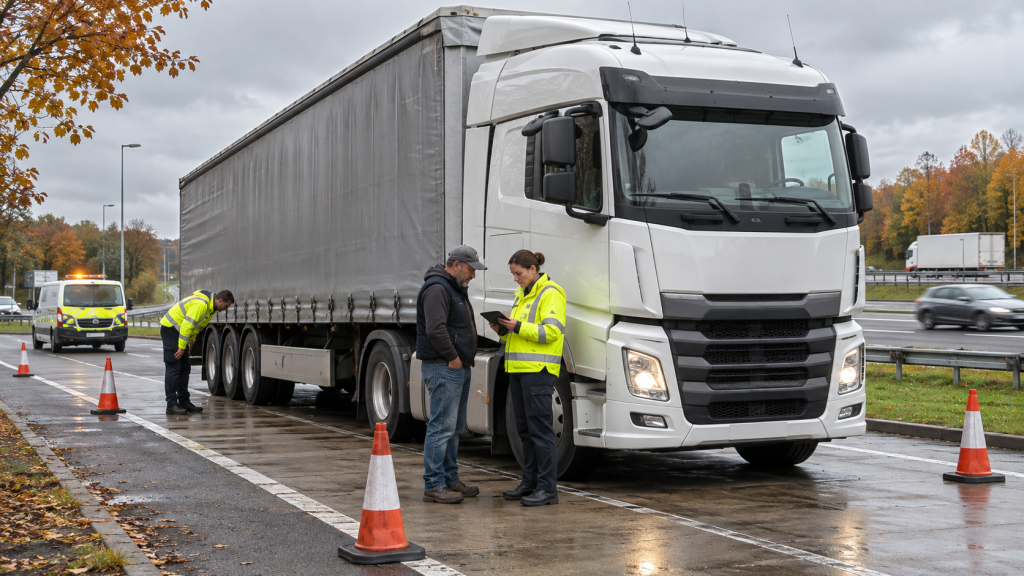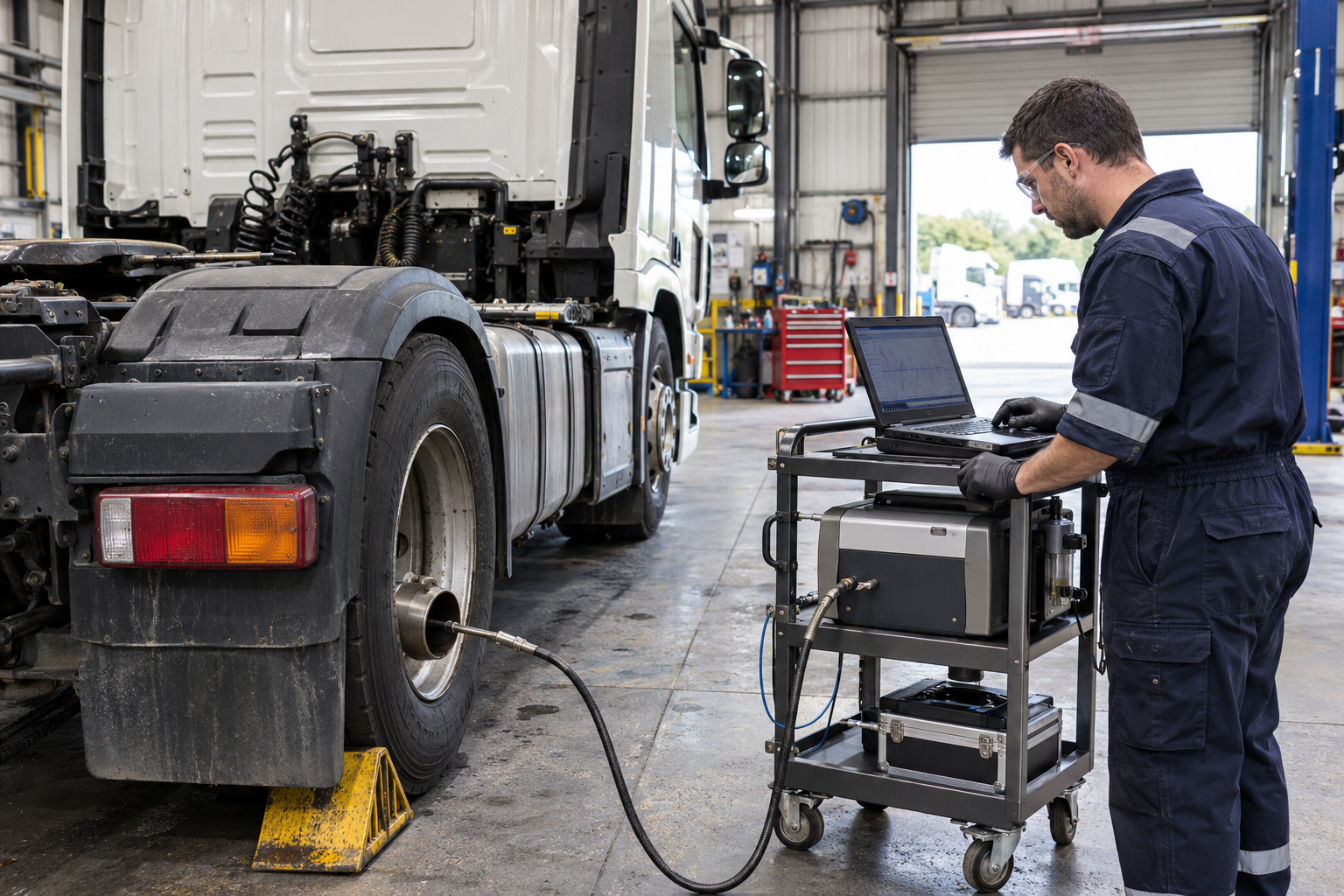
Irish commercial vehicle workshops should prepare for closer scrutiny of diesel emissions systems as the EU negotiates changes to vehicle testing and roadside inspections.
The proposed Roadworthiness Package includes more sophisticated methods for measuring particle numbers and nitrogen oxide emissions, potentially making defective or manipulated exhaust after-treatment systems easier to identify.
For workshops maintaining trucks, buses and vans, the practical implication is clear: diagnosing emissions faults and demonstrating that repairs have worked will become increasingly important. However, the proposals should not be confused with an immediate change to Ireland’s CVRT requirements. Discussions on the revised legislation continued in November, and the final scope and implementation timetable remain subject to agreement. Consilium
Why the smoke test has limitations
Traditional diesel smoke testing has a recognised limitation when assessing modern vehicles fitted with diesel particulate filters.
The European Commission has acknowledged that existing testing methods cannot reliably identify every defective or tampered DPF. Its 2023 recommendation on particle-number testing was intended to help address that gap and establish a more consistent approach across Member States. Mobility and Transport
Particle-number testing measures particles in the exhaust, providing a different assessment from smoke opacity. For workshops, the implication is that an acceptable smoke reading should not be treated as comprehensive proof that the entire emissions-control system is operating correctly.
NOx moves into focus
The proposed changes also address nitrogen oxides, commonly referred to as NOx.
The Council’s negotiating position supports new NOx and particle-number measurement methods, potentially supplemented by remote emissions sensing on the road network. However, it has also highlighted concerns about costs and the readiness of NOx testing technology for widespread deployment. Consilium
This gives workshops a reason to review their diagnostic capabilities now, while following the development of final testing specifications before committing to equipment purchases.
Diagnose the cause
For a workshop handling a recurring emissions warning, the objective should be to identify the underlying fault and verify the repair.
A useful diagnostic process starts with the vehicle’s fault history, operating conditions and manufacturer’s test procedures. Depending on the symptoms, the investigation may involve the DPF, selective catalytic reduction system, AdBlue dosing equipment, sensors, wiring or exhaust leaks.
- Every key deadline: diesel rebate, fuel excise, carbon tax
- Tick-box checklist for tacho, CVRT, CPC & operator licence
- Where drivers get caught at RSA roadside checks
Replacing a component solely because it appears in a fault-code description can leave the original problem unresolved. Equally, clearing codes or completing a regeneration does not, by itself, establish that the vehicle’s emissions performance has been restored.
Any regeneration, cleaning or component replacement should follow the manufacturer’s procedures and suitability checks.
Make repair records count
Workshops should also consider how clearly their job cards explain emissions-related work.
A record stating that a warning light was reset provides little information if the vehicle returns with the same complaint. More useful records identify the reported symptoms, relevant fault codes, diagnostic findings, repairs completed and verification undertaken.
Where appropriate, retaining before-and-after readings can help explain the repair to the customer and support subsequent fault investigation. This is a practical workshop recommendation, rather than a newly announced record-keeping requirement.
Prepare people before purchasing equipment
The immediate priority is to assess whether technicians have the training, technical information and diagnostic coverage needed for the vehicles they maintain.
Workshop managers should review access to manufacturer procedures, live-data interpretation, guided tests and relevant software updates. They should also establish when a vehicle needs specialist assessment.
The proposed EU changes do not themselves mean that every Irish repair workshop must immediately purchase a particle counter or NOx analyser. Investment decisions should reflect the final Irish requirements, equipment specifications and the workshop’s customer base.
As negotiations progress, workshops can prepare by improving diagnostic skills and repair verification. Those capabilities already help reduce repeat visits—and will become more valuable if future inspections examine emissions faults that a conventional smoke test can miss.