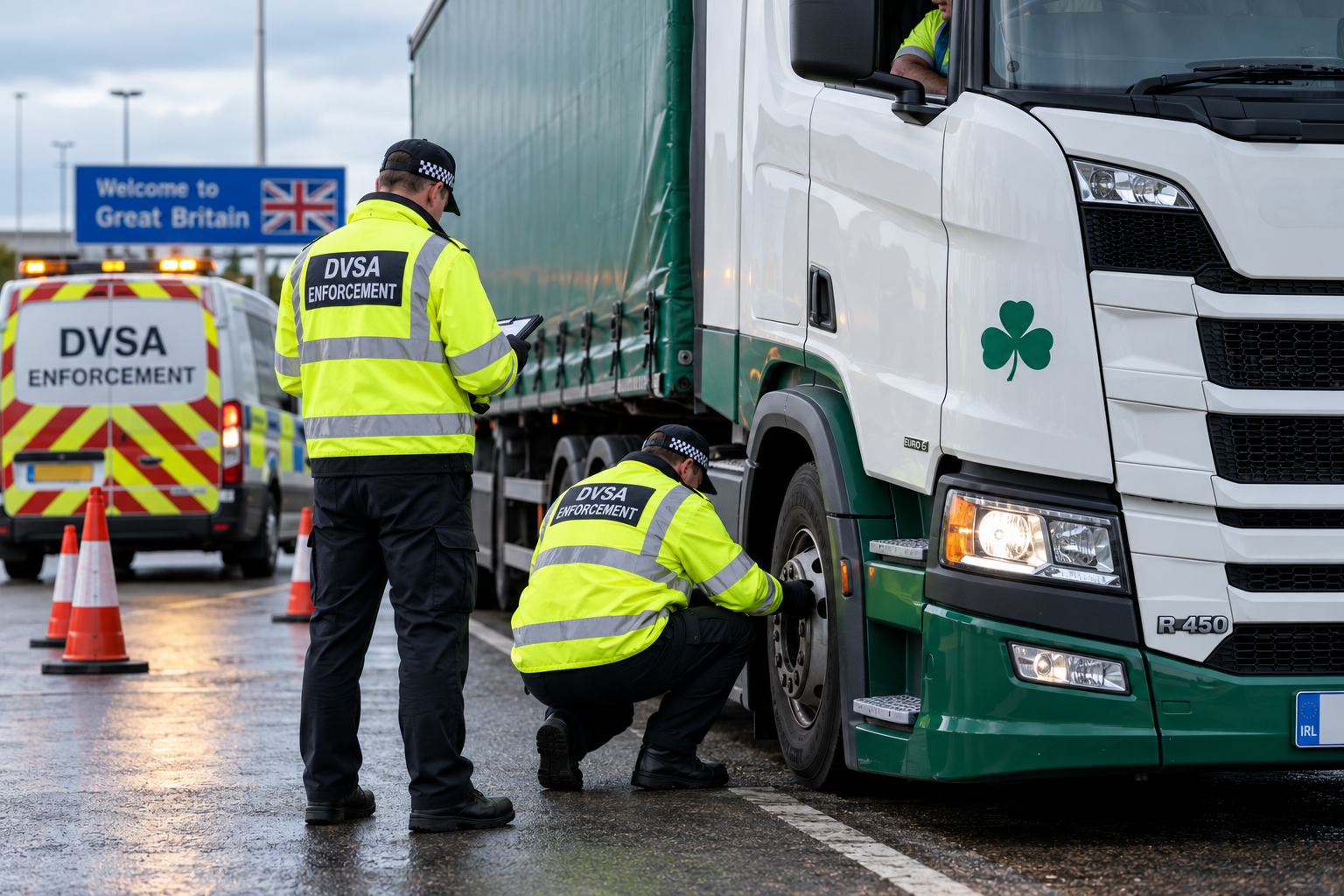
Irish hauliers operating into Britain are being reminded of the importance of vehicle maintenance, drivers’ hours compliance and accurate tachograph records, as the UK’s Driver and Vehicle Standards Agency (DVSA) continues its roadside enforcement programme.
For Irish transport operators, a roadside inspection in Britain can mean much more than a routine paperwork check. Vehicle defects, drivers’ hours infringements or incorrect documentation can result in financial penalties, vehicle prohibitions and costly delays to deliveries.
With Irish hauliers regularly travelling through British ports and onwards to customers across the UK and continental Europe, understanding DVSA enforcement requirements remains an essential part of international transport operations.
Vehicle defects remain a major enforcement concern
The DVSA’s latest published vehicle enforcement statistics, covering inspections through June 2026, provide an insight into the agency’s roadside inspection activities.
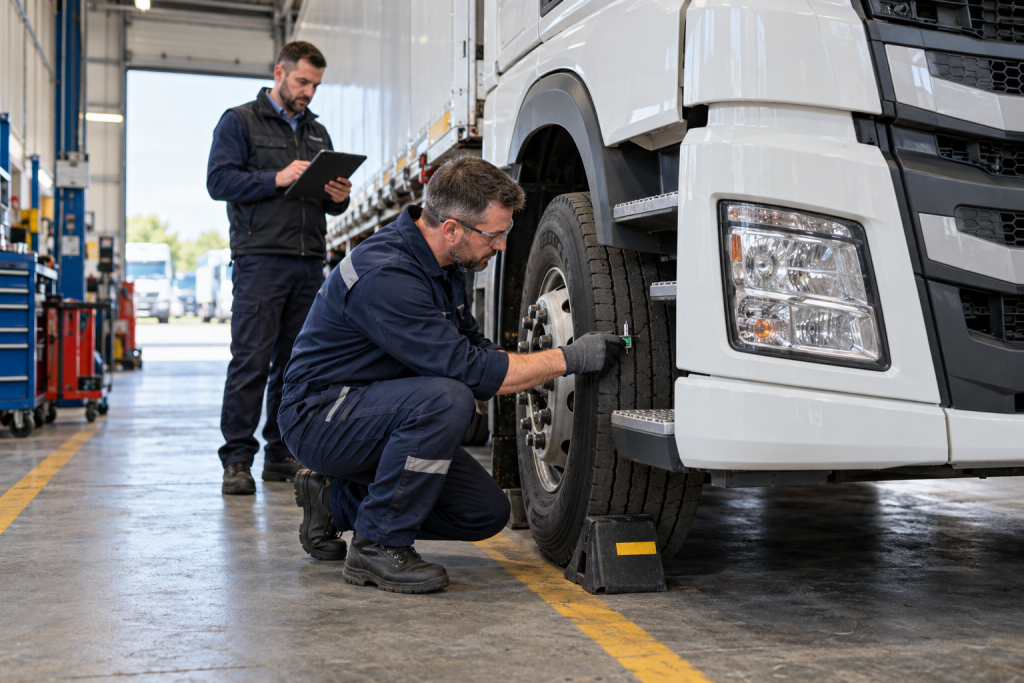
Brakes, tyres, steering, suspension and lighting are among the critical safety systems examined during roadside inspections.
Where inspectors identify defects that make a vehicle unsafe, they can issue an immediate prohibition preventing the vehicle from continuing its journey until the necessary repairs have been completed and any clearance requirements satisfied.
For an Irish haulier carrying a time-sensitive load, such an intervention could mean missed delivery slots, additional repair costs and disruption to onward ferry bookings.
The message for operators is clear: preventative maintenance and effective daily walkaround checks are essential.
Tachographs and drivers’ hours under scrutiny
Drivers’ hours compliance remains another important element of DVSA roadside enforcement.
Inspectors can examine tachograph records to establish whether drivers have complied with applicable driving limits, rest periods and break requirements.
They may also investigate missing records, incorrect manual entries and potential tachograph manipulation.
Irish operators should ensure that drivers understand the requirements for recording other work, periods of availability and rest, particularly when undertaking journeys involving ferry crossings and international transport.
Operators must also ensure that vehicles used for international journeys have the appropriate tachograph equipment installed.
The introduction of additional tachograph requirements for certain international light commercial vehicle operations from July 2026 has further extended the importance of compliance beyond traditional HGV fleets.
Roadside penalties can quickly become expensive
DVSA enforcement officers have powers to issue fixed penalties for certain offences and, where appropriate, require financial deposits from drivers who do not have a satisfactory UK address.
In serious cases, vehicles can be immobilised or prevented from continuing their journeys.
- Every key deadline: diesel rebate, fuel excise, carbon tax
- Tick-box checklist for tacho, CVRT, CPC & operator licence
- Where drivers get caught at RSA roadside checks
While a fixed penalty may be relatively modest compared with the overall cost of an international transport operation, the associated disruption can be considerably more expensive.
A vehicle detained at the roadside may require repairs, replacement drivers or revised delivery arrangements.
For operators working to tight schedules, these additional costs can quickly erode already narrow margins.
Maintenance records are just as important
Roadside inspections do not necessarily end with the vehicle itself.
Serious or repeated compliance failures can lead to wider investigations into an operator’s maintenance systems, record-keeping and management controls.
DVSA enforcement activity during 2026 has highlighted the potentially severe consequences of persistent non-compliance, including action against UK operator licences.
Although Irish-licensed hauliers operate under their own licensing arrangements, they must still comply with the applicable UK road traffic and vehicle safety requirements when operating in Britain.
Good maintenance records, documented defect reporting and evidence of timely repairs can help demonstrate that an operator takes its roadworthiness responsibilities seriously.
What should Irish hauliers check before travelling to Britain?
Before dispatching an HGV to Britain, operators should pay particular attention to:
- Vehicle roadworthiness: Check tyres, brakes, steering, suspension, lights and other safety-critical components.
- Daily defect reporting: Ensure drivers complete walkaround checks and report defects before departure.
- Tachograph compliance: Confirm that the correct equipment is fitted and that driver records are complete.
- Drivers’ hours: Plan journeys around legal driving limits, breaks, rest periods and ferry schedules.
- Documentation: Ensure drivers carry the documents required for the vehicle, driver, goods and journey.
- Maintenance records: Keep inspection, servicing and repair records accurate and readily accessible.
Prevention is better than roadside prohibition
For Irish hauliers, the consequences of failing a DVSA roadside inspection extend well beyond the immediate penalty.
A prohibition can disrupt customer deliveries, increase operating costs and damage commercial relationships.
With vehicle maintenance, fuel, insurance and labour costs already placing pressure on the haulage sector, avoiding preventable enforcement problems should be a priority for every international operator.
The best protection remains a properly maintained vehicle, a compliant driver and a management system capable of identifying potential problems before the truck leaves the depot.
For Irish hauliers travelling to Britain, a few extra minutes spent checking a vehicle before departure could prevent hours of delays at the roadside.