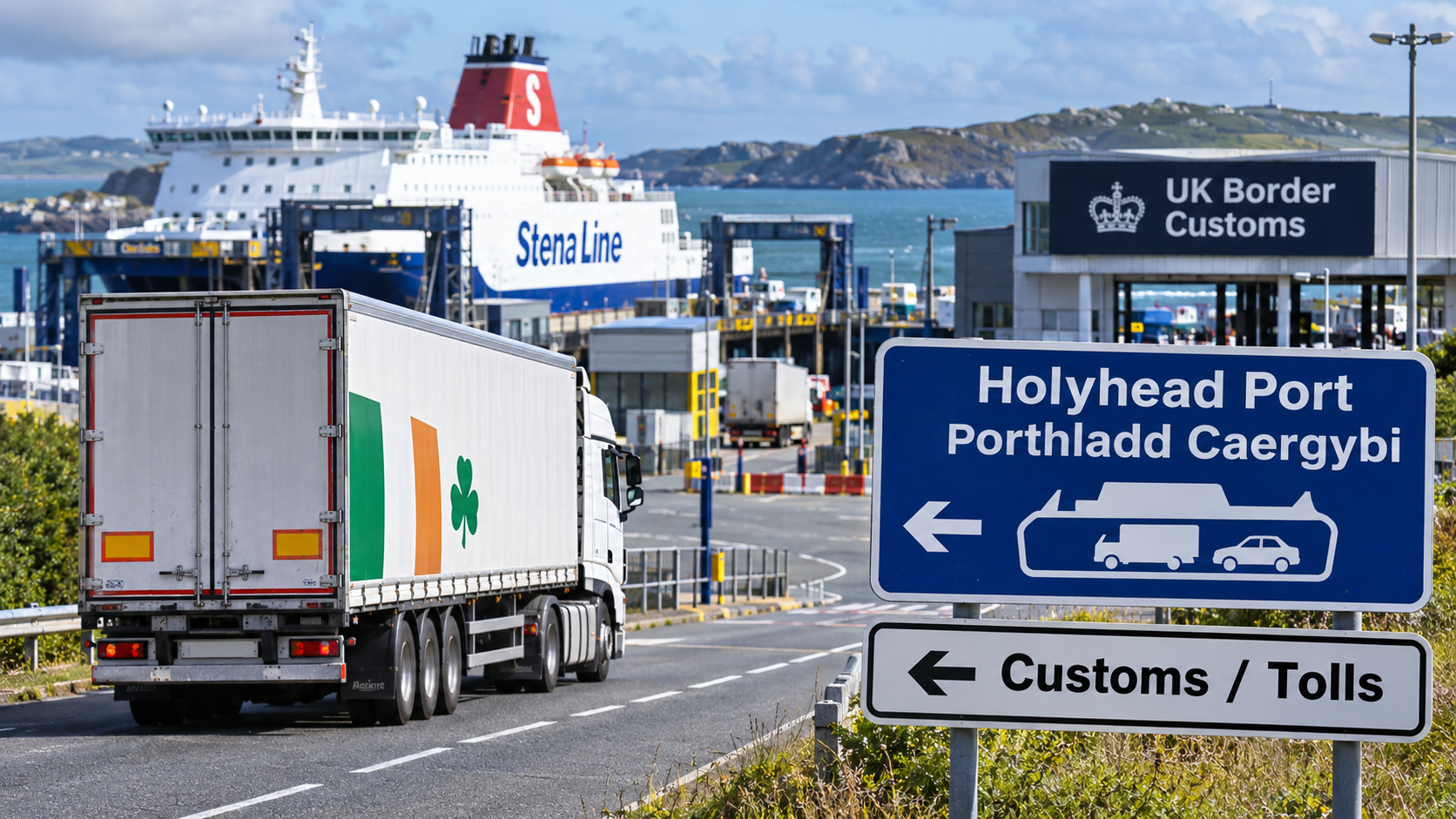
Irish hauliers carrying meat, dairy and other food products between Ireland and Great Britain could face fewer routine border checks and less certification from 1 March 2028.
For operators using Britain as a landbridge to continental Europe, the impact is less certain. The UK government says it will publish further guidance on transit movements in 2027.
The UK and EU concluded negotiations on a common sanitary and phytosanitary (SPS) area at their Brussels summit on 20 November. The agreement covers rules for food and feed, animal health and plant health. Both sides aim to apply it from March 2028, subject to their respective legal procedures. Current border requirements continue to apply in the meantime.
Fewer checks for eligible Irish food exports to Britain
Under the agreement, eligible goods moving between Great Britain and the EU will no longer face routine SPS border checks. Many consignments of meat, dairy, fish and other products of animal origin will no longer require an export health certificate, provided they are outside disease-controlled zones and meet any product-specific requirements. Most live terrestrial animals will still need veterinary certification, while some plant products will continue to require documentation. Risk-based checks can still take place.
For a refrigerated fleet delivering Irish food to a British distribution centre, fewer routine inspections could make delivery times more predictable. That matters when a delay at the port can cost a booking slot or eat into the driver’s available hours. Customs declarations and rules-of-origin requirements will continue to apply where relevant.
What happens to freight using the British landbridge?
An Irish trailer bound for France via Britain is moving under transit. Revenue currently requires an electronic transit declaration backed by a guarantee. For a roll-on, roll-off sailing from Ireland to Great Britain, the haulier is responsible for ensuring that a Pre-Boarding Notification (PBN) has been submitted. One PBN covers the vehicle, even when the trailer contains several consignments.
- Every key deadline: diesel rebate, fuel excise, carbon tax
- Tick-box checklist for tacho, CVRT, CPC & operator licence
- Where drivers get caught at RSA roadside checks
Defra says it will publish further information in 2027 on transit, transhipment, certification and digital systems. For Irish operators, that guidance will help establish which food consignments still need advance notification or certification when passing through Britain, and how the new food controls will interact with customs transit. Until then, operators comparing the landbridge with a direct ferry to continental Europe should base schedules and quotes on the procedures that apply today.
Great Britain to Northern Ireland movements
The summit statement says the benefits of the common SPS area will also extend to goods moving from Great Britain to Northern Ireland through the Windsor Framework. Operators serving Northern Ireland from British depots should follow the route-specific implementation guidance as it is published.
The next development to watch is the 2027 transit guidance. It will give Irish hauliers a firmer basis for judging whether the deal can reduce paperwork and improve journey reliability on the landbridge as well as on direct deliveries to British customers.