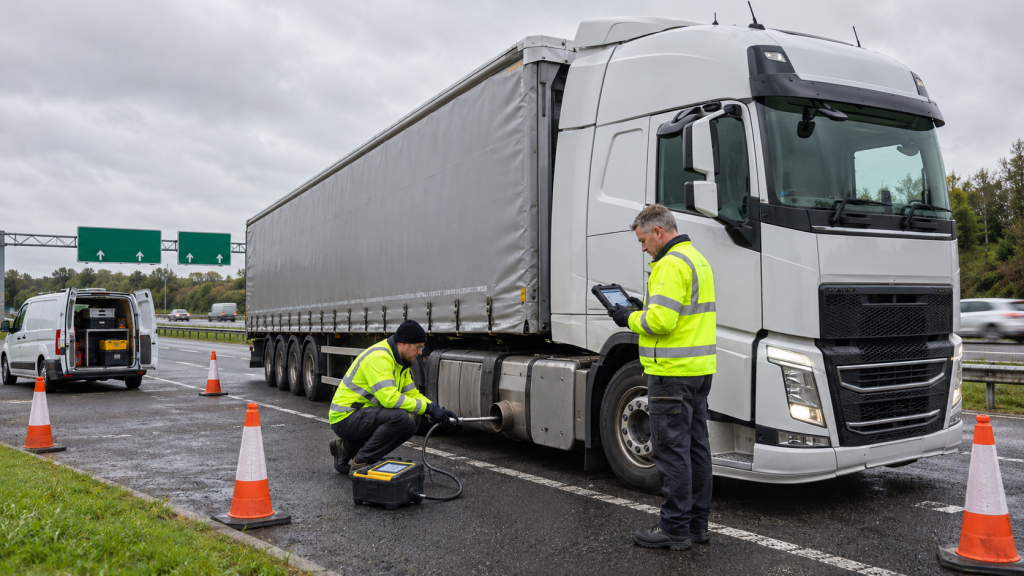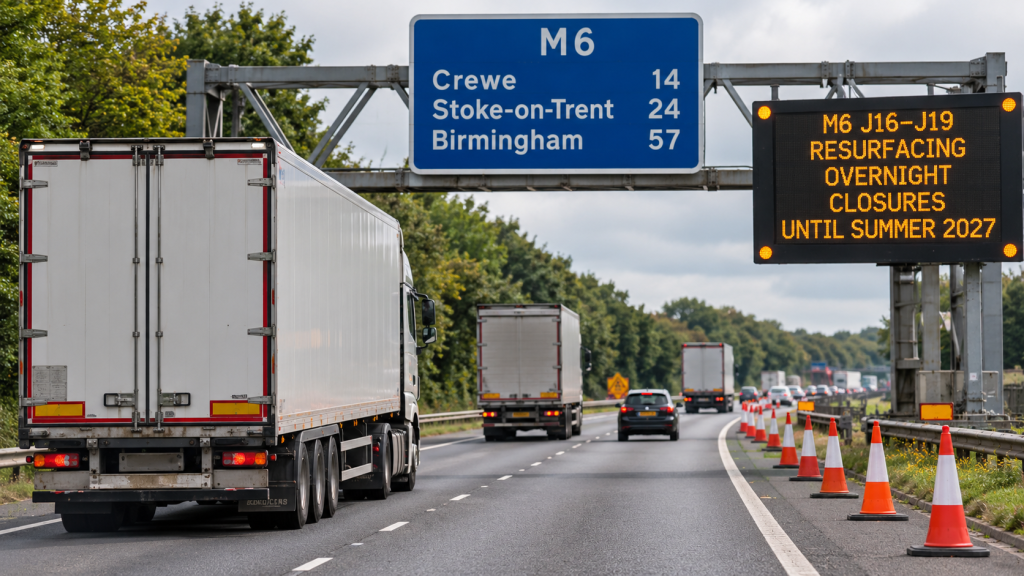
Irish hauliers operating on continental routes are reminded that the next European Truck & Bus enforcement week takes place from Monday, 16 November to Sunday, 22 November 2026.
The ROADPOL campaign will focus on commercial vehicle safety and compliance, with officers targeting overloading, breaches of driving and rest-time rules, and technical defects. It is the third and final Truck & Bus operation in ROADPOL’s 2026 calendar. ROADPOL
Euro Contrôle Route also lists the dates as a joint ECR/ROADPOL Truck & Bus control week, confirming the coordinated enforcement period.
For Irish operators sending vehicles to mainland Europe, the campaign provides a timely opportunity to review driver records, vehicle condition and loading arrangements before departure.
Driving hours and vehicle condition in focus
ROADPOL identifies driving and rest-time compliance as a central priority for the operation, alongside vehicle roadworthiness and overloading. The campaign coordinates enforcement across participating member countries, although individual national authorities determine their own deployment.
Transport managers should use the days ahead to review tachograph records and address any unexplained gaps, missing entries or recurring infringements with drivers.
Journey schedules also deserve attention. Ferry connections, loading delays and customer delivery windows should be planned around the driver’s available hours, with sufficient flexibility to accommodate disruption.
A tight delivery schedule should never depend on a driver exceeding permitted driving time or cutting a required break short.
Check the truck and trailer
Pre-departure preparation should cover both the tractor unit and trailer, with particular attention to brakes, tyres, lights and any outstanding defects.
- Every key deadline: diesel rebate, fuel excise, carbon tax
- Tick-box checklist for tacho, CVRT, CPC & operator licence
- Where drivers get caught at RSA roadside checks
Drivers should have a clear process for reporting faults, while transport managers should confirm that reported problems have been assessed and any necessary repairs completed.
Weights and load distribution should also be reviewed. Operators should check axle loads as well as overall vehicle weight, particularly where loading or unloading during a journey changes how the remaining cargo is distributed.
Load restraints should be suitable for the goods being carried and checked throughout the journey where appropriate.
Prepare drivers before departure
A short driver briefing ahead of the enforcement week can help identify issues while the vehicle is still at base.
Useful preparation includes:
- Reviewing driving, break and rest arrangements for the planned journey.
- Checking tachograph operation and resolving recording queries.
- Confirming that vehicle checks and defect reporting are up to date.
- Checking load security, weight and distribution.
- Ensuring the relevant driver, vehicle and transport documents are complete and readily accessible.
These are practical preparation steps rather than an exhaustive compliance checklist. Operators should also review requirements specific to the countries and transport operations involved.
For Irish fleets, the immediate action is to check vehicles and records before dispatch and give drivers a workable journey plan. Discovering a problem at base leaves time to resolve it before it interrupts an international delivery.