Ireland’s HGV aftermarket is entering a period of significant change. For decades, the formula was relatively straightforward: trucks needed servicing, mechanical repairs, tyres, brakes, batteries and replacement parts, while workshops relied on experienced technicians to keep them moving.
That model is changing rapidly.
Modern HGVs are becoming increasingly sophisticated, while at the same time Ireland faces a shortage of skilled technicians. Meanwhile, electric and alternative-fuel trucks are beginning to enter the market, CVRT requirements are changing, and independent workshops are being asked to invest heavily in equipment, training and diagnostics.
The fundamental question for Ireland’s aftermarket is therefore becoming increasingly important:
Who will have the skills and equipment to repair tomorrow’s trucks?
Technician shortage
Perhaps the biggest immediate threat to the HGV aftermarket is not technology — it is people.
Ireland has already recognised a shortage of HGV and bus mechanics. The Government increased the employment-permit quota for HGV and bus mechanics as part of measures to address transport-sector skills shortages.
The problem is particularly acute for independent workshops and haulage companies that operate their own maintenance facilities.
An experienced HGV technician is becoming a highly valuable commodity.
The job is also becoming considerably more complicated. Today’s technician needs to understand much more than engines, gearboxes and braking systems. Increasingly, they need expertise in electronics, diagnostics, communications networks, emissions systems and software.
Ireland’s National Skills Bulletin has identified difficulties filling HGV mechanic positions, with digital and health-and-safety skills also increasingly in demand.
That creates a difficult equation for the aftermarket.
More technology + fewer technicians = increased pressure on workshops.
The truck is becoming a computer
Modern HGVs contain sophisticated electronic systems controlling virtually every aspect of their operation.
A workshop may now be dealing with:
-
Engine management
-
Automated transmissions
-
EBS braking systems
-
ADAS
-
Telematics
-
CAN-bus networks
-
DPF and SCR systems
-
AdBlue
-
Electronic suspension
-
Digital tachographs
-
ECU programming
-
Camera and radar systems
The traditional distinction between a mechanic and an auto electrician is becoming increasingly blurred.
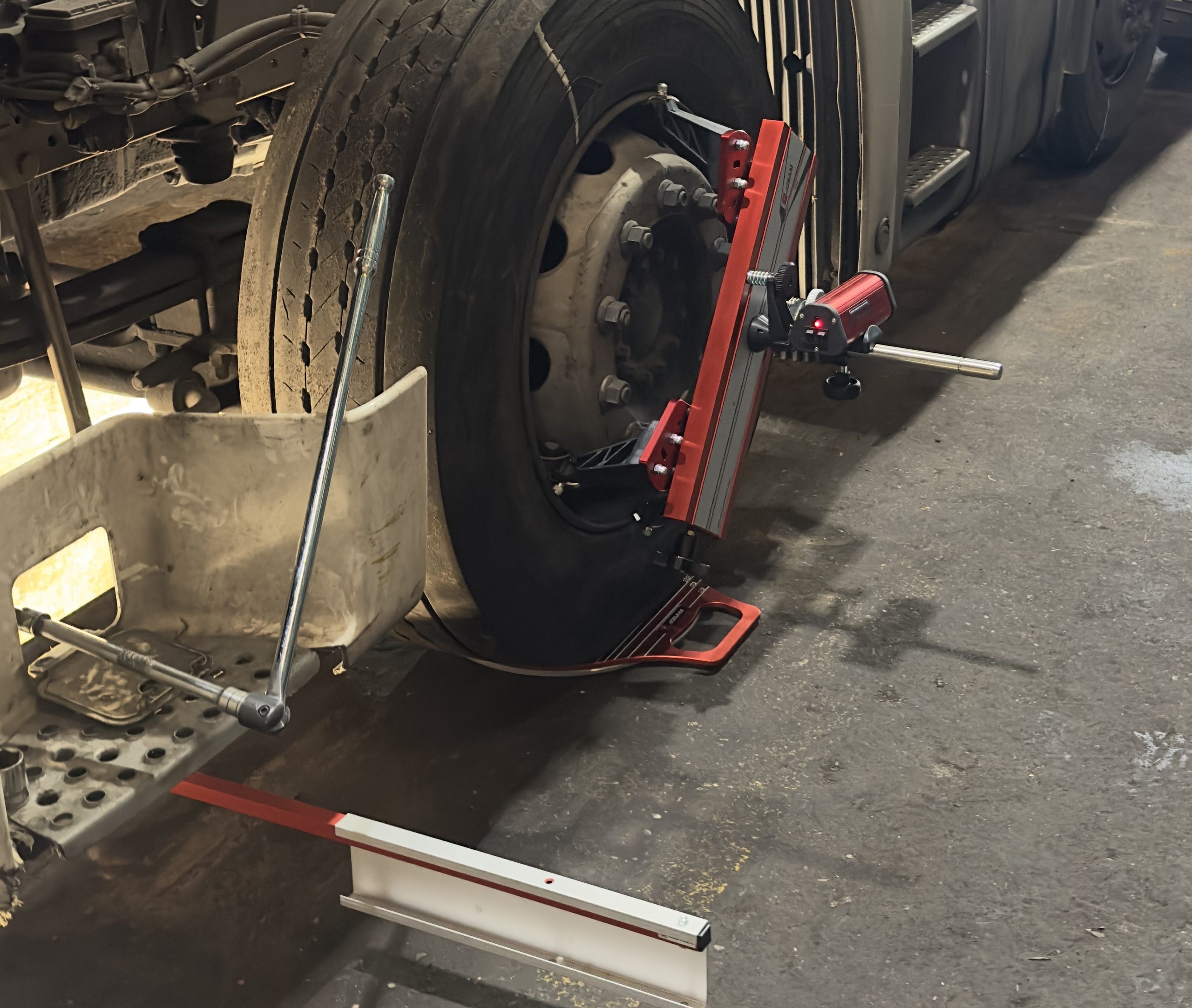
Diagnostic equipment is consequently becoming as important to an HGV workshop as the spanner.
But diagnostic technology comes at a price. Independent workshops may need to invest in multiple systems, subscriptions, training and technical information simply to maintain access to the technology required to diagnose modern vehicles.
The independent aftermarket faces a particular challenge
For independent workshops, the competition from franchised dealers is becoming more complicated.
Dealers have access to manufacturer-specific diagnostic systems, technical information, software updates and factory training.
Independent workshops have traditionally competed on price, flexibility and personal service.
But the technology gap can potentially make that harder.
The independent workshop of the future may therefore need to offer dealer-level technical capability with independent-workshop pricing and service.
That is a difficult proposition.
It also creates opportunities for aftermarket diagnostic companies, training providers, component suppliers and technical-information providers.
CVRT is changing the workshop environment
Another important development is the continuing upgrade of Ireland’s commercial vehicle testing network.
From 19 March 2027, authorised CVR testing centres must meet higher standards for premises and equipment. The RSA says some existing operators have decided not to continue because they do not intend to upgrade.
That is already generating investment in the commercial vehicle workshop and testing sector.
MAHA Ireland, for example, reported that 10 new CVRT test lanes opened during 2025, alongside six workshop fit-outs, with another 10 projects underway in 2026. The company attributed increased demand partly to updated CVRT and NCT requirements.
For equipment suppliers, this represents an opportunity.
For workshop owners, however, it represents another capital investment that has to be justified against already tight operating margins.
And then comes electrification
Electric HGVs represent perhaps the biggest long-term change facing the aftermarket.
But Ireland isn’t going to wake up one morning with a completely electric truck fleet.
The transition will be gradual.
Electric HGVs currently account for only a little over 1% of Ireland’s HGV fleet, according to reporting in May 2026. High vehicle costs, charging infrastructure, charging prices, range and payload concerns remain significant barriers.
That means diesel-powered HGVs will remain central to Ireland’s road transport industry for many years.
But workshops cannot afford to ignore electrification.
The Irish Climate Change Advisory Council has highlighted the additional skills and workshop requirements associated with zero-emission HGVs, including battery and fuel-cell maintenance and the need for appropriate safety procedures and risk assessments.
This could fundamentally change workshop training.
The HGV technician of the future may need to be part mechanic, part auto electrician and part software technician.
What happens to the traditional aftermarket?
Electrification will undoubtedly eliminate or reduce demand for some traditional components.
Electric trucks don’t require:
-
Engine oil changes
-
Traditional exhaust systems
-
DPF maintenance
-
Many conventional engine components
-
Some transmission-related maintenance
But that doesn’t mean the aftermarket disappears.
It changes.
Demand will develop around batteries, thermal management, electric drivetrains, braking systems, tyres, suspension, charging systems, electronics, diagnostics and high-voltage safety.
There will also be a very large installed base of diesel HGVs requiring maintenance for many years.
That transition period could actually create one of the most interesting aftermarket environments Ireland has ever experienced.
Parts and downtime
Parts availability remains another critical issue.
For a haulage operator, the cost of a replacement component isn’t necessarily the biggest concern. Downtime is.
A €500 component that keeps a €150,000 tractor unit off the road for two days can ultimately cost the operator far more than the part itself.
This places enormous pressure on distributors to provide fast delivery and maintain comprehensive stock.
It also makes parts identification and diagnostics increasingly important. The faster a workshop can identify the problem and source the correct component, the faster the vehicle can return to work.
The changing role of the parts distributor
The traditional parts distributor sold components. Tomorrow’s distributor may need to sell something much broader:
Parts + diagnostics + technical information + training + support.
The aftermarket is becoming increasingly knowledge-driven.
A distributor that can help a workshop identify a fault, identify the correct part and provide technical support could have a significant advantage over one competing purely on price.
Training will become a competitive advantage
The most successful workshops over the next decade may not necessarily be the largest.
They may be the ones that invest most effectively in their people.
That means developing technicians capable of working across several disciplines.
Traditional mechanical skills will remain essential, but they will need to be supplemented by:
Diagnostics | Electronics | Software | ADAS | High-voltage systems | Data | Safety
Ireland’s wider automotive sector is already warning about the need for more EV technician training as vehicle technology changes.
The HGV aftermarket needs to be thinking about this now rather than waiting until electric trucks become commonplace.
A crossroads for the aftermarket
The Irish HGV aftermarket isn’t disappearing. But it is changing. The independent workshop that relies solely on traditional mechanical expertise will increasingly find itself under pressure.
The successful workshop of the future is likely to be one that combines: Skilled people, advanced diagnostics, technical information, fast parts supply and continuous training.
And there is another important consideration.
Ireland’s road freight sector cannot function without a strong aftermarket.
Every truck that is off the road represents lost productivity for a haulier, lost capacity for the supply chain and potentially lost revenue for the wider economy. Keeping trucks moving is therefore not simply a workshop issue. It is an essential part of Ireland’s transport infrastructure. The question isn’t whether the HGV aftermarket will change. It will.
The real question is whether Ireland can develop the people, training, technology and investment required to keep pace with that change.
Tomorrow’s truck is already arriving. The aftermarket needs to be ready for it.