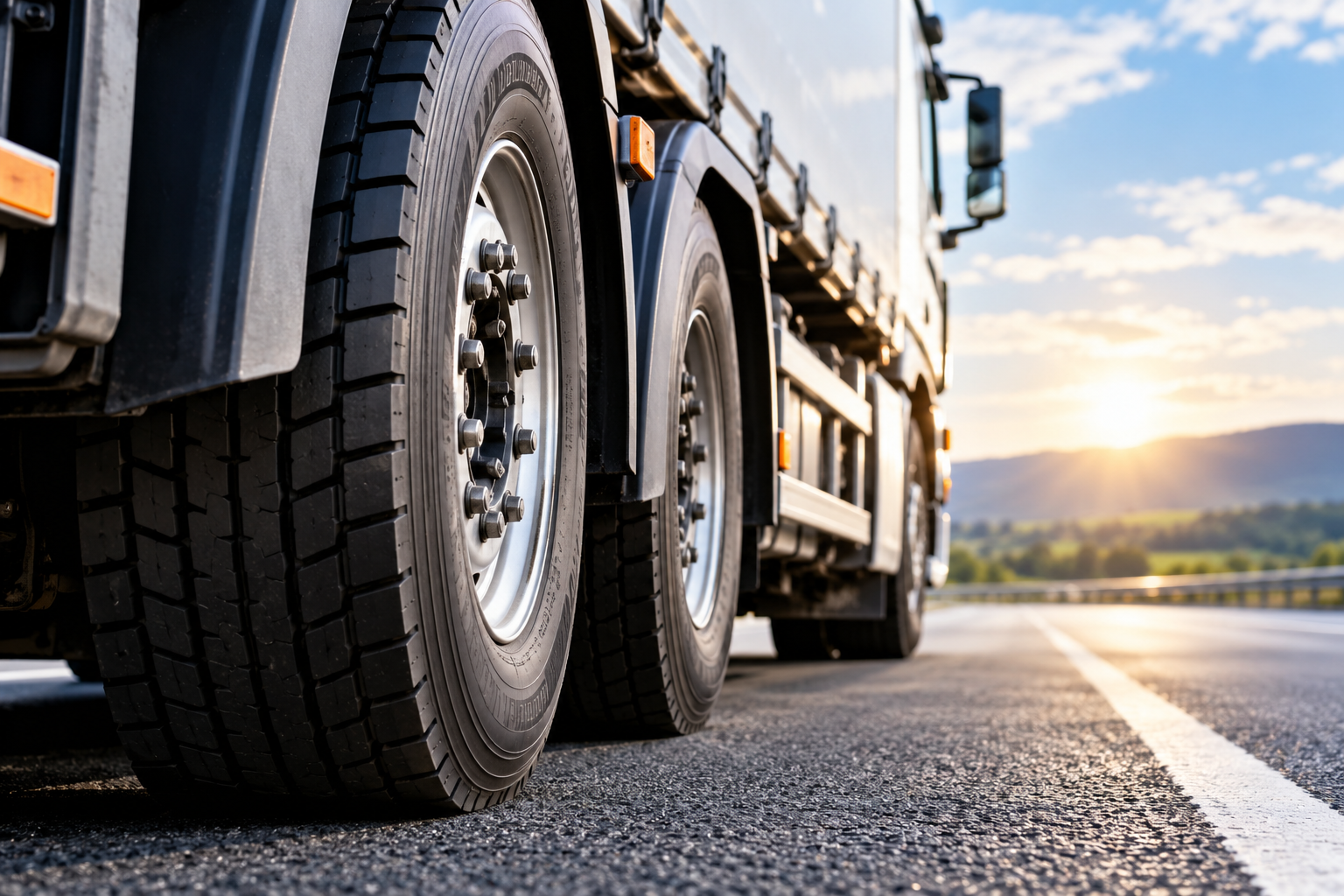
European regulators are moving closer to introducing new rules governing truck and bus tyre abrasion, potentially changing how commercial vehicle tyres are tested, developed and ultimately selected by haulage operators.
The UNECE Tyre Abrasion Task Force meets in Brussels on 8–9 October, with one of its key objectives being to determine how tyre abrasion from C3 truck and bus tyres can be reliably measured for future regulation.
While this might appear to be another highly technical regulatory discussion, its implications for truck operators, tyre manufacturers and the commercial tyre trade could be significant.
Truck tyres present regulators with a major challenge
Europe is increasingly focusing on tyre wear because particles released as tyres abrade are regarded as a source of non-exhaust vehicle emissions.
However, measuring truck tyre abrasion is considerably more complicated than testing passenger-car tyres.
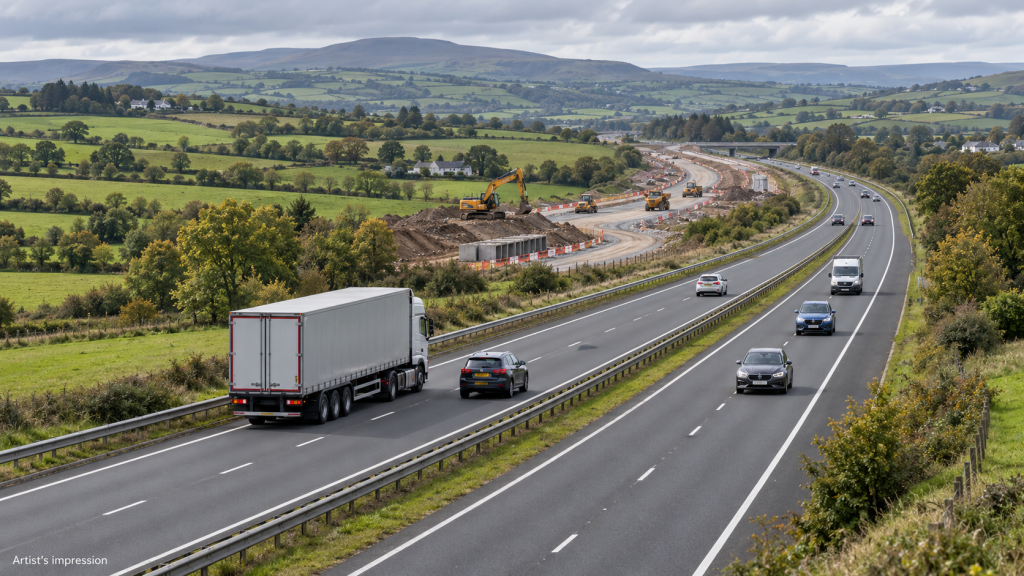
Commercial vehicle tyres operate under vastly different conditions depending on their application. A steer tyre fitted to a tractor unit covering hundreds of kilometres each day on motorways experiences very different operating conditions from a drive tyre on a construction vehicle or a tyre fitted to an urban distribution truck.
Consequently, simply applying the passenger-car abrasion testing methodology to heavy commercial vehicles may not provide a fair or representative measurement.
The Brussels meeting is expected to examine C3 tyre segmentation, possible simplified testing methods, phased introduction of requirements and the testing resources required.
Long-haul and urban tyres could be treated differently
One of the particularly interesting issues for hauliers is how regulators eventually categorise different commercial vehicle tyre applications.
It may be necessary to distinguish between tyres designed primarily for long-haul, regional distribution, urban delivery and other specialist applications, rather than treating every C3 tyre in exactly the same way.
There are also fundamental differences between steer, drive and trailer tyres, each of which is designed around different performance priorities.
The decisions taken during the development of the new testing regime could therefore influence future tyre compounds, tread designs, expected mileage and potentially tyre prices.
What could this mean for Irish hauliers?
For Irish transport operators, tyre abrasion regulation could eventually make whole-life tyre performance even more important when purchasing tyres.
A tyre’s purchase price is only one element of its real cost to a fleet. Mileage, fuel efficiency, casing durability, regroovability and suitability for retreading can have a much greater influence on the ultimate cost per kilometre.
If abrasion performance becomes a regulated and measurable characteristic, fleets could eventually have another useful benchmark for comparing tyres.
That could particularly benefit operators already concentrating on total cost of ownership rather than simply buying the cheapest tyre available.
However, tighter regulatory requirements could also increase tyre manufacturers’ development and testing costs, some of which could ultimately filter through into tyre prices.
Retreading could become even more important
There is another important consideration for the Irish haulage industry: retreading.
Premium truck tyre casings can potentially have several lives through regrooving and retreading, significantly increasing the useful life of the original casing.
As European transport policy places increasing emphasis on sustainability, resource efficiency and the circular economy, the ability to extend casing life could become an increasingly valuable part of the environmental argument for retreaded commercial vehicle tyres.
Future abrasion regulations will therefore need to take account not only of how quickly a tyre wears during its first life, but potentially how tyre durability fits into the wider lifecycle of the product.
Passenger-car rules are already on the way
The commercial vehicle work follows progress already made on passenger-car tyres.
UN Regulation No. 186 has established an abrasion testing framework for C1 passenger-car tyres, with the first stage beginning on 30 June 2028.
Work is also progressing on C2 tyres covering vans and light commercial vehicles, with proposals expected to go before the UNECE Working Party on Noise and Tyres, GRBP, in February 2027.
C3 truck and bus tyres represent the next major challenge.
Euro 7 changes the tyre emissions landscape
The work also needs to be viewed against the much wider Euro 7 regulatory programme.
Unlike previous Euro emissions standards, which concentrated overwhelmingly on exhaust emissions, Euro 7 introduces requirements covering non-exhaust emissions including brake particles and tyre abrasion.
For the road transport industry, that represents an important change.
As exhaust emissions fall with newer diesel powertrains and the gradual introduction of zero-emission vehicles, regulators are paying much greater attention to emissions generated elsewhere on the vehicle.
And tyre wear does not disappear with electrification. Indeed, vehicle weight, torque, tyre design, driving conditions and operating patterns can all influence tyre wear.
Truck tyre regulation is entering a new era
There is still considerable technical work to be completed before truck operators start seeing abrasion figures appearing alongside the familiar performance characteristics of commercial vehicle tyres.
But the direction of European regulation is becoming increasingly clear.
Tyre wear is moving from being primarily a fleet operating-cost issue to becoming an emissions and regulatory issue as well.
For Irish hauliers, the key question will be whether the eventual regulations deliver useful real-world information that allows fleets to compare tyres fairly across different operating applications.
Get that right and abrasion testing could help operators identify tyres offering the best combination of mileage, fuel efficiency, durability and cost per kilometre.
Get it wrong, and attempting to compare radically different truck tyre applications through a single laboratory measurement could provide fleets with little meaningful information.
The outcome of the 8–9 October Brussels discussions should therefore be watched closely by the European truck tyre industry — and by Irish hauliers whose tyre bills remain one of the significant costs of keeping a fleet on the road.