Geotab, a global leader in connected vehicle and asset management solutions has published its first European Freight Efficiency Index titled “The Cost of Standing Still” revealing a 144% performance gap between Europe’s major cities with Berlin ranking highest in freight efficiency and Dublin in third place.
Every day, millions of vehicles move through Europe’s cities carrying the things that keep economies alive – food, medicine, materials, parcels. But not all cities move them equally. The report uncovers that the same fleet, running the same vehicles, can experience fundamentally different realities depending on the city it operates in – with wide-reaching consequences for cost, emissions and performance.
At one end, Berlin leads the Index with a score of 61 out of 100, where traffic remains manageable and, crucially, predicGeotabtable. At the other, Madrid ranks last with a score of 25, creating a 144% efficiency gap between the best and worst-performing cities – a stark difference that translates directly into time, fuel and operational cost.
Amsterdam (59) trails just behind Berlin, nearly matching the city in terms of efficiency. Dublin (49) and Rome (48) follow forming a workable tier, while Paris (37) and London (29) join Madrid in a category where the system itself begins to work against the fleet.
Dublin sits in the middle tier with evident but manageable congestion and broadly consistent journey times. Where freight operators have an edge is scheduling: unlike passenger and service vehicle fleets tied to business hours and customer appointments, freight operators can structure delivery windows around known congestion periods. In Dublin, the data shows that this flexibility translates directly into better performance with freight operators consistently outperforming passenger vehicle fleets operating in the same conditions.
The real story: the road shapes performance but operations determine the gap
What emerges from Geotab’s first ‘European Freight Efficiency Index’ is a shift in how freight efficiency should be understood – away from day-to-day congestion and towards the infrastructure that shapes how cities move.
In Berlin, a polycentric layout distributes traffic across multiple routes, creating a flowing network that remains stable throughout the day. In Amsterdam, compact design and signal optimisation keep vehicles moving – even at slow speeds – rather than queuing.
But infrastructure is only part of the picture. How fleets plan, schedule and adapt to the network they operate in is equally consequential. Cities like London, Paris and Madrid reveal that congestion alone is not the defining issue – unpredictability is. And for fleets, that unpredictability creates what the Geotab data points to as a ‘structural tax’: extra buffer time, broken delivery windows and lost efficiency that cannot be solved through routing or driver training alone.
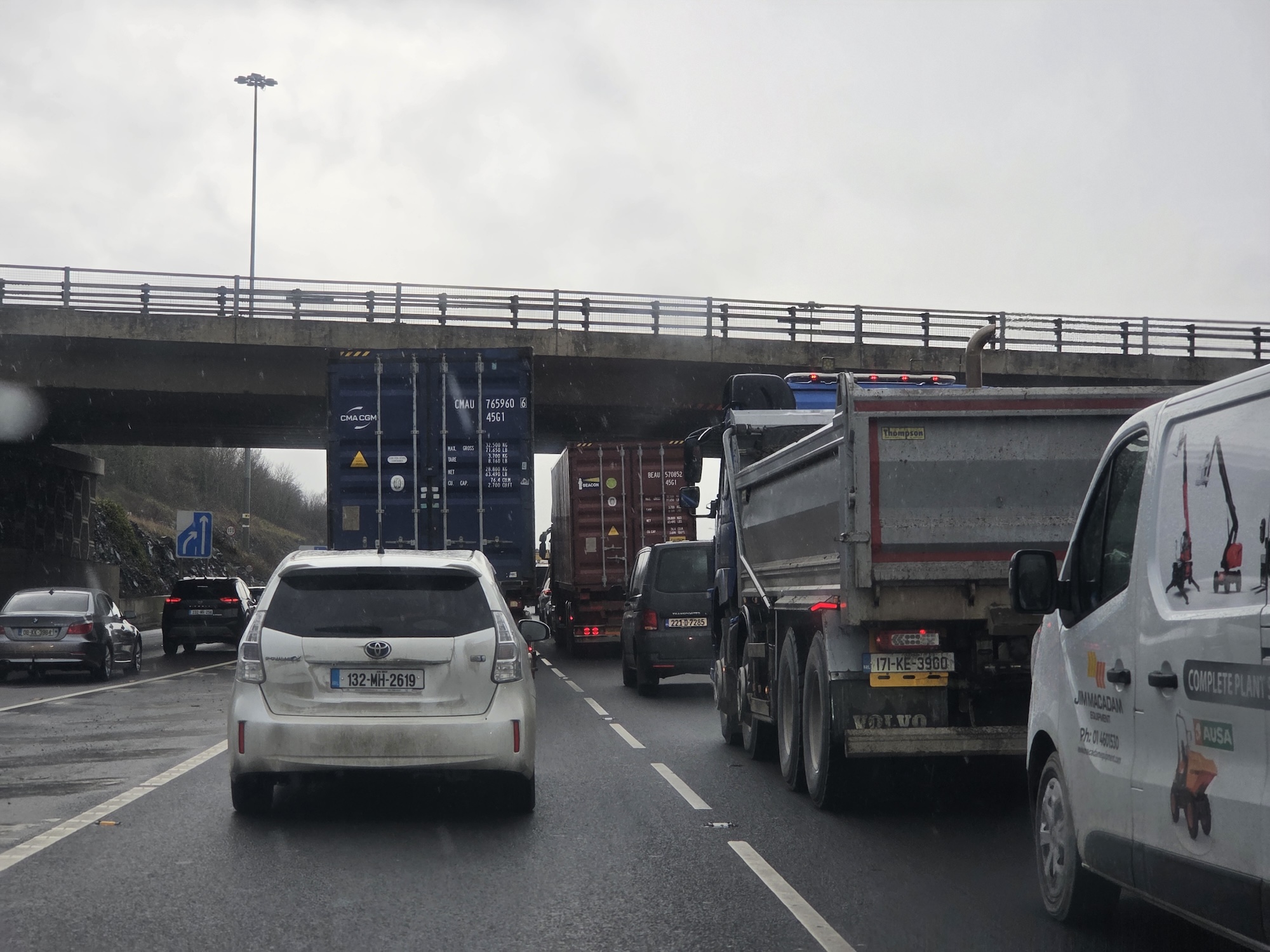
At a fundamental, and perhaps counterintuitive level, cities that move slowly can still be efficient, if they keep moving.Rome, for example, combines high congestion with some of the lowest idling waste, as traffic flows in a continuous crawl rather than a stop-start pattern. London, by contrast, sits at the opposite end – where repeated stopping and starting drives inefficiency, fuel waste and emissions.