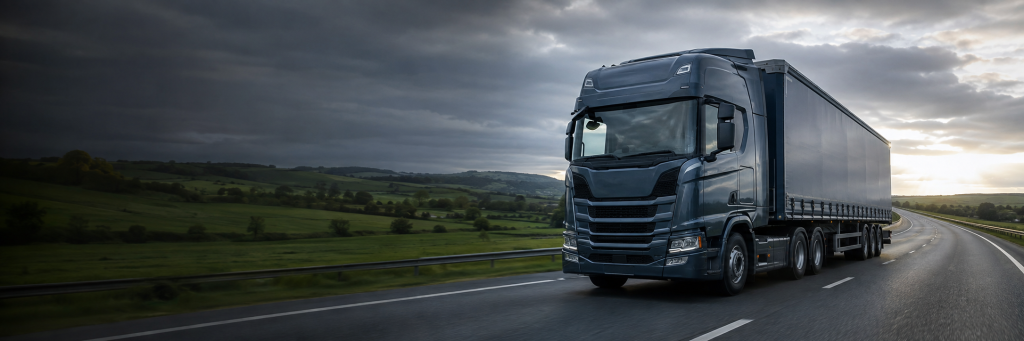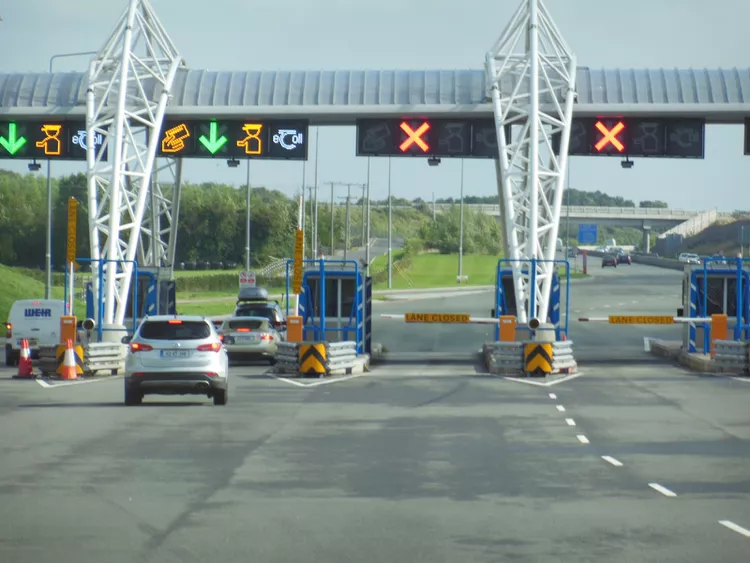
Barrier-free tolling (also called open-road tolling or free-flow tolling) removes the need for vehicles to slow down, stop, and restart at toll plazas. For heavy goods vehicles (HGVs), that change has a surprisingly large impact on fuel use because of how much energy is involved in moving heavy loads.
Here’s how it saves fuel:
Eliminates stop-start driving
HGVs burn a lot of fuel when accelerating from low speeds. A fully loaded truck can weigh 30–40 tonnes, and getting that mass back up to cruising speed requires significant engine power and fuel. Barrier-free systems let trucks maintain a steady speed, avoiding that repeated acceleration cycle entirely.
Reduces idling time
At traditional toll booths, trucks often idle while waiting in queues. Idling a large diesel engine can burn roughly 2–3 liters of fuel per hour. Even short delays add up across fleets and over time. Free-flow tolling removes queues, so that fuel waste disappears.
Maintains optimal engine efficiency
Truck engines are most fuel-efficient at steady speeds (typically in higher gears on open roads). Slowing down for tolls forces gear changes and suboptimal engine loads. Keeping a constant speed keeps the engine operating in its most efficient range.
Improves traffic flow
Toll plazas create bottlenecks, causing ripple effects—vehicles brake, bunch up, and then accelerate again. Barrier-free systems smooth traffic flow across entire corridors, reducing unnecessary speed fluctuations that increase fuel consumption.
Cuts congestion-related fuel waste
Where toll plazas are busy, congestion can extend well beyond the toll point. Eliminating the plaza removes that choke point, reducing overall fuel burned in traffic delays.
Rough impact
Studies in transport engineering generally find:
-
Fuel savings for HGVs in the range of 5–15% at former toll points
-
Even higher savings on heavily congested routes
-
Additional benefits from reduced journey time and lower emissions (CO₂, NOₓ, particulates)