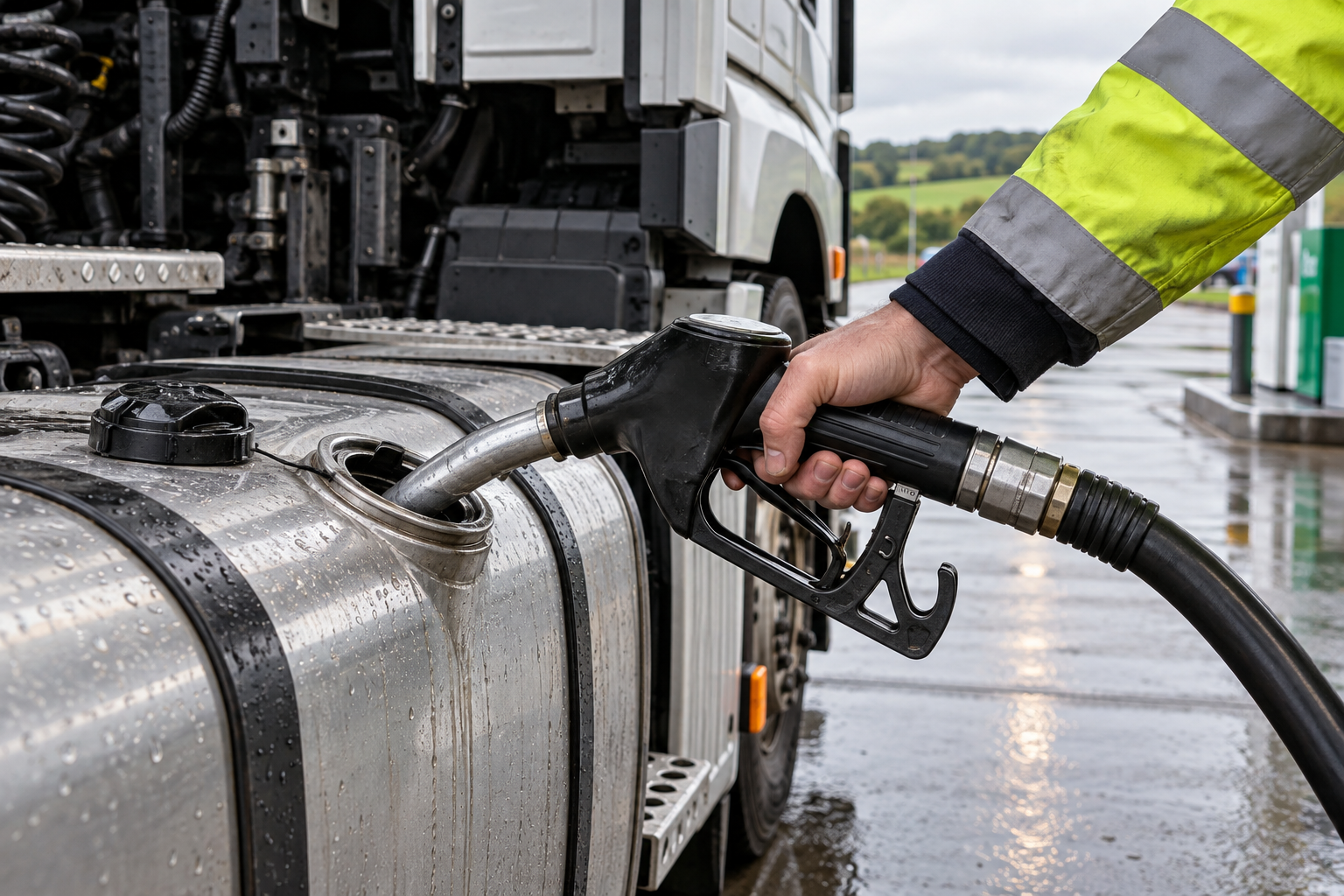
Irish hauliers are seeing little relief in their fuel bills despite falling crude oil prices, as pressure on diesel production and supply keeps the cost of the finished fuel elevated.
The difference matters for operators facing calls to reduce transport rates whenever international oil prices fall. A cheaper barrel of crude does not necessarily mean a comparable reduction in diesel purchased through a fuel card or delivered to a depot.
According to the International Road Transport Union (IRU), crude oil delivered into Europe had fallen by almost a third since early October, while diesel prices had declined by only around a tenth in its 13 November update.
Cheaper crude, expensive diesel
Crude oil is the raw material. Before it can power a truck, it must be refined into diesel, transported, stored and distributed.
Each stage adds costs, while the wholesale diesel price also reflects how much finished fuel is available relative to demand.
The European Central Bank (ECB) reports that disruption in the Middle East and outages in Russia have strained refinery operations and supplies of refined products. Recovering crude flows therefore do not automatically restore diesel production.
This helps explain how oil prices can fall while diesel remains expensive: the raw material becomes cheaper, but the capacity to turn it into the required fuel remains constrained.
The widening gap
A key measure is the “crack spread” — the difference between the price of a refined fuel and the crude benchmark.
The ECB says European diesel spreads surged to around three times their pre-Middle East conflict levels. A wider spread can offset part of the benefit of falling crude prices. www.ecb.europa.eu
This difference should not be treated as pure refinery profit, as it also has to cover processing costs. Nevertheless, it illustrates why following Brent crude alone gives an incomplete picture of the pressures on haulage fuel bills.
- Every key deadline: diesel rebate, fuel excise, carbon tax
- Tick-box checklist for tacho, CVRT, CPC & operator licence
- Where drivers get caught at RSA roadside checks
Exchange rates add another variable. International oil and diesel are traded in dollars, meaning a weaker euro can reduce the savings reaching European buyers. The IRU identifies recent euro weakness as another factor limiting price relief.
Limited relief at Irish pumps
AA Ireland’s November survey put average retail diesel at €2.13 per litre, down just 1.87 cent from October. That modest reduction followed an increase of 20.56 cent in October. theaa.ie
These are retail averages rather than the prices individual hauliers pay through bulk supply or fuel-card agreements. However, they show how little of the earlier increase has been reversed.
Taxes and distribution costs also remain part of the final price. Fixed per-litre duties do not fall alongside crude, so a percentage reduction in oil prices cannot translate directly into the same percentage reduction at the pump.
What this means for hauliers
Operators should base fuel-cost discussions with customers on the diesel prices they actually pay and the agreed benchmark in their contracts.
A fuel surcharge linked to a transparent diesel index provides a clearer basis for adjustments than headlines about crude oil.
The sums remain significant. An illustrative five-cent increase in the net cost of each litre adds €500 to the bill for every 10,000 litres purchased.
For Irish hauliers, the developments to watch are sustained reductions in wholesale diesel prices in euro, improving refinery output and more reliable supplies. Until those improvements reach supplier invoices, falling crude prices offer limited grounds for assuming that haulage operating costs have fallen.