Irish hauliers undertaking domestic transport work in Spain will need to prepare for a new digital freight documentation requirement coming into force on Monday, 5 October 2026.
Spain’s Electronic Administrative Control Document, known as DeCA, becomes mandatory for affected domestic road freight operations, including cabotage carried out by foreign operators. Spain’s Transport Ministry has confirmed the implementation date.
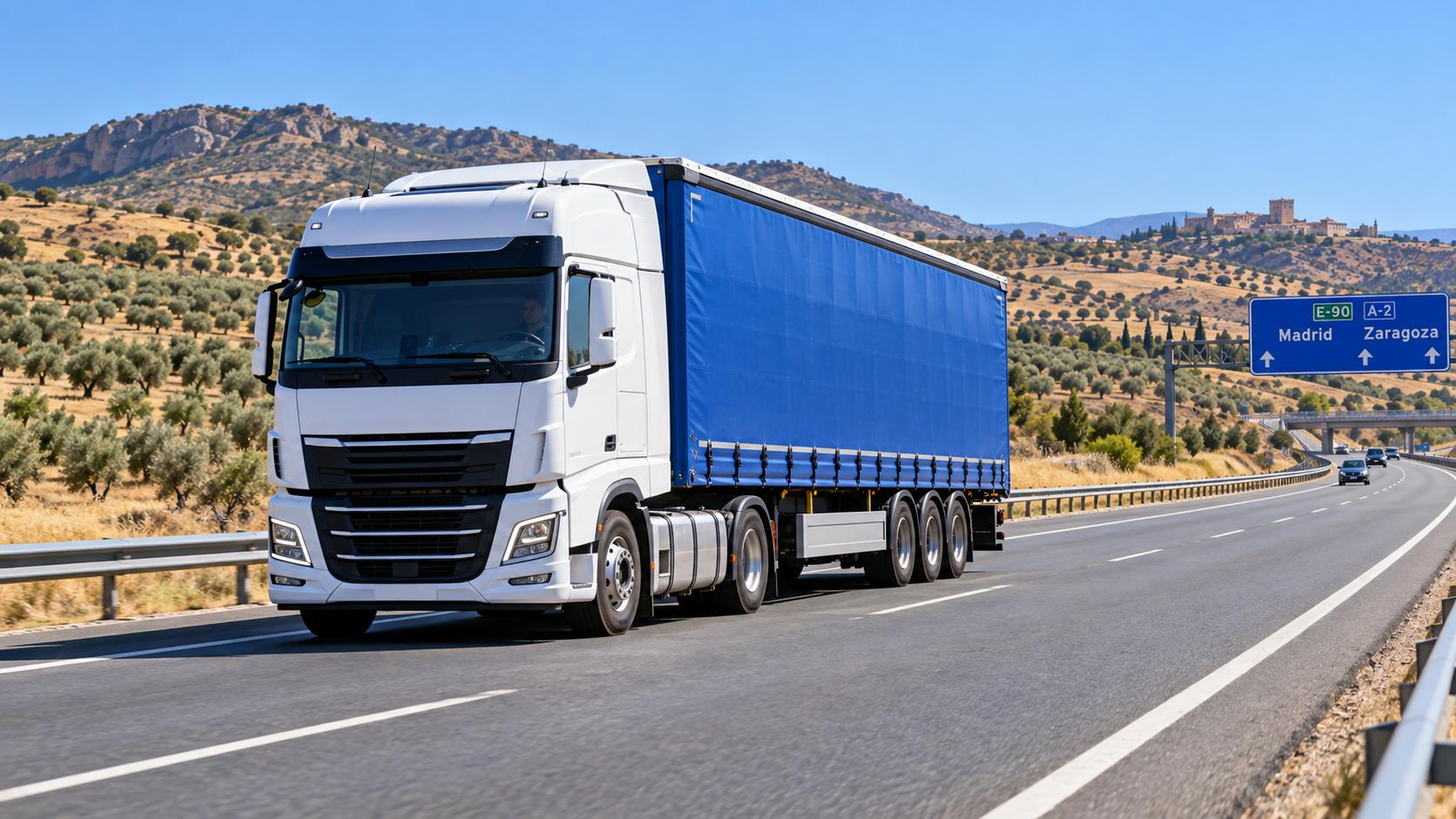
For Irish operators, the distinction is straightforward: international loads between Ireland and Spain are excluded from this particular obligation, while a separate load collected and delivered within Spain falls within its scope. Spain’s implementing resolution expressly includes cabotage and excludes international transport.
An Irish truck delivering to Madrid from Ireland would therefore be outside the DeCA requirement for that journey. If it subsequently takes a domestic load from Madrid to Barcelona, that operation requires a compliance check.
DeCA is the digital version of the administrative document accompanying affected freight movements. The required information includes the contractual consignor and actual carrier, their tax identification details, the collection and delivery locations, the nature and weight of the goods, the transport date, and the registrations of the truck and trailer.
The document must be generated electronically before transport begins. Under the standard DeCA arrangements, it must be a digitally generated PDF of no more than 5 MB, containing a QR code linking directly to the document. Simply scanning existing paper paperwork will not meet the requirement.
Drivers may carry an electronic copy on a mobile device or a printed copy containing the QR code. Inspectors must be able to download the PDF directly without entering login credentials. Electronic records must be retained for at least one year.
Responsibility for the documentation involves both the actual carrier and the party contracting directly with it. The latter may be the customer, a forwarder or another transport company. Irish hauliers should agree who will generate the document and ensure the necessary information is supplied.
The practical priority is to resolve those arrangements before accepting Spanish domestic work. Operators should check their document system, brief dispatch staff and drivers, and test that the QR code works before departure.
For hauliers combining international deliveries with cabotage, the key is to assess each load separately. The paperwork arrangements for the journey into Spain should not automatically be assumed sufficient for the next domestic job.