A pioneering road safety initiative in Italy is demonstrating how practical, hands-on training can help HGV drivers, transport operators and other industry professionals reduce risks and improve safety across the heavy-duty transport sector.
The Safer Truck initiative, developed by Efficient Driving Enterprise in Italy, has been recognised by the European Road Safety Charter as its November Good Practice of the Month.
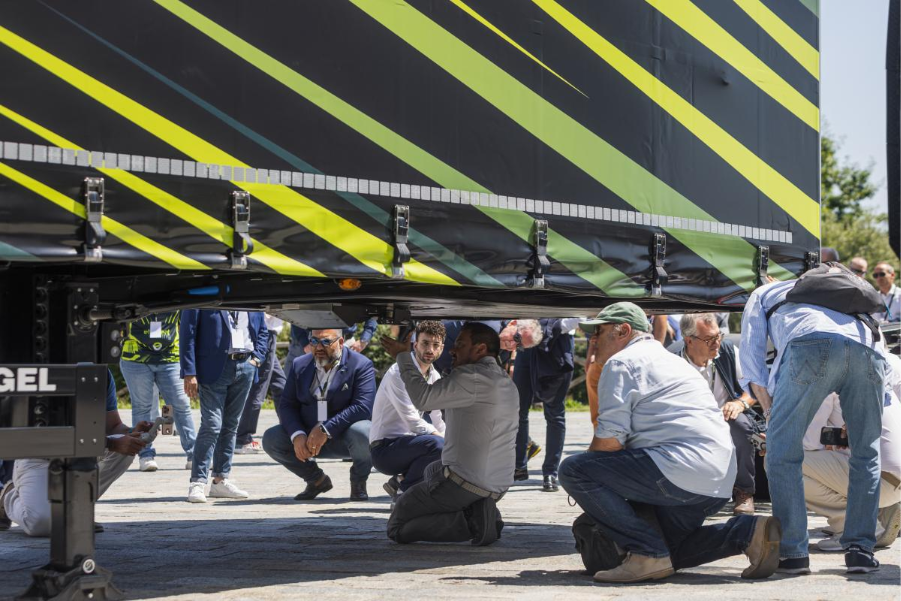
The project takes a different approach to traditional road safety training by transforming a real articulated truck into a mobile learning environment, allowing participants to experience and understand the risks associated with everyday transport operations.
Its central message is straightforward: improving HGV safety requires more than modern vehicle technology and written procedures. It also depends on the decisions made by drivers, loaders, fleet managers and other transport professionals before and during every journey.
Bringing road safety training into the real world
Heavy-duty vehicles are essential to Europe’s economy, moving goods between manufacturers, distribution centres, retailers and consumers.
However, the sector continues to face significant road safety challenges, with human factors, operational pressures and inconsistent safety practices contributing to incidents involving trucks.
The Safer Truck project was developed to address these challenges through practical demonstrations and realistic operational scenarios.
Rather than relying exclusively on classroom presentations, the initiative allows participants to examine safety risks directly on a fully equipped articulated vehicle.
Training focuses on several critical areas, including:
- Load securing: Understanding how poorly secured or incorrectly distributed loads can affect vehicle stability and road safety.
- Vehicle preparation: Highlighting the importance of pre-journey inspections and identifying potential defects before departure.
- Vehicle stability: Demonstrating how load distribution, vehicle movement and driving behaviour influence rollover risks.
- Driver behaviour: Examining how everyday decisions, distraction and operational pressures can contribute to dangerous situations.
- Advanced Driver Assistance Systems (ADAS): Helping drivers understand how modern safety technologies work and their limitations.
- Risk assessment: Encouraging transport professionals to identify and address potential hazards before they result in incidents.
The emphasis is on translating technical safety information into practical knowledge that drivers and operators can apply during their working day.
Industry collaboration delivers practical results
The initiative was officially launched on 10 July 2025 at the Arese test circuit in Italy.
Developed in collaboration with organisations from the transport, vehicle technology and road safety sectors, the project brings together specialist equipment, modern vehicle technologies and professional training expertise.
The Italian Traffic Police also supported the initiative, participating in its launch and helping to promote its road safety message.
Since its introduction, Safer Truck has reached 80 participants directly through training sessions, demonstrations and stakeholder presentations.
A further 95 representatives from the transport, road safety, training and commercial vehicle sectors attended the official launch.
Project evaluations indicated increased awareness of important safety risks, particularly those associated with load securing, vehicle stability and unsafe operational practices.
The initiative also received the Italian InnovationT Award 2025, recognising its innovative approach to improving safety in the transport industry.
Lessons for Irish hauliers
Although developed in Italy, the principles behind Safer Truck are directly relevant to Irish haulage operators.
Fleet managers and transport companies face many of the same challenges, including demanding delivery schedules, vehicle maintenance requirements, driver training obligations and the need to manage workplace risks.
- Every key deadline: diesel rebate, fuel excise, carbon tax
- Tick-box checklist for tacho, CVRT, CPC & operator licence
- Where drivers get caught at RSA roadside checks
For Irish operators, the project highlights the potential benefits of making safety training more practical and closely connected to everyday transport operations.
For example, a training programme built around a working articulated truck could demonstrate how incorrect load distribution affects braking and stability, how safety systems respond to hazards, and why thorough vehicle inspections remain essential.
It could also help reinforce the message that road safety is not solely the responsibility of the driver.
Loaders, transport planners, workshop personnel, safety managers and company directors all have important roles to play.
The project offers a model that Irish transport associations, training providers, vehicle manufacturers and fleet operators could potentially adapt to local conditions.
Safety begins before the truck leaves the yard
One of the strongest messages emerging from the initiative is that many road safety risks develop long before a truck reaches a public road.
Incorrect loading, inadequate vehicle checks, poor journey planning and insufficient understanding of vehicle safety systems can all increase the likelihood of incidents.
By bringing these risks into a practical training environment, Safer Truck helps participants understand the consequences of everyday operational decisions.
The initiative also demonstrates the importance of continuous professional development, particularly as commercial vehicles become increasingly sophisticated.
Modern trucks feature a growing range of electronic safety systems, but technology alone cannot eliminate the risks associated with poor operating practices.
Drivers and fleet operators must understand both the capabilities and limitations of these systems.
A model for improving HGV safety across Europe
The European Road Safety Charter recognised Safer Truck for its practical approach to improving safety awareness and encouraging shared responsibility throughout the transport chain.
Its mobile training platform also provides a model that could be replicated in other European countries using locally available vehicles, equipment and training expertise.
For the Irish haulage industry, the initiative reinforces a fundamental road safety principle: the safest truck is not simply the one equipped with the latest technology, but one that is properly maintained, correctly loaded and operated by a well-trained driver supported by a safety-conscious organisation.
As transport operators continue to invest in safer fleets, initiatives such as Safer Truck demonstrate that practical training and a strong workplace safety culture remain essential to reducing accidents and protecting all road users.
Further information: The Safer Truck project is featured on the European Road Safety Charter website.