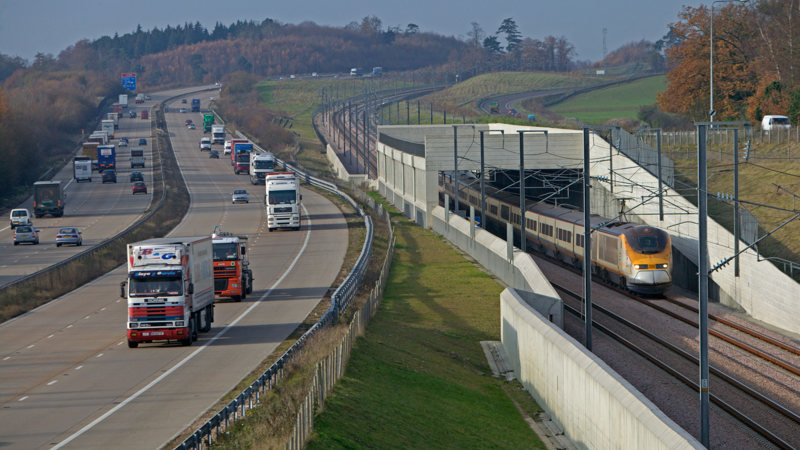
Operation Brock has returned to the M20 in Kent, ahead of the summer getaway.
The contraflow system will be in place on the M20 coastbound between Maidstone and Ashford for around 6 weeks.
It means there will be a reduced speed limit between Junctions 8 and 9, with dedicated lanes for HGVs to queue.
Operation Brock is a traffic management system used in Kent, England to keep roads operating during major disruption to cross-Channel travel via the Port of Dover and the Channel Tunnel (Eurotunnel).
It was originally developed in preparation for the UK’s departure from the EU, when there were concerns that additional border checks could cause long queues of freight vehicles.
Today, it is used whenever there is significant disruption affecting Channel crossings, such as bad weather, ferry delays, industrial action, or periods of exceptionally heavy traffic.
How it works
The central feature of Operation Brock is a contraflow system on the M20 motorway:
- Lorries (HGVs) travelling to Europe queue on the coastbound carriageway.
- Other traffic is diverted onto the opposite carriageway, allowing vehicles to continue travelling in both directions.
- Speed limits are reduced (typically 50 mph for general traffic, with lower limits in some areas).
- If queues become too long, additional holding areas—such as Manston Airfield or other designated sites—can be brought into use.
Why it replaced Operation Stack
Before Brock, Kent used Operation Stack, which often involved closing large sections of the M20 completely so thousands of lorries could park on the motorway.
Operation Brock was introduced because it:
- keeps the M20 open in both directions for most traffic,
- reduces disruption for local residents and businesses,
- provides a more flexible response depending on the scale of disruption. KKent Prepared+1
Rules for HGVs when Operation Brock is active:
- Europe-bound HGVs must follow designated routes on the M20/A20.
- Drivers attempting to bypass the system can be turned around and fined.
- Drivers are advised to carry enough food, water, and supplies because delays can be lengthy.
Yes. Although it was designed with Brexit-related disruption in mind, Operation Brock remains a contingency plan. Authorities activate it during periods when delays at Dover or the Channel Tunnel are expected to cause severe congestion. The UK government has stated that it continues to work with local partners on longer-term alternatives, including digital freight management and additional off-road holding capacity to reduce reliance on Brock.
In short, Operation Brock is not a permanent road layout. It is an emergency traffic management scheme that aims to keep Kent’s road network functioning when cross-Channel freight traffic becomes heavily disrupted.