Italy has postponed planned restrictions on Euro 5 diesel vehicles in four northern regions for another year, providing welcome breathing space for transport operators, including Irish hauliers travelling to northern Italy.
The Italian Government has confirmed that the proposed restrictions, originally scheduled to take effect on 1 October 2026, will now be deferred until 1 October 2027.
The decision follows concerns about the economic consequences of restricting older diesel vehicles, particularly for businesses, transport operators and commercial vehicle fleets.
The postponement was formally introduced under Decree-Law No. 167 of 28 September 2026, which came into force the following day.
Four northern regions affected
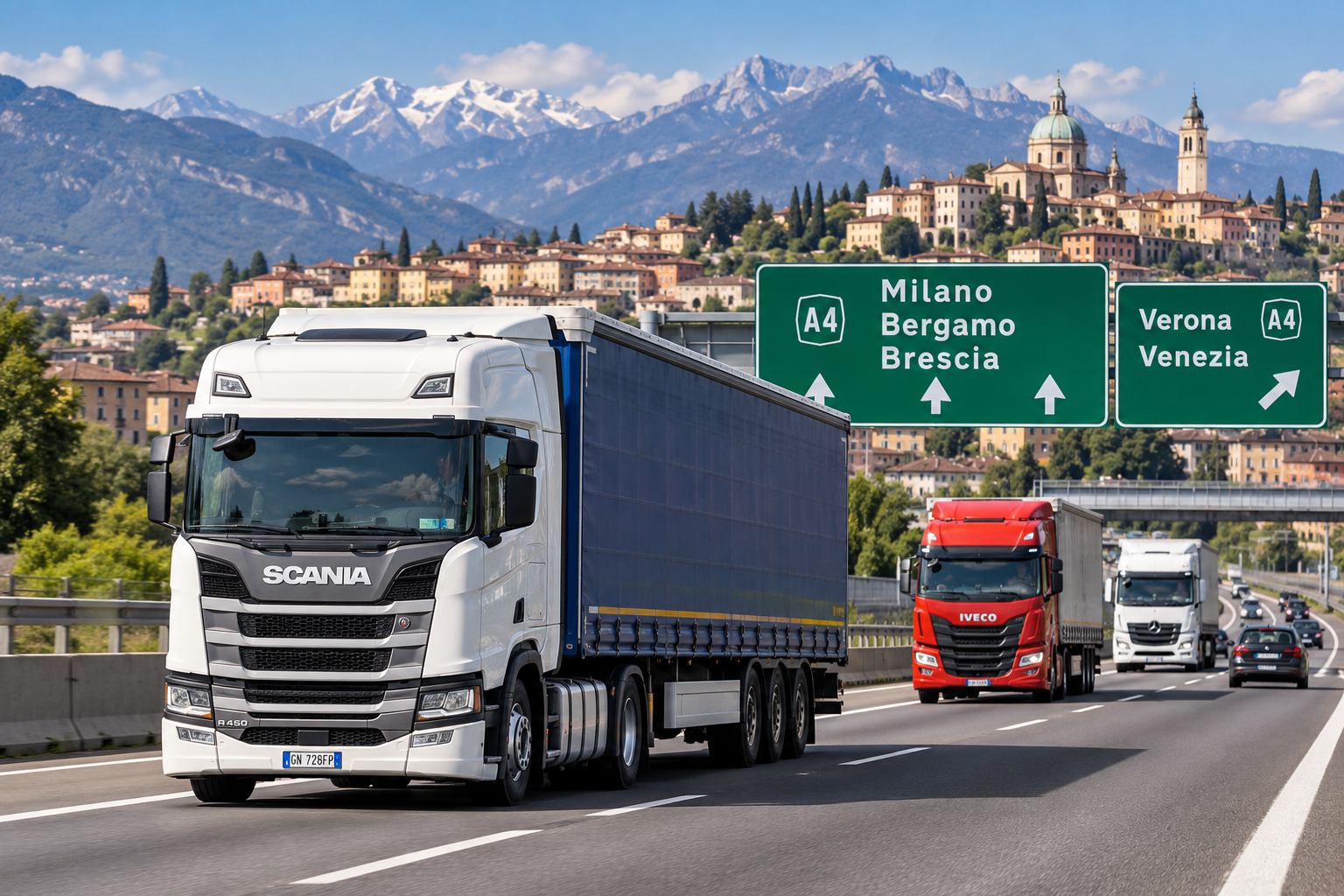
The restrictions concern four of Italy’s most economically important regions:
- Lombardy, including Milan, Bergamo, Brescia and Monza.
- Piedmont, including Turin.
- Veneto, including Venice and Verona.
- Emilia-Romagna, including Bologna, Parma and Modena.
These regions form part of the Po Valley, one of Europe’s most heavily industrialised areas, where air pollution has been a longstanding concern.
The proposed restrictions cover Euro 5 diesel passenger cars and commercial vehicles, including light commercial vehicles, medium-duty trucks and heavy goods vehicles in categories N1, N2 and N3.
The legislation primarily targets urban areas in municipalities with populations exceeding 100,000, rather than imposing a blanket ban across northern Italy.
Government acknowledges impact on transport industry
The Italian Government justified the postponement by highlighting the potential disruption to mobility, transport services and economic activity.
The authorities have recognised that introducing restrictions at this stage could have significant consequences for businesses already facing substantial operating costs.
Italian Infrastructure and Transport Minister Matteo Salvini welcomed the decision, which gives regional administrations additional time to introduce alternative measures to improve air quality without necessarily removing Euro 5 vehicles from the road.
Several regions have already proposed alternative environmental programmes, including incentives for cleaner fuels, improvements to public transport and measures to reduce emissions from other sources.