Government discussions with the freight and logistics industry are continuing as escalating fuel costs place mounting financial pressure on Irish transport operators ahead of Budget 2027.
FTA Ireland has met with Minister of State Seán Canney, Department officials and industry representatives to discuss rising fuel costs, the Road Transporters Support Scheme (RTSS) and the wider challenges confronting commercial transport businesses.
The talks come at a critical time for the Irish haulage industry, with elevated fuel prices increasing operating costs and putting significant pressure on company cash flow.
According to FTA Ireland, the meeting highlighted the importance of maintaining a resilient, competitive and sustainable freight and logistics sector, particularly as operators simultaneously face increasing costs and pressure to invest in decarbonisation.
Fuel costs putting cash flow under pressure
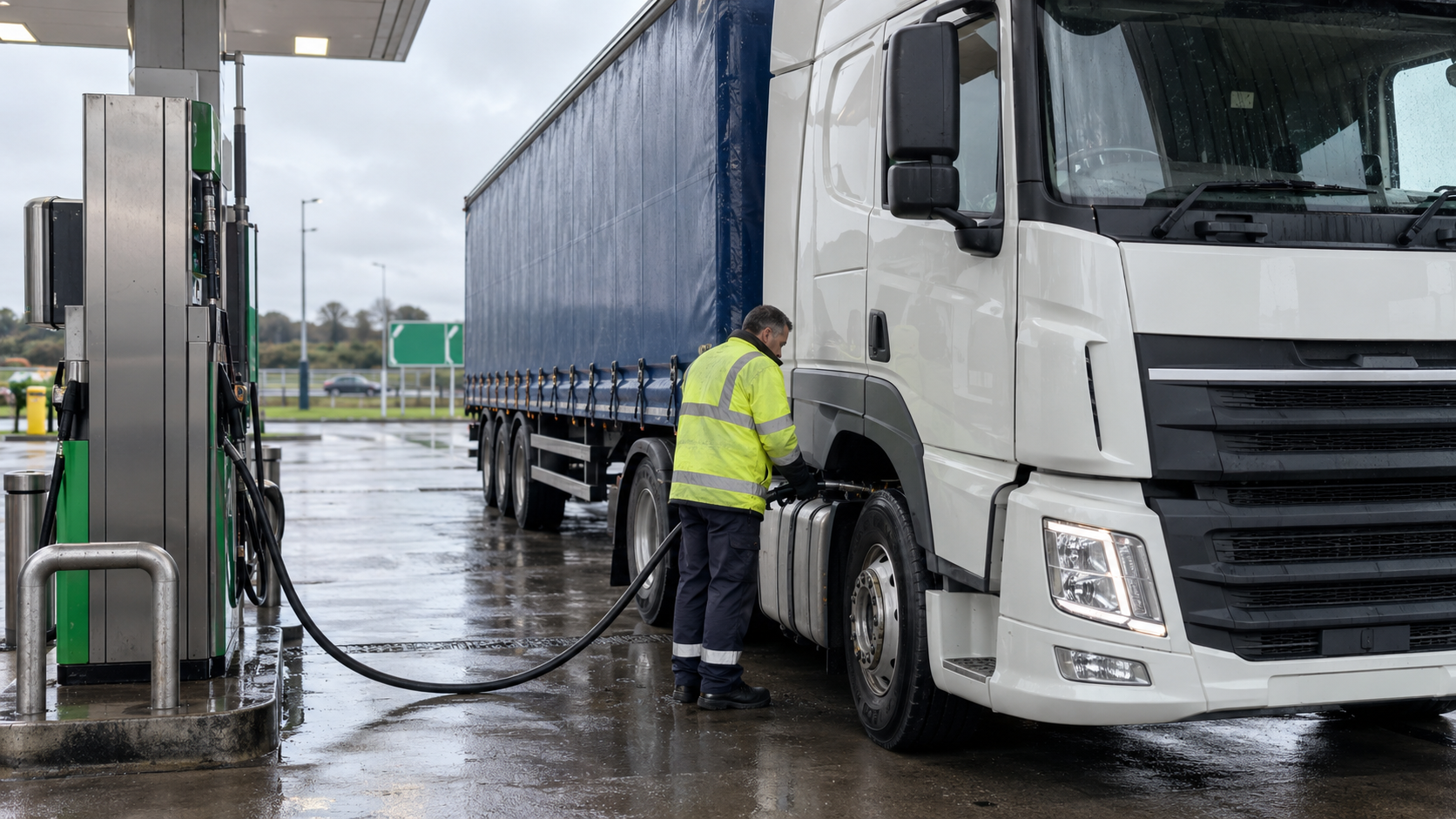
Fuel remains one of the largest operating costs for an Irish haulage business, meaning substantial movements in diesel prices can quickly feed through to company finances.
This can be particularly challenging for operators working on fixed-price contracts or where fuel surcharge mechanisms do not immediately reflect increases at the pump.
FTA Ireland used its meeting with Government to highlight the cash-flow and operating difficulties now being experienced across the sector.
The organisation is calling for the needs of freight and logistics operators to be recognised as Government considers possible support measures.
Outstanding RTSS payments raised with Government
Significantly, FTA Ireland also raised concerns surrounding the Road Transporters Support Scheme, including outstanding applications and payments.
Issues surrounding appeals and requests relating to late applications were also discussed, reflecting feedback FTA Ireland says it has received directly from its members.
Department officials acknowledged a number of the difficulties experienced by operators and confirmed that further processing and appeals arrangements are progressing.
For affected transport businesses, however, the speed at which outstanding cases are resolved will be important, particularly against the backdrop of current fuel costs and pressure on working capital.
Budget support remains on the table
No specific new financial support measures were confirmed following the meeting.
However, FTA Ireland says discussions concerning potential Budget supports remain ongoing, with Minister Canney committing to provide a further update in the coming days.
That will be closely watched by the haulage industry ahead of Budget 2027.
The sector has been calling for measures capable of providing meaningful relief from current diesel costs rather than simply preventing further increases.
Questions surrounding fuel excise, targeted assistance for commercial operators and the future of transport support schemes are therefore likely to remain firmly on the agenda.
Supporting hauliers while pursuing decarbonisation
FTA Ireland also stressed that Ireland’s transition towards lower-carbon freight cannot be considered separately from the commercial realities facing transport businesses.
Operators are being encouraged to invest in cleaner vehicles, alternative fuels and other technologies to reduce emissions, while simultaneously dealing with substantially increased day-to-day operating costs.
Maintaining viable transport businesses is therefore central to maintaining Ireland’s essential freight capacity and delivering the longer-term transition towards lower-carbon transport.
FTA Ireland welcomed what it described as constructive engagement with Government and the acknowledgement of the challenges currently facing freight and logistics operators.
The organisation said it will continue working with Government and other stakeholders to support business resilience, protect essential freight capacity and ensure that progress towards decarbonisation can continue alongside a competitive transport sector.
For Irish hauliers, attention will now turn to the promised Government update — and ultimately to whether the discussions translate into concrete measures in Budget 2027.