Europe’s Entry/Exit System (EES) is now fully operational, bringing digital border records to journeys into and out of the Schengen area. For Irish hauliers, its practical impact depends on the nationality of the driver behind the wheel.
The system began a phased rollout in October 2025 and became fully operational at participating countries’ external borders on 10 April 2026. It records the arrival and departure of most non-EU nationals travelling for a short stay, replacing passport stamps with a digital record. At the border, it collects details from the traveller’s passport, a facial image and fingerprints.
Irish citizens are not registered under EES. However, a haulier employing UK nationals or other non-EU drivers for continental work needs to understand how the system affects them. A UK driver entering the Schengen area for a short stay will generally be registered on entry and exit. EES also provides border authorities with a record of the time that driver has spent in the area.
That matters because the familiar limit of 90 days in any rolling 180-day period still applies to short stays. EES has not introduced that limit or changed it; it makes entries and exits easier to verify. Operators who regularly send UK drivers into mainland Europe should keep their own accurate records of each driver’s Schengen days rather than relying on a count made at the roadside or border.
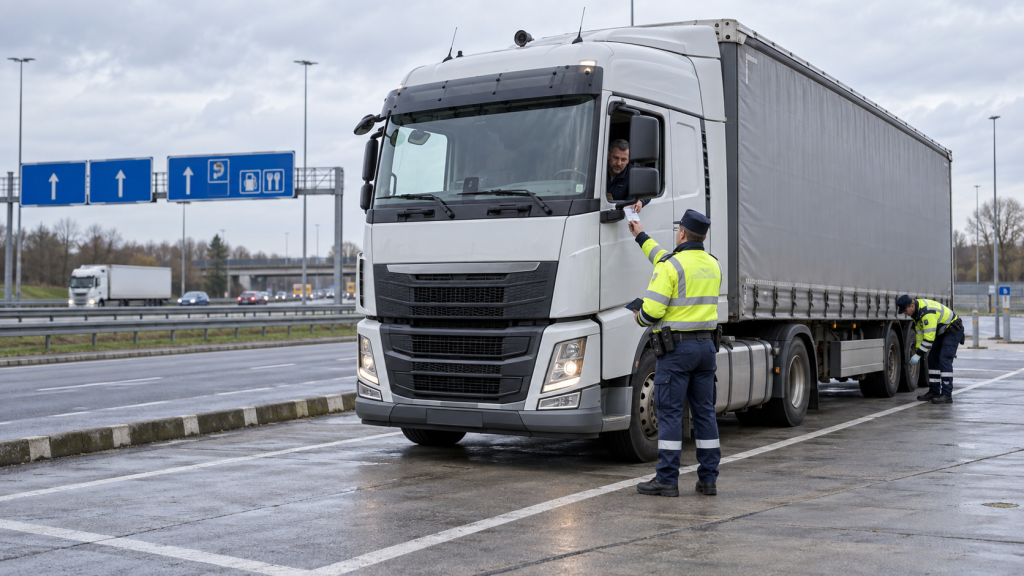
Journey planning is another consideration. Where EES registration applies, drivers may need to provide biometric information as part of their border checks. For journeys through Dover or Eurotunnel, the relevant checks take place before departure from the UK. Hauliers should account for the process when planning collections, deliveries and onward connections, especially if a driver has not previously registered.
Ireland does not participate in EES. A driver arriving directly into Ireland is therefore not registered in the system at an Irish port or airport. The distinction is between travel to Ireland and crossing an external border of a country using EES; it is particularly relevant to operators whose routes take drivers through Great Britain and onward to continental Europe.
EES should also not be confused with ETIAS, the separate European travel authorisation planned for eligible visa-exempt visitors. ETIAS is not yet in operation. The EU expects it to launch in the last quarter of 2026, but has not announced a firm start date.
For fleet managers, the immediate task is straightforward: know which drivers fall within EES, check the documents they need for each route, monitor applicable Schengen day limits and allow time for border checks. As digital records replace passport stamps, accurate driver and trip records will become even more valuable to operators running regular continental services.