Irish hauliers weighing up investment in zero-emission trucks need greater certainty on charging, operating costs and financial support, according to the priorities outlined in a new European Clean Trucking Alliance (ECTA) policy paper.
The paper, Our Road to Zero-Emission Trucks, sets out the alliance’s blueprint for accelerating the transition to cleaner road freight, bringing vehicle regulation, infrastructure and operator incentives into a coordinated policy framework.
The ECTA argues that the transition represents both a climate imperative and an opportunity to strengthen Europe’s industrial competitiveness and energy security. Its central message is that ambition must be matched by the conditions that allow transport businesses to invest.
Making the business case work
For Irish operators, the practical question is how a zero-emission truck will fit into the business: what it can carry, where it can charge and whether the investment can be supported by the work available.
ECTA’s paper addresses seven connected areas, including heavy-duty vehicle CO₂ standards, emissions-based road tolls, vehicle weight limits, public and depot charging, electricity grid readiness, the implementation of ETS2 and financial incentives for operators.
These are policy recommendations from the alliance, rather than an announcement of new obligations or funding entitlements for Irish hauliers.
The emphasis on coordinated action is relevant to fleet investment decisions. An operator considering an electric truck must assess the vehicle alongside charging equipment, electricity supply, route requirements and customer contracts.
A purchase incentive alone cannot resolve a depot power constraint, while access to charging does not automatically make the vehicle affordable.
Charging and payload matter
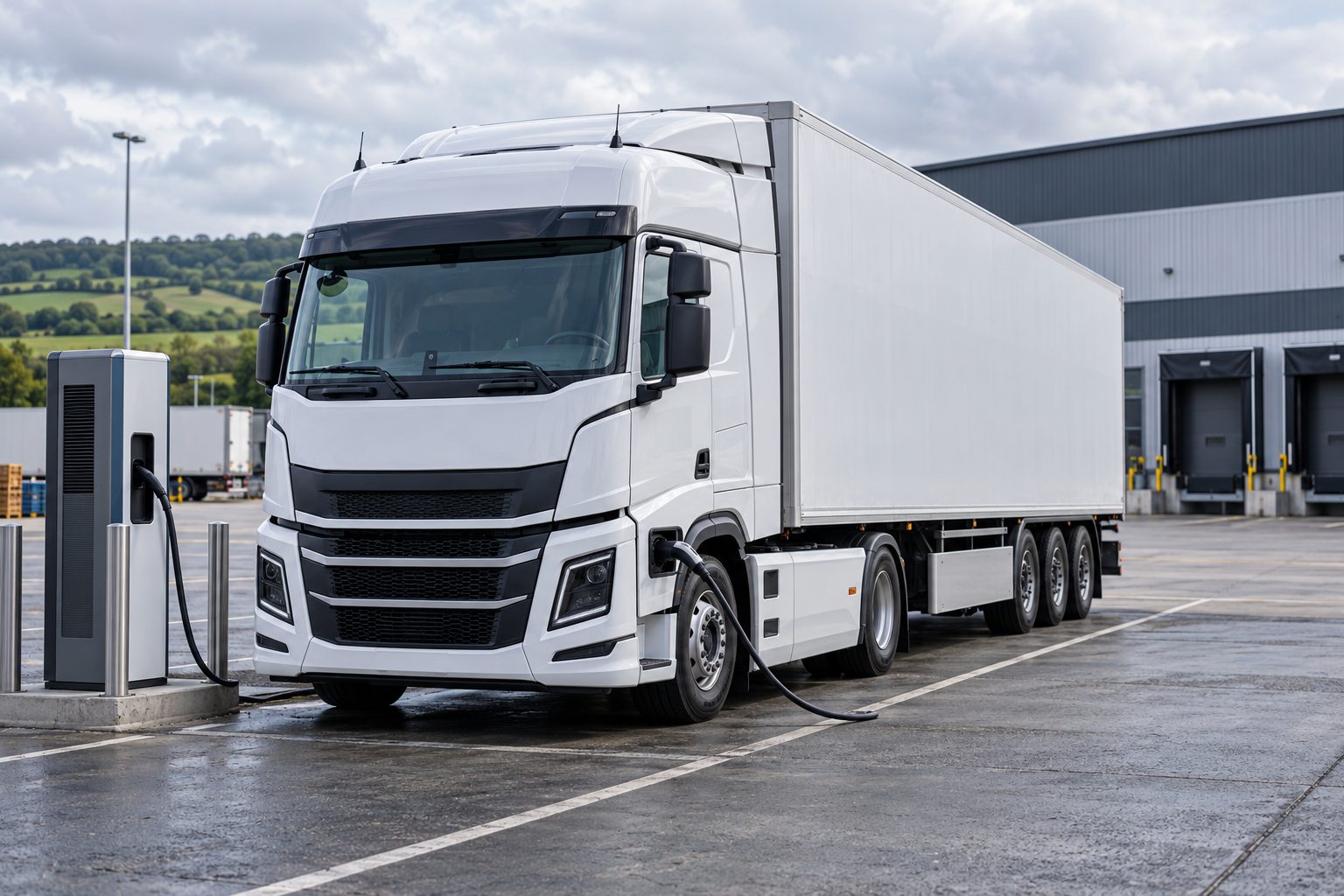
The ECTA identifies both public and depot charging as priorities, alongside the readiness of electricity networks to support fleet electrification.
For an Irish haulier assessing a potential purchase, this means establishing what charging capacity is available at the operating base and how charging would fit around loading, deliveries and vehicle downtime.
International operators also need to examine charging availability along their actual routes. The relevant issue is whether suitable infrastructure supports the journeys their trucks undertake.
Vehicle weight limits are another element of the paper. For businesses carrying weight-sensitive loads, the relationship between vehicle weight and available payload is a commercial consideration that needs to be included in any assessment.
Certainty before investment
The inclusion of CO₂-based tolls and ETS2 places future operating costs alongside the initial purchase decision. Irish hauliers undertaking continental work will need to consider how policy developments could affect route costs and the relative economics of different vehicles.
ECTA’s wider call is for regulatory certainty, coordinated policies and financial support that make zero-emission road freight more accessible and affordable.
For Irish operators, the practical next step is to assess suitable routes, depot electricity requirements and whole-life costs together. The strength of the investment case will depend on how closely vehicle capability, infrastructure and available support match the needs of the business.