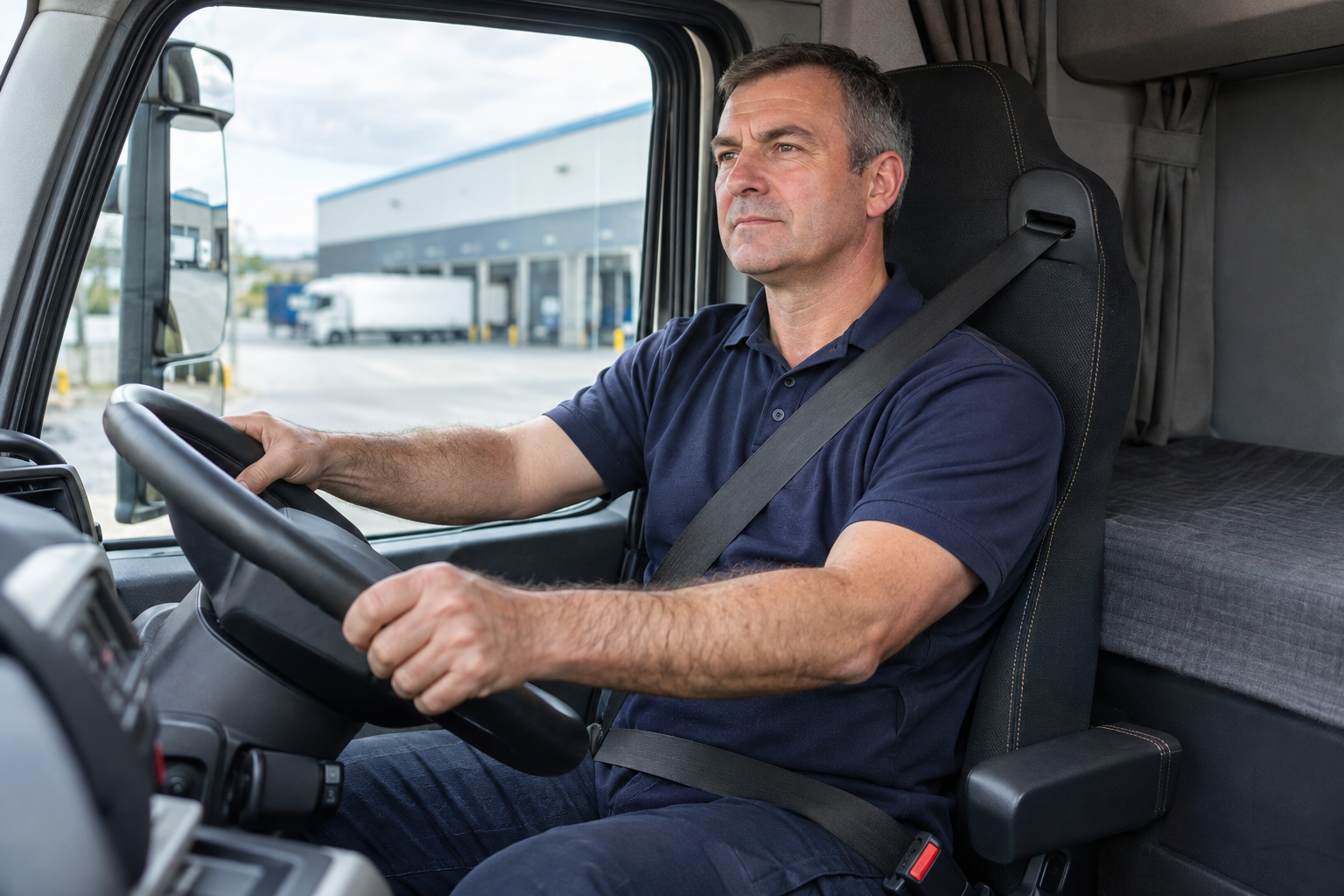
Drivers and passengers are being reminded that wearing a seat belt remains one of the most effective ways to reduce the risk of death or serious injury in a road collision.
The European Road Safety Charter has highlighted the continuing importance of seat belts, warning that rear-seat passengers and the incorrect use of child restraints remain significant road safety concerns.
Research cited by the Charter indicates that wearing a seat belt reduces the risk of fatal injury by approximately 60% for front-seat occupants and 44% for rear-seat occupants, compared with travelling unrestrained. Despite this protection, around 27% of car occupants killed in crashes in 2023 were not wearing a seat belt. European Road Safety Charter
Protection when a collision occurs
While technologies such as automatic emergency braking aim to prevent a collision, seat belts help protect occupants when a crash happens.
They restrain the body, spread collision forces across stronger areas and reduce the danger of being thrown from the vehicle. Their effectiveness depends on occupants fastening them and wearing them correctly.
For professional drivers and fleet operators, this makes seat belt use an essential part of everyday road safety. Checks before departure should include making sure everyone travelling in the vehicle is properly restrained.
Rear seats remain a concern
European research shows a clear difference between seat belt use in the front and rear of vehicles.
According to the Charter, motorway observations from the EU-funded Trendline project recorded driver wearing rates above 97% in 13 of 17 participating countries. However, rear-seat wearing rates exceeded 90% in only four of the 16 countries providing those observations.
The ESRA3 survey also found that 32% of European drivers admitted to travelling in a rear seat without a belt at least once during the previous 30 days. European Road Safety Charter
The back seat should never be treated as a reason to leave a belt unfastened. An unrestrained passenger can be thrown forward in a collision, endangering people seated ahead as well as themselves.
Whether travelling to work, sharing a lift or making a family journey, every passenger needs appropriate protection.
A child seat must be used correctly
For children who have not yet reached the appropriate size for an adult seat belt, a suitable child restraint is essential.
- Every key deadline: diesel rebate, fuel excise, carbon tax
- Tick-box checklist for tacho, CVRT, CPC & operator licence
- Where drivers get caught at RSA roadside checks
Choosing the correct seat is only part of the task. It must also be compatible with the vehicle, installed according to the manufacturer’s instructions and adjusted correctly for the child.
The Charter highlights evidence of widespread misuse. Trendline inspections found that fewer than 60% of child restraints were being used correctly in several participating countries. European Road Safety Charter
Parents and carers should check the installation whenever a seat is moved between vehicles. Anyone uncertain about fitting or adjustment should seek help from a qualified child-seat adviser.
Technology supports a simple habit
Modern restraint systems can include pretensioners that rapidly remove belt slack and load limiters that help manage forces on the chest. Some systems also work with collision-warning and braking technology to prepare occupants for an anticipated impact.
These developments strengthen the protection available, but fastening the belt remains the essential first step.
As Christmas approaches, fleet safety briefings and family travel preparations provide an opportunity to reinforce that habit. Before setting off, check that every occupant is correctly restrained, that children have suitable seats and that any defective belt or buckle is reported and repaired.
A busy schedule or a short trip should never make fastening a seat belt an afterthought.