With diesel costs continuing to put pressure on haulage margins, maintaining correct tyre pressures across trucks and trailers could be one of the simplest and most cost-effective ways for operators to reduce fuel consumption, extend tyre life and improve vehicle safety.
For Irish hauliers, fuel remains one of the biggest operating expenses. While much of the industry’s attention is focused on fuel-efficient engines, aerodynamic improvements and alternative fuels, one important area of potential savings is often overlooked — tyre pressure.
An HGV operating with underinflated tyres uses more fuel than necessary, while incorrect pressures can also accelerate tyre wear, increase operating temperatures and raise the risk of tyre failure.
Across a fleet of trucks and trailers covering hundreds of thousands of kilometres annually, even relatively small improvements in fuel efficiency can translate into significant financial savings.
Why tyre pressures matter
Tyres play a critical role in determining the rolling resistance of a heavy commercial vehicle.
Rolling resistance is the energy required to keep a tyre moving along the road. As a tyre rolls, its structure continually flexes and deforms, consuming energy in the process.
When tyre pressure falls below the recommended level, the tyre generally flexes more, increasing rolling resistance and requiring the engine to work harder to maintain speed.
The result is increased fuel consumption.
Underinflation can also generate excessive heat within the tyre structure, potentially damaging the casing and increasing the risk of premature failure.
For haulage operators, the consequences extend well beyond the additional diesel consumed.
Premature tyre replacement, roadside breakdowns, vehicle downtime and missed deliveries can all add to the cost of poor tyre maintenance.
The trailer tyre problem
While tractor units generally receive regular attention from drivers and maintenance teams, trailer tyres can sometimes be overlooked.
This is particularly relevant to operators running large trailer fleets, where trailers may be parked for extended periods, transferred between drivers or coupled to different tractor units.
A tractor unit may have correctly inflated tyres, but if the trailer is operating with several underinflated tyres, the combination can still suffer unnecessary rolling resistance and increased fuel consumption.
Trailer tyre pressures are especially important because trailers frequently operate under changing load conditions.
The correct inflation pressure must reflect the tyre manufacturer’s recommendations, axle loading, tyre specification and operating conditions.
A tyre that appears properly inflated during a visual inspection may still be significantly below its recommended pressure.
This is why regular pressure measurement, rather than visual inspection alone, is essential.
How much fuel could operators save?
The precise relationship between tyre pressure and fuel consumption varies according to tyre design, axle configuration, load, road conditions and the degree of underinflation.
However, the underlying principle is clear: maintaining correct tyre pressures helps minimise avoidable rolling resistance and fuel consumption.
Consider a typical long-distance HGV covering 120,000 kilometres annually and averaging 30 litres of diesel per 100 kilometres.
ILLUSTRATIVE ANNUAL FUEL SAVINGS
Diesel saved annually
540 L
Annual saving per HGV
€864
Illustrative calculation only. The 1.5% default is an assumed improvement, not a guaranteed or independently established saving from tyre pressure monitoring.
For a fleet of 20 vehicles operating under the same assumptions, that would represent a potential annual fuel-cost saving of €17,280.
Actual savings depend on how many tyres are currently underinflated and how effectively corrective maintenance reduces rolling resistance.
Tyre Pressure Monitoring Systems: Taking the guesswork out of maintenance
One increasingly important development is the use of Tyre Pressure Monitoring Systems (TPMS) on commercial vehicles.
These systems use sensors to monitor tyre pressures, and in some cases temperatures, providing drivers and fleet managers with warnings when readings fall outside predetermined limits.
Rather than relying exclusively on periodic manual checks, operators can identify developing problems while vehicles are in service.
Depending on the system installed, information may be displayed in the cab or transmitted remotely through a fleet management platform.
This can allow maintenance teams to identify a slow puncture or gradual pressure loss before it develops into a serious problem.
For trailer fleets, remote monitoring can be particularly valuable.
A trailer fitted with a compatible monitoring system can provide information about tyre condition even when it is being operated by different tractor units, subject to the system’s connectivity and configuration.
Some systems also allow fleet managers to review pressure trends across individual vehicles and identify tyres requiring repeated inflation.
This moves tyre maintenance away from a purely reactive approach towards preventative maintenance based on actual operating data.
Automatic tyre inflation systems
Another technology gaining attention in the commercial vehicle sector is the Automatic Tyre Inflation System (ATIS).
Unlike conventional TPMS, which primarily monitors and reports pressure, an automatic inflation system can maintain or restore tyre pressure using an onboard air supply.
These systems are particularly relevant to trailers, where multiple tyres can be monitored and inflation pressures maintained during operation.
Automatic inflation does not eliminate the need for inspections or maintenance, but it can help reduce the time tyres spend operating below their intended pressures.
However, the systems must be correctly specified and maintained, and a persistent air leak still requires investigation and repair.
More than fuel savings
The benefits of effective tyre pressure management extend beyond diesel consumption.
Correct inflation pressures can help operators achieve more consistent tyre wear, maximise usable tyre life and protect valuable tyre casings.
This is particularly important for operators using premium commercial vehicle tyres that may be suitable for regrooving and retreading.
Excessive heat caused by underinflation can damage the internal structure of a tyre, potentially reducing its suitability for subsequent retreading.
For fleets investing in tyre lifecycle management, protecting the casing is therefore an important financial consideration.
Correct tyre pressures also contribute to vehicle handling, braking performance and overall road safety.
While tyre pressure monitoring cannot prevent every tyre-related incident, early identification of pressure loss can reduce the likelihood of avoidable failures.
What should Irish hauliers be doing?
For operators looking to improve fuel efficiency through tyre management, the starting point should be a structured pressure maintenance programme.
This should include:
-
Establishing the correct cold inflation pressures for each tyre position, based on tyre manufacturer guidance and actual axle loads.
-
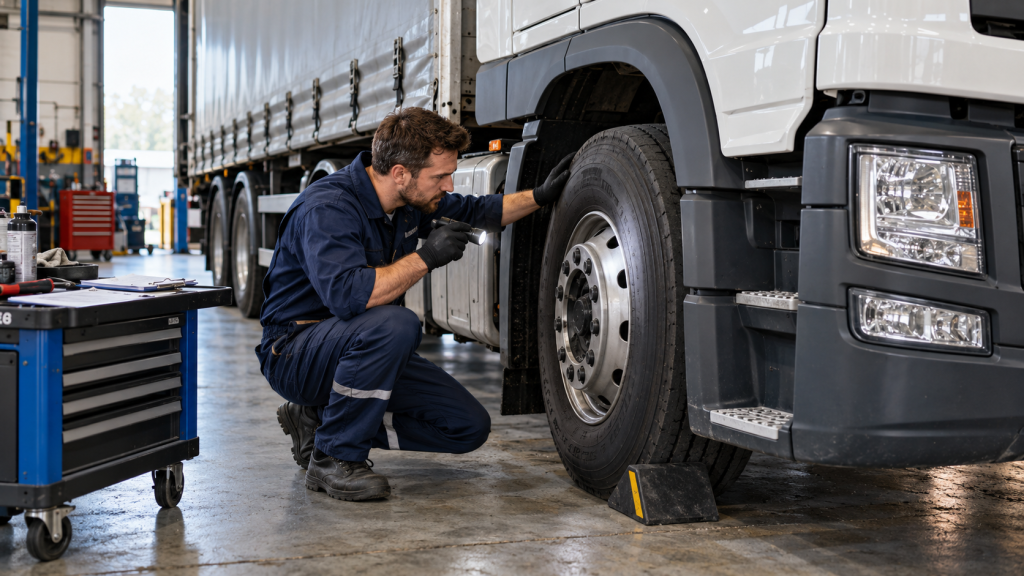
Checking tractor and trailer tyre pressures regularly using properly calibrated equipment.
-
Incorporating tyre condition and visible damage checks into daily vehicle walkaround inspections.
-
Investigating repeated pressure loss rather than simply reinflating the affected tyre.
-
Considering TPMS or automatic inflation technology, particularly for high-mileage trailers.
-
Recording tyre pressures, tread wear, tyre failures and fuel consumption to identify recurring problems and measure improvements.
Daily visual checks remain essential, but they should complement rather than replace accurate pressure measurements.
Where TPMS is fitted, drivers and maintenance personnel should also understand how to respond to warnings and ensure that faults are addressed promptly.
Small savings, significant fleet-wide benefits
For Irish road transport operators facing continued pressure on operating margins, tyre pressure management represents an opportunity to reduce costs without replacing vehicles or making major changes to fleet operations.
Unlike some fuel-saving technologies that require substantial capital investment, improved tyre maintenance can begin with better inspection procedures, accurate pressure measurements and greater attention to trailer tyres.
More sophisticated monitoring and automatic inflation systems can build on those foundations, particularly for larger fleets.
The financial benefits will vary from operator to operator, but the combination of reduced rolling resistance, improved tyre life, fewer avoidable breakdowns and better maintenance planning makes tyre pressure management worth serious consideration.
The message for Irish hauliers is straightforward: every unnecessary litre of diesel consumed through poor tyre maintenance is a cost that could potentially be avoided.
And with tractor and trailer tyres working together across every kilometre of a journey, keeping them at the correct pressures should be a fundamental part of any fleet’s fuel-efficiency strategy.