France has asked the European Commission to temporarily relax European fuel-quality specifications in an effort to increase refinery output and ease pressure on diesel supplies.
The proposal could help place more diesel on the European market, potentially benefiting Irish hauliers facing exceptionally high fuel costs. However, Brussels has not approved the request, and significant questions remain around vehicle compatibility, exhaust after-treatment systems and emissions.
French President Emmanuel Macron made the request in a letter to European Commission President Ursula von der Leyen. France wants temporary exemptions covering certain diesel and kerosene specifications, alongside greater use of B10 diesel.
French refiners estimate that the proposed changes could increase individual refinery output by between 5 and 20 per cent, depending on the plant.
What France wants changed
European road diesel is produced to tightly controlled specifications intended to protect engines, emissions systems, public health and fuel consistency across the Single Market.
The French proposal reportedly seeks temporary flexibility in three areas:
-
Fuel density
-
Evaporation characteristics
-
Desulphurisation requirements
EU rules currently limit sulphur in road diesel to 10 milligrams per kilogram. France has not publicly indicated how far it wants any temporary sulphur exemption to extend.
Reducing the amount of refinery processing required could allow more diesel to be produced from the available crude oil. But changing specifications—particularly sulphur content—could have consequences for diesel particulate filters, selective catalytic reduction systems and other emissions-control equipment.
France has asked Brussels to examine the options with vehicle manufacturers and ensure that any change would not damage vehicles or infrastructure or compromise health and safety.
Wider use of B10 diesel proposed
France also wants to increase the use of B10 diesel, which can contain up to 10 per cent fatty acid methyl ester biodiesel. Standard B7 diesel contains no more than 7 per cent.
Moving from B7 to B10 would replace another three litres of fossil diesel with biodiesel in every 100 litres sold. This could reduce demand for conventional diesel without requiring an equivalent increase in crude-oil refining.
However, B10 cannot simply be introduced as a universal replacement for B7. It is covered by the separate EN 16734 standard and should only be used in vehicles and engines approved by their manufacturers.
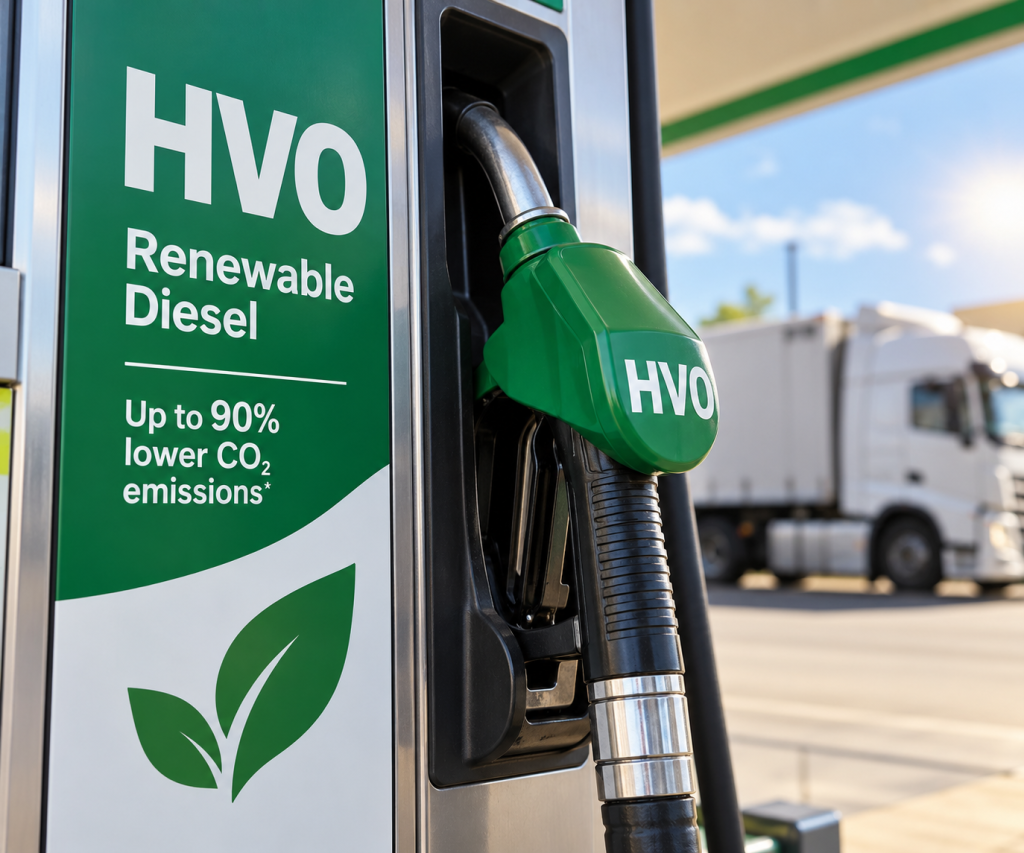
Heavy vehicles not listed as compatible should have a specific B10 marking at the fuel tank before operators use the fuel. An approval for hydrotreated vegetable oil, or HVO, does not automatically mean that a truck is suitable for B10.
Could Irish hauliers benefit?
Ireland imports its refined road fuels, so any meaningful increase in French or wider European refinery output could reduce competition for diesel cargoes and relieve pressure on wholesale prices.
That does not guarantee an immediate or equivalent reduction at Irish pumps. Any effect would depend on what Brussels approves, how much additional fuel refineries produce, distribution costs and how quickly lower wholesale prices are passed through.
Irish operators travelling in France would also need absolute clarity about pump labelling and vehicle compatibility if B10 becomes more widely available. Fleet managers should not use an unfamiliar diesel grade without checking the truck or engine manufacturer’s approval.
The proposal should therefore be viewed as an emergency supply measure rather than an agreed reduction in fuel standards. Brussels must balance the urgent need for additional diesel against emissions, air-quality and engine-protection requirements.
For Irish hauliers, the key question is whether the plan can safely put more compliant diesel into the European market—or merely exchange a supply problem for additional maintenance and emissions-system risks.