European haulage operators are facing pressure from two directions: the rising cost of keeping trucks on the road and a shortage of drivers to put behind the wheel. For Irish hauliers serving continental markets, the combination threatens profitability, complicates planning and makes it harder to take on additional work.
Emergency action to ease diesel supply pressures may offer some relief. However, fuel market intervention cannot resolve the deeper workforce problems restricting transport capacity across Europe.
Emergency fuel intervention
G7 countries have agreed to release an additional 100 million barrels of diesel and crude oil from emergency reserves amid pressure to bring down fuel prices. The European Commission said on 5 October that the release would have a positive impact on prices. The intervention follows US pressure on European governments and concern over a possible restriction on American diesel exports.
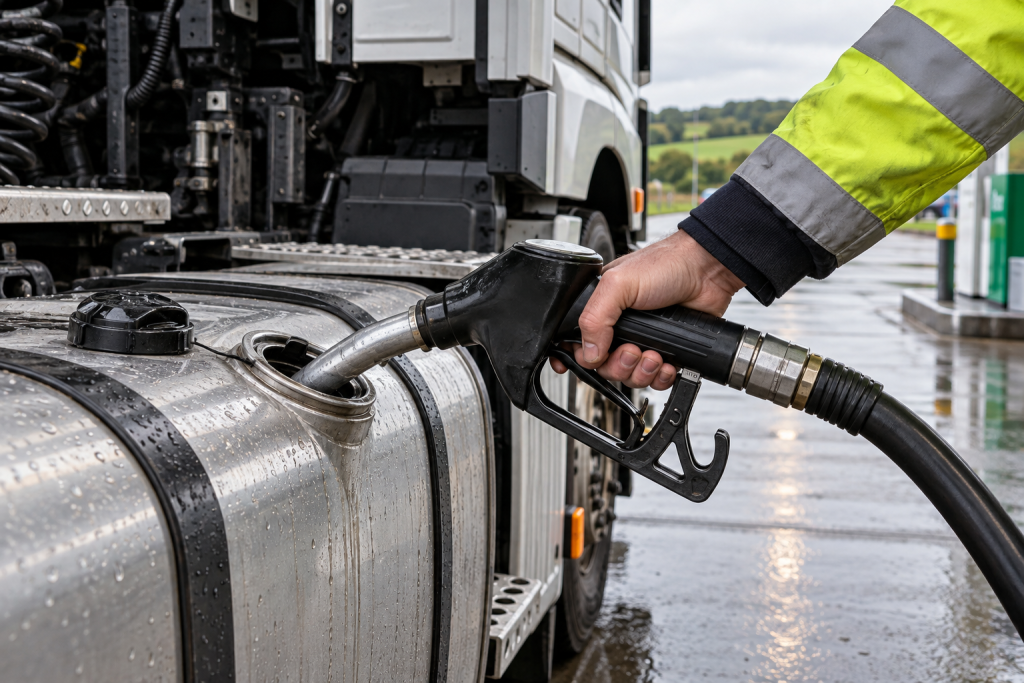
The difficulty extends beyond the availability of crude oil. Disruption to shipping and refining is affecting the supply and delivered cost of usable fuels, including diesel. Reuters analysis published on 5 October highlighted transport bottlenecks, higher shipping and insurance costs, and constrained refining capacity.
For hauliers, the practical question is how quickly any market relief reaches their fuel bills. Operators must continue buying diesel to fulfil contracts, even where the rate agreed with the customer no longer adequately covers the cost of the journey.
Fixed contracts expose operators
The pressure is already evident in the UK. The Road Haulage Association reported on 5 October that operators were paying an additional £350 per truck per week for fuel compared with before the Iran war. Businesses unable to pass on the increase were struggling, particularly where they were tied to fixed-price contracts.
The commercial lesson for Irish operators is clear: the timing of a fuel adjustment can matter almost as much as the adjustment itself.
Where diesel costs rise immediately but a surcharge changes only monthly or quarterly, the haulier finances the difference. Across a fleet, that gap can place substantial pressure on working capital before the customer’s next invoice is paid.
Fuel clauses, surcharge review periods and the treatment of empty running therefore deserve close attention when agreeing or renewing transport contracts.
Driver shortage restricts capacity
Alongside the fuel squeeze, Europe’s driver shortage remains a major barrier to growth.
IRU’s latest global driver shortage report, published in June 2026 and based on its 2025 survey, estimated approximately 502,000 unfilled truck driver positions in Europe—equivalent to a shortage rate of 13%. Around two-thirds of surveyed European operators reported turning down new contracts because they could not find enough drivers.
This creates a difficult position for transport businesses. Additional work may be available, but accepting it requires both a driver and a rate that covers the operating cost.
The demographic outlook adds to the concern. IRU estimates that approximately 660,500 European truck drivers will retire by 2030. Its findings also suggest that higher wages alone are insufficient to address recruitment and retention: predictable schedules, time at home, vehicle conditions and secure parking increasingly influence drivers’ employment decisions.
Irish international operators face a planning challenge
For an Irish haulier, a continental delivery involves coordinating road mileage, ferry movements, driver availability and rest periods. A delay at one stage can affect the remainder of the schedule.
The combined fuel and workforce pressures make accurate costing more important. Waiting time, missed connections and empty kilometres consume resources that cannot automatically be recovered from the customer.
Operators assessing international work need to consider the full journey and its likely delays, alongside the headline rate per kilometre. A busy truck is only commercially useful if the work produces an adequate return.
Keeping essential freight moving
Emergency fuel releases address an immediate market problem. The driver shortage requires a longer-term response involving training, accessible entry routes and working conditions that encourage people to remain in the profession.
Customers also have a role. Realistic delivery schedules, efficient loading and unloading, and fuel adjustment mechanisms that respond promptly to changing costs can help protect the capacity on which their supply chains depend.
For European haulage operators, the challenge is to keep essential freight moving while securing enough drivers and recovering the true cost of delivery. Irish businesses trading across Europe have a direct interest in whether the sector can meet that challenge.