The European Commission has released preliminary figures on road fatalities for 2025, reporting around 19,400 deaths. This represents a 3% decrease from 2024, meaning that 580 fewer people died on European roads. Given the increase in vehicles on EU roads and kilometres driven, this is a significant achievement. However, the preliminary data also highlights the need for sustained efforts at all levels as most Member States are not yet on track to meet the EU’s goal of halving road deaths and serious injuries by 2030.
Road safety progress varies widely by country. Between 2024 and 2025, there were remarkable decreases in Estonia (-38%) and Greece (-22%). Based on this preliminary and sometimes partial data, Belgium, Bulgaria, Denmark, Poland and Romania are currently on track to meet the 50% reduction target in road deaths by 2030.
Despite this progress, Romania continues to have one of the highest fatality rates in the EU alongside Bulgaria and Croatia. Sweden and Denmark had the safest roads in 2025 as in previous years, with low fatality rates of 20 and 23 deaths per million inhabitants, respectively.
For every fatality, an estimated five people are seriously injured. This means that around 100,000 people across the EU suffer serious injuries in road crashes each year.
The available data for 2024 show that rural roads continue to be the most dangerous, with 53% of road traffic fatalities occurring there, compared with 38% in urban areas and 8% on motorways.
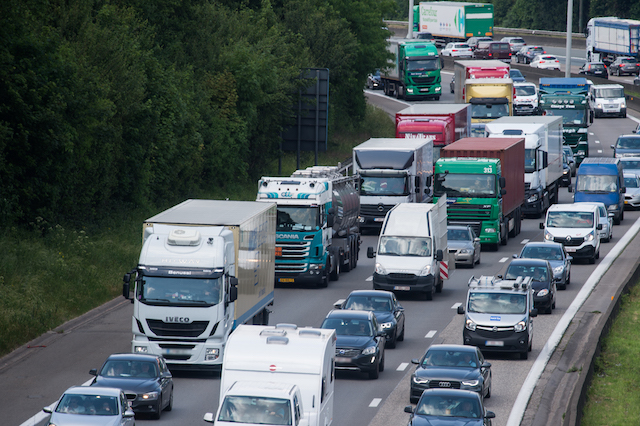
Within urban areas, vulnerable road users (pedestrians, cyclists and users of powered two-wheelers and personal mobility devices) represent 70% of total road deaths. Fatalities in urban areas occur overwhelmingly when a crash involves cars and lorries.
Overall, men (77%) vastly outnumber women (23%) in road deaths. A growing concern is the disproportionately high share of young people (18-24) and older people (aged 65+) in road deaths – especially among people walking and on bicycles. Car drivers and passengers represented 44% of all fatalities, whereas users of powered two-wheelers (motorbikes and mopeds) accounted for 21%, pedestrians 18%, and cyclists 9%. Although personal mobility devices make up only 1% of the total, the number of fatalities involving such devices (mostly e-scooters) increased significantly between 2021 and 2024.