Ireland’s road haulage sector has demonstrated extraordinary resilience through Brexit, the pandemic, supply-chain disruption and repeated fuel-price shocks. Yet resilience should not be confused with invulnerability, writes John Loughran, Publisher, HGV Ireland.com.
The industry enters the final months of 2026 under intense pressure. Fuel remains the most visible concern, but it is only one part of a much wider challenge involving driver shortages, rising wages, insurance, vehicle finance, maintenance, tolls, regulatory compliance and the cost of transitioning to lower-emission transport.
Hauliers continue to keep Ireland moving, but many are doing so on margins that offer little protection against the next economic or geopolitical shock.
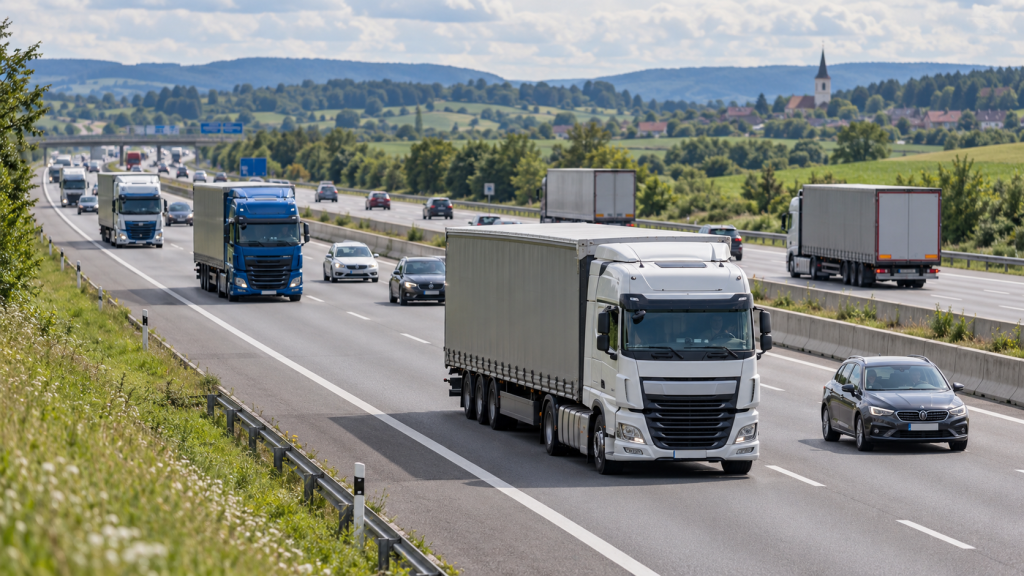
The importance of the sector cannot be overstated. As an island economy with a limited rail-freight network, Ireland depends overwhelmingly on commercial vehicles to move food, medicines, construction materials, industrial products and exports. Every supermarket shelf, factory production line and port operation ultimately relies on road transport.
Despite that, haulage is too often treated as simply another contributor to congestion and emissions rather than as essential national infrastructure.
Fuel relief provides breathing space, not certainty
The Government’s fuel-support measures and the €120 million Road Transporters Support Scheme have provided some welcome assistance. Payments under the scheme were structured to offer greater support per vehicle to smaller operators, reflecting the vulnerability of family-run businesses with limited purchasing power and cash reserves.
However, temporary schemes cannot compensate for an operating environment in which businesses do not know what diesel will cost from one month to the next. The enhanced Diesel Rebate Scheme and temporary excise measures have also helped, but operators need clarity about how long these supports will remain in place.
The Government previously confirmed that the enhanced Diesel Rebate Scheme would continue until 30 September 2026. With that deadline now approaching, hauliers need an early decision—not another last-minute announcement. Government fuel-support announcement
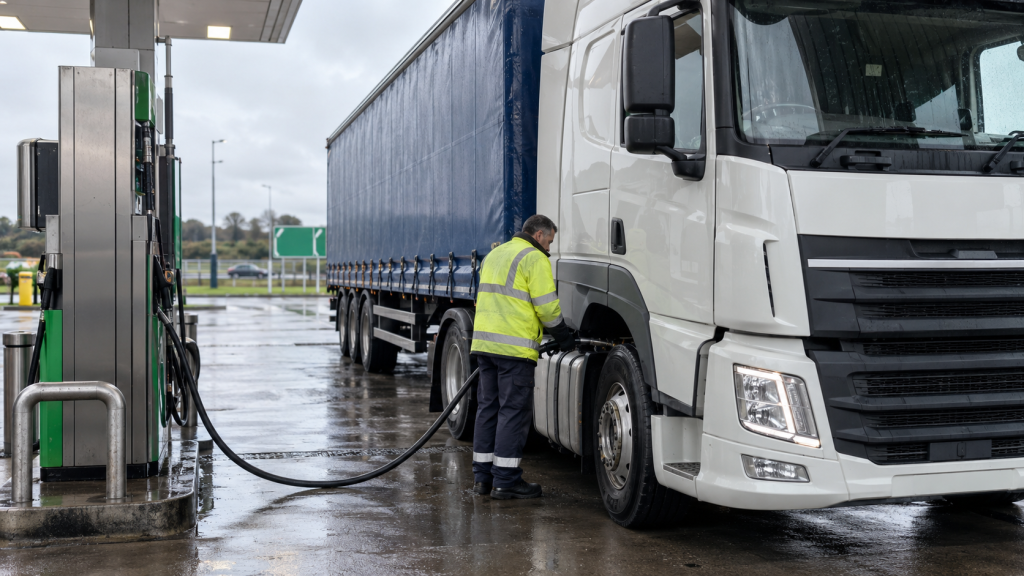
Fuel volatility must also be reflected in haulage rates. The Irish Road Haulage Association has correctly advised operators to review fuel surcharges against current bulk and pump prices and adjust rates regularly. When customers delay accepting increases, the additional cost falls directly on the transport company. In a low-margin industry, that is simply unsustainable. IRHA guidance on fuel surcharges
The message to transport buyers must be clear: a viable haulage rate is not an unnecessary business expense. It is the price of maintaining safe, compliant and dependable supply chains.
The driver shortage is becoming structural
Ireland’s shortage of professional drivers is no longer a temporary recruitment difficulty. It is a long-term demographic problem.
An ageing workforce is approaching retirement while too few younger people are entering the profession. The cost and complexity of obtaining the necessary licences and qualifications remain barriers, while delays in commercial driving tests have made matters worse.
This is not solely an Irish problem. The IRU estimates that Europe has approximately 502,000 unfilled truck-driver positions, with around 660,500 drivers expected to retire by 2030. IRU driver-shortage analysis
Ireland must compete within that already-constrained European labour market. Recruiting from overseas may form part of the answer, but it cannot replace the need to develop a sustainable domestic workforce.
Driver testing must be prioritised, training made more accessible and apprenticeships expanded. The industry must also improve facilities, working conditions and career progression. Truck parking, sanitation and rest facilities are not peripheral matters; they directly affect safety, recruitment and retention.
There is also a major opportunity to attract more women and younger workers. That will require the industry, training bodies and Government to present professional driving and transport management as skilled careers rather than occupations of last resort.
Decarbonisation must be commercially achievable
The haulage sector accepts that emissions must be reduced. Operators are already investing in newer Euro VI trucks, telematics, aerodynamic equipment, fuel-efficient tyres, driver training and alternative fuels.
Government grants for zero-emission heavy-duty vehicles and depot charging infrastructure are positive developments. Businesses can receive assistance towards the additional purchase cost of qualifying vehicles, while infrastructure grants of up to €300,000 are available in certain circumstances. Government expansion of zero-emission HDV supports
Nevertheless, the transition cannot be driven by targets alone. Electric trucks remain substantially more expensive than diesel equivalents, while payload, charging capacity, grid connections and operational range continue to influence what is practical.
A truck covering a predictable urban delivery route is very different from one hauling a refrigerated trailer across Ireland or travelling regularly to continental Europe.
Policy must recognise those distinctions. Battery-electric vehicles will suit some operations, while renewable fuels, HVO, biomethane and other technologies may have important roles elsewhere. Operators need long-term investment certainty and a technology-neutral pathway—not penalties for failing to adopt solutions that are not yet commercially or operationally viable.
A strong sector operating under weak margins
The underlying contradiction within Irish haulage is clear. Demand for transport remains strong because Ireland’s economy and population continue to grow, yet the profitability of carrying that freight remains under pressure.
Fuel is a major component of HGV operating costs, while maintenance, wages and overheads have all increased. FTA Ireland’s cost data previously showed fuel accounting for almost half the operating cost of a 46-tonne articulated vehicle. FTA Ireland distribution-cost data
Operators cannot continually absorb these increases. Some customers may still choose carriers almost entirely on price, but excessively cheap transport ultimately carries a cost: reduced investment, older equipment, recruitment difficulties and the gradual disappearance of reputable smaller hauliers.
The sector itself must remain disciplined. Rates must reflect costs, written fuel-surcharge mechanisms should become standard, and operators must resist buying turnover at the expense of profit.
Recognition must now be matched by policy
Irish hauliers are not asking to be insulated permanently from commercial risk. They are asking for a fair operating environment and recognition of the strategic service they provide.
That means certainty around the Diesel Rebate Scheme, proportionate tolls and taxation, faster driver testing, meaningful investment in truck parking, practical decarbonisation supports and closer coordination between government departments.
Ireland’s haulage industry remains resourceful, adaptable and fundamentally strong. But resilience has limits.
The country cannot continue expecting transport operators to absorb every increase while simultaneously investing in safer vehicles, cleaner technology and a new generation of drivers. If Ireland wants secure and sustainable supply chains, it must ensure that the businesses carrying its freight are themselves sustainable.
That is not special treatment for hauliers. It is basic economic common sense.rexit, the pandemic, supply-chain disruption and repeated fuel-price shocks. Yet resilience should not be confused with invulnerability.
The industry enters the final months of 2026 under intense pressure. Fuel remains the most visible concern, but it is only one part of a much wider challenge involving driver shortages, rising wages, insurance, vehicle finance, maintenance, tolls, regulatory compliance and the cost of transitioning to lower-emission transport.
Hauliers continue to keep Ireland moving, but many are doing so on margins that offer little protection against the next economic or geopolitical shock.
The importance of the sector cannot be overstated. As an island economy with a limited rail-freight network, Ireland depends overwhelmingly on commercial vehicles to move food, medicines, construction materials, industrial products and exports. Every supermarket shelf, factory production line and port operation ultimately relies on road transport.
Despite that, haulage is too often treated as simply another contributor to congestion and emissions rather than as essential national infrastructure.
Fuel relief provides breathing space, not certainty
The Government’s fuel-support measures and the €120 million Road Transporters Support Scheme have provided some welcome assistance. Payments under the scheme were structured to offer greater support per vehicle to smaller operators, reflecting the vulnerability of family-run businesses with limited purchasing power and cash reserves.
However, temporary schemes cannot compensate for an operating environment in which businesses do not know what diesel will cost from one month to the next. The enhanced Diesel Rebate Scheme and temporary excise measures have also helped, but operators need clarity about how long these supports will remain in place.
The Government previously confirmed that the enhanced Diesel Rebate Scheme would continue until 30 September 2026. With that deadline now approaching, hauliers need an early decision—not another last-minute announcement. Government fuel-support announcement
Fuel volatility must also be reflected in haulage rates. The Irish Road Haulage Association has correctly advised operators to review fuel surcharges against current bulk and pump prices and adjust rates regularly. When customers delay accepting increases, the additional cost falls directly on the transport company. In a low-margin industry, that is simply unsustainable. IRHA guidance on fuel surcharges
The message to transport buyers must be clear: a viable haulage rate is not an unnecessary business expense. It is the price of maintaining safe, compliant and dependable supply chains.
The driver shortage is becoming structural
Ireland’s shortage of professional drivers is no longer a temporary recruitment difficulty. It is a long-term demographic problem.
An ageing workforce is approaching retirement while too few younger people are entering the profession. The cost and complexity of obtaining the necessary licences and qualifications remain barriers, while delays in commercial driving tests have made matters worse.
This is not solely an Irish problem. The IRU estimates that Europe has approximately 502,000 unfilled truck-driver positions, with around 660,500 drivers expected to retire by 2030. IRU driver-shortage analysis
Ireland must compete within that already-constrained European labour market. Recruiting from overseas may form part of the answer, but it cannot replace the need to develop a sustainable domestic workforce.
Driver testing must be prioritised, training made more accessible and apprenticeships expanded. The industry must also improve facilities, working conditions and career progression. Truck parking, sanitation and rest facilities are not peripheral matters; they directly affect safety, recruitment and retention.
There is also a major opportunity to attract more women and younger workers. That will require the industry, training bodies and Government to present professional driving and transport management as skilled careers rather than occupations of last resort.
Decarbonisation must be commercially achievable
The haulage sector accepts that emissions must be reduced. Operators are already investing in newer Euro VI trucks, telematics, aerodynamic equipment, fuel-efficient tyres, driver training and alternative fuels.
Government grants for zero-emission heavy-duty vehicles and depot charging infrastructure are positive developments. Businesses can receive assistance towards the additional purchase cost of qualifying vehicles, while infrastructure grants of up to €300,000 are available in certain circumstances. Government expansion of zero-emission HDV supports
Nevertheless, the transition cannot be driven by targets alone. Electric trucks remain substantially more expensive than diesel equivalents, while payload, charging capacity, grid connections and operational range continue to influence what is practical.
A truck covering a predictable urban delivery route is very different from one hauling a refrigerated trailer across Ireland or travelling regularly to continental Europe.
Policy must recognise those distinctions. Battery-electric vehicles will suit some operations, while renewable fuels, HVO, biomethane and other technologies may have important roles elsewhere. Operators need long-term investment certainty and a technology-neutral pathway—not penalties for failing to adopt solutions that are not yet commercially or operationally viable.
A strong sector operating under weak margins
The underlying contradiction within Irish haulage is clear. Demand for transport remains strong because Ireland’s economy and population continue to grow, yet the profitability of carrying that freight remains under pressure.
Fuel is a major component of HGV operating costs, while maintenance, wages and overheads have all increased. FTA Ireland’s cost data previously showed fuel accounting for almost half the operating cost of a 46-tonne articulated vehicle. FTA Ireland distribution-cost data
Operators cannot continually absorb these increases. Some customers may still choose carriers almost entirely on price, but excessively cheap transport ultimately carries a cost: reduced investment, older equipment, recruitment difficulties and the gradual disappearance of reputable smaller hauliers.
The sector itself must remain disciplined. Rates must reflect costs, written fuel-surcharge mechanisms should become standard, and operators must resist buying turnover at the expense of profit.
Recognition must now be matched by policy
Irish hauliers are not asking to be insulated permanently from commercial risk. They are asking for a fair operating environment and recognition of the strategic service they provide.
That means certainty around the Diesel Rebate Scheme, proportionate tolls and taxation, faster driver testing, meaningful investment in truck parking, practical decarbonisation supports and closer coordination between government departments.
Ireland’s haulage industry remains resourceful, adaptable and fundamentally strong. But resilience has limits.
The country cannot continue expecting transport operators to absorb every increase while simultaneously investing in safer vehicles, cleaner technology and a new generation of drivers. If Ireland wants secure and sustainable supply chains, it must ensure that the businesses carrying its freight are themselves sustainable.
That is not special treatment for hauliers. It is basic economic common sense.