Becoming a professional HGV driver in Ireland involves considerably more than holding an ordinary car licence. Drivers must obtain the correct truck licence, meet medical standards and, in most cases, secure a Driver Certificate of Professional Competence before they can drive commercially. Whether you are considering a new career in road transport or upgrading an existing licence, here are the principal requirements.
Choosing the correct licence category
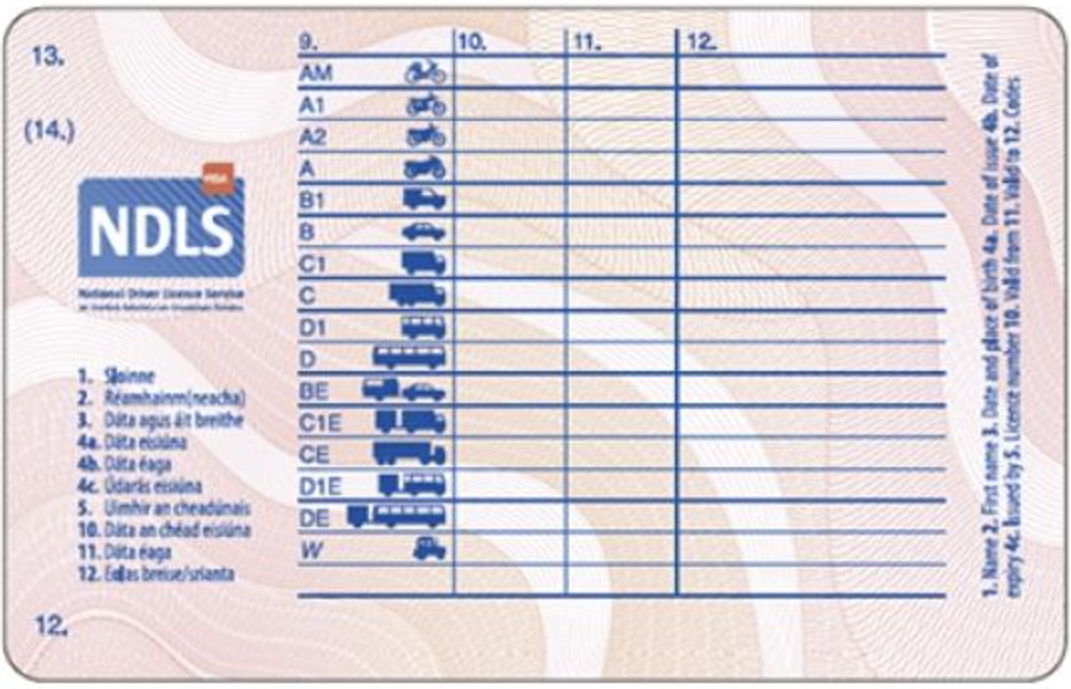
“HGV” is commonly used to describe larger commercial vehicles, but Irish driving licences divide trucks into several categories.
A Category C1 licence covers vehicles with a maximum authorised mass of more than 3,500kg but not exceeding 7,500kg. A trailer weighing up to 750kg may also be towed.
Category C covers rigid trucks with a maximum authorised mass of more than 3,500kg. Again, a trailer weighing no more than 750kg can be attached.
Drivers wishing to operate an articulated truck, or a rigid truck with a heavier trailer, generally require a Category CE licence. Category C1E applies to certain combinations involving a Category C1 towing vehicle.
In most cases, an applicant must already hold a full Category B car licence before progressing to a truck learner permit.
Minimum age requirements
A person can apply for a truck-category learner permit from the age of 18 where the Driver CPC requirements are being completed. Without CPC, the minimum age is generally 21.
This distinction is important because most people intending to drive trucks for a living will need Driver CPC. The lower age threshold supports entry into professional driving from the age of 18.
Passing the theory test
The first stage is passing the appropriate bus and truck theory test. A theory-test pass is normally valid for two years when applying for a learner permit.
Anyone seeking to qualify as a professional driver must also complete the Driver CPC case-study test. This covers situations that professional drivers are likely to encounter, including vehicle safety, load security, regulations, risk management and professional conduct.
Applying for a learner permit
Once the theory-test requirement has been met, the applicant can apply to the National Driver Licence Service for the relevant truck learner permit.
Applicants will generally need:
-
A full Category B driving licence
-
A valid theory-test pass
-
A completed eyesight report
-
A completed medical report where required
-
Proof of identity, PPS number, address and normal residence
-
The appropriate application fee
Truck learner drivers must display L plates and be accompanied by a person who has held a full driving licence in the same category for at least two continuous years.
A learner permit in Category C1 or C does not allow its holder to tow a trailer. The appropriate trailer category must be obtained separately.
Medical fitness
Truck drivers are subject to higher medical standards than ordinary car drivers because of the size of the vehicle, the amount of time spent on the road and the possible consequences of a collision.
A medical report may be required when applying for or renewing a truck licence. Drivers must disclose relevant conditions that could affect their ability to drive safely, including certain eyesight, neurological, cardiovascular, diabetic and sleep-related conditions.
A medical condition does not automatically prevent someone from driving a truck. However, it must be properly assessed, and a licence may be issued for a shorter period or subject to medical review.
Drivers also have an ongoing responsibility to inform the licensing authority if their medical fitness changes.
Completing the driving and walkaround tests
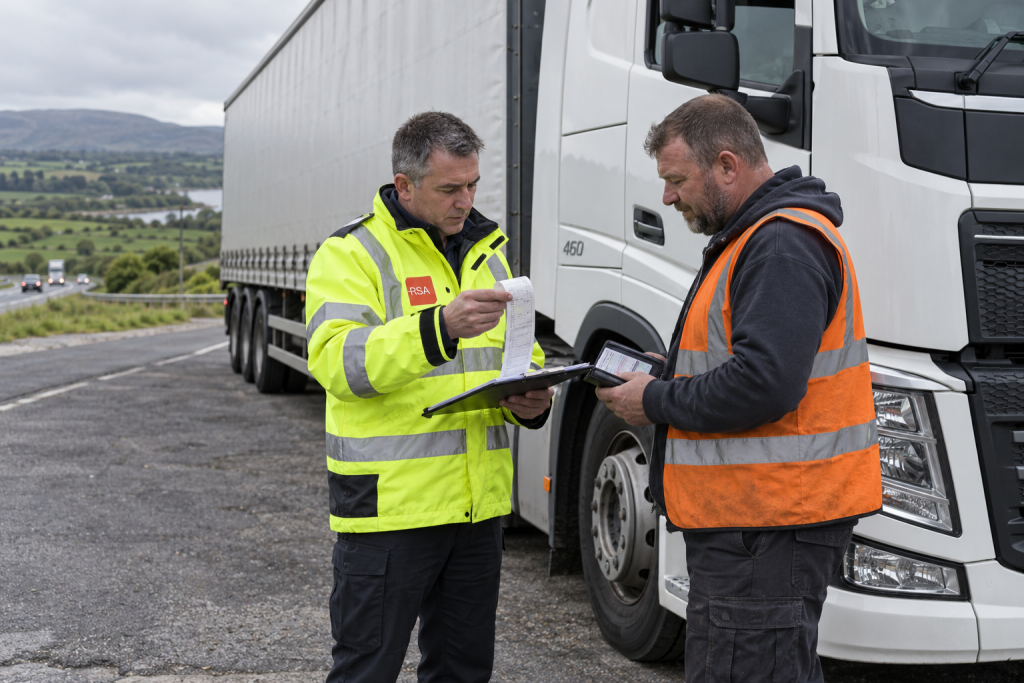
The practical process for a new professional truck driver consists of a driving test and a separate practical knowledge or walkaround test.
The driving test assesses control of the vehicle, road positioning, observation, manoeuvring and the driver’s ability to operate safely in real traffic conditions.
The walkaround test examines practical knowledge of the truck. Candidates may be asked to demonstrate vehicle checks and explain matters such as tyres, lights, brakes, load security, warning systems, safety equipment and the action required when a defect is discovered.
Applicants should undertake professional lessons with an instructor experienced in Category C or CE training. Passing a car test does not prepare a driver for the size, weight, braking characteristics and restricted visibility of a heavy commercial vehicle.
Driver CPC is essential for professional drivers
A full truck licence permits a person to drive the relevant vehicle category, but it does not necessarily allow that person to work as a professional HGV driver.
Drivers whose principal occupation involves driving a truck must normally hold a valid Driver CPC card.
New professional drivers must pass four elements:
-
The bus and truck theory test
-
The Driver CPC case-study test
-
The practical driving test
-
The practical walkaround test
Once all four have been passed and the relevant full driving-licence category has been issued, the driver can apply for a Driver CPC card.
There are limited exemptions from Driver CPC for certain vehicles and activities, but operators and drivers should never assume that an exemption applies without checking the precise circumstances.
CPC training continues throughout a driver’s career
Qualification is not the end of the process. A professional truck driver must complete 35 hours of periodic Driver CPC training during each five-year cycle.
Training is normally divided into modules covering subjects such as safe and efficient driving, regulations, driver health, vehicle safety and emergency situations. Repeating the same module within a training cycle will not normally count twice.
Drivers qualified for both trucks and buses must complete 42 hours of training in the relevant five-year cycle.
Failure to complete the required training can prevent the renewal of a Driver CPC card and leave the driver unable to drive professionally.
Tachograph cards and drivers’ hours
Drivers operating vehicles fitted with digital or smart tachographs will generally require a personal driver card. This records driving time, breaks, rest periods and other work.
Holding a truck licence and CPC does not remove the driver’s responsibility to comply with EU drivers’ hours and tachograph rules. Drivers must use the correct tachograph mode, make required manual entries and keep their card secure.
Employers must also organise work so that drivers can comply with driving-time, rest and working-time requirements.
Additional qualifications
Some HGV work requires further training. Drivers carrying dangerous goods may need an ADR certificate, while specialist operations can require instruction in areas such as tanker work, crane operation, tail-lift use, refrigerated transport or abnormal loads.
Employers should also provide vehicle-specific familiarisation, load-security instruction and training covering their own safety procedures.
A career with significant responsibility
Ireland continues to need properly trained professional HGV drivers, offering employment opportunities across haulage, distribution, construction, food transport and specialist logistics.
However, obtaining a licence is only the beginning. A professional driver must maintain medical fitness, complete CPC training, observe drivers’ hours, carry out effective vehicle checks and remain compliant throughout their career.
Requirements and application procedures can change. Applicants should check the latest information from the Road Safety Authority and National Driver Licence Service before beginning the process.