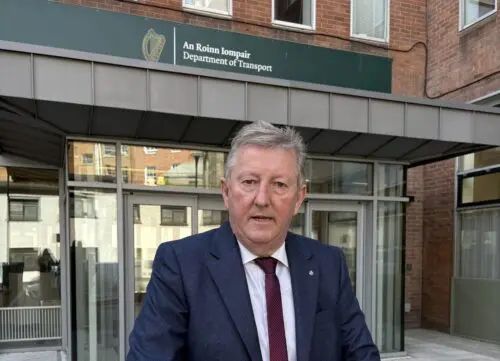
When Minister for Climate, Environment, Energy and Transport Darragh O’Brien addresses the Irish Road Haulage Association Annual Conference in Killarney this weekend, Ireland’s hauliers will be looking for more than another acknowledgement of the “important role” they play in the economy, writes John Loughran, Managing Editor, HGVIreland.com.
They already know they are important. What they need now are answers.
More importantly, they need action.
The IRHA Annual Conference on 4th and 5th September comes at a critical moment for Irish road transport, with fuel costs, taxation, regulation, driver shortages, decarbonisation and competitiveness placing enormous pressure on licensed operators.
The Government’s recent decision not to proceed with planned fuel-tax increases in September and October was welcome. It also demonstrated what can happen when Government listens.
But postponing a tax increase is not a long-term road transport policy. The
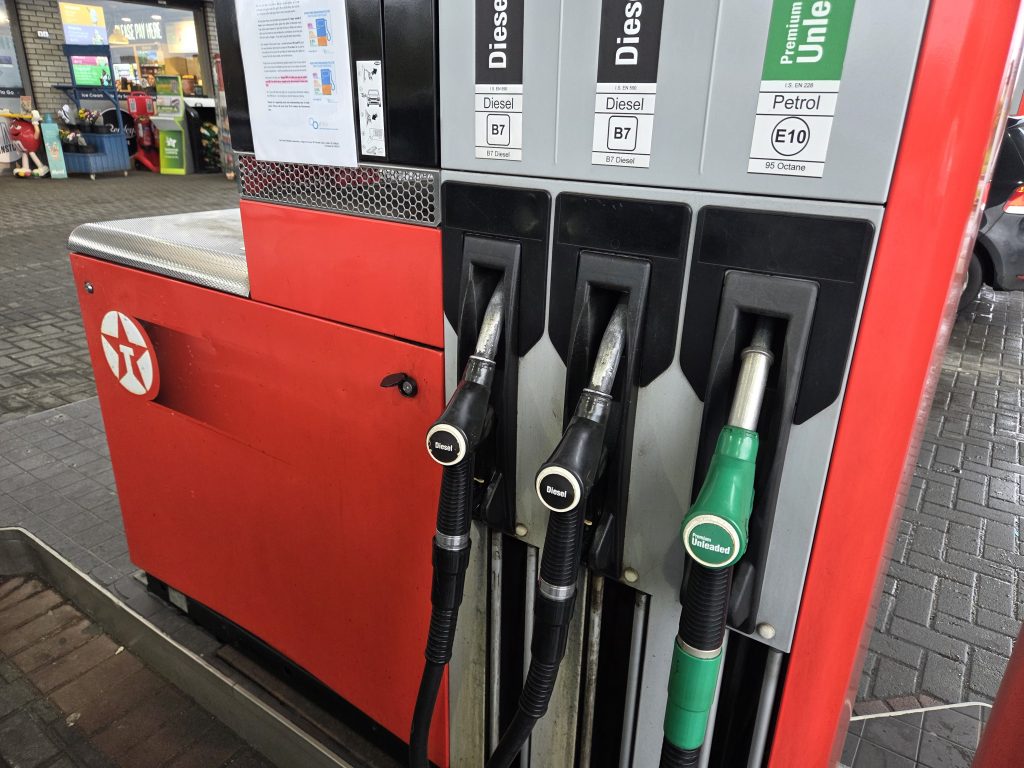
Minister needs to give hauliers certainty on diesel. The immediate question facing Minister O’Brien in Killarney concerns diesel.
What happens next?
The enhanced Diesel Rebate Scheme currently provides for a maximum repayment of 12 cent per litre, but that is scheduled to fall back to 7.5 cent from 1st October. That is effectively another cost increase waiting around the corner.
The Government needs to recognise that diesel is not a discretionary purchase for a haulage operator. It is one of the industry’s largest unavoidable operating costs.
An Irish haulier cannot simply park the trucks when diesel becomes too expensive.
Supermarkets still need deliveries. Factories need raw materials. Exporters need access to ports. Construction sites need supplies. Farms, pharmacies, retailers and thousands of businesses depend on road freight every day.
The Government introduced a €120 million Road Transporters Support Scheme earlier this year precisely because it recognised the exceptional pressures facing transport operators. That support was necessary.
But emergency schemes every time fuel prices explode are not the answer.
Ireland needs a permanent, predictable commercial diesel policy that allows legitimate licensed operators to plan ahead.
Stop treating haulage as an easy source of revenue. Fuel is only one part of the problem.
Insurance, wages, tolls, tyres, maintenance, vehicle finance, port charges and regulatory compliance are all adding to the cost of putting a truck on the road.
Meanwhile, hauliers are being asked to invest enormous sums in newer, cleaner vehicles and prepare for the transition towards alternative fuels.
Something has to give
Government cannot demand that operators decarbonise their fleets while simultaneously extracting more money from the businesses expected to finance that transition.
If Ireland genuinely wants a greener commercial vehicle fleet, then Government must help operators get there.
That means meaningful incentives for cleaner trucks, support for renewable fuels such as HVO, investment in charging and alternative-fuel infrastructure and a realistic transition timetable.
Climate policy must work in the real world, not simply on a spreadsheet in Dublin.
Where are tomorrow’s drivers?
Minister O’Brien must also address the industry’s growing recruitment problem. Ireland needs another generation of professional HGV drivers, yet the barriers to entry remain considerable.
Training, licence acquisition, insurance and the cost of getting established make road haulage difficult for younger people to enter. We need a proper pathway into professional driving.
That means apprenticeships, accessible training, faster licensing and a national campaign promoting road transport as a skilled professional career.
Without drivers, there is no haulage industry
And without a functioning haulage industry, Ireland does not have a functioning supply chain. Hauliers cannot absorb everything. There also needs to be recognition among customers that transport rates cannot remain static while every input cost rises.
For too long, sections of the haulage industry have been expected to absorb increases rather than pass them on. That cannot continue.
A transport company operating trucks below their true cost is not being competitive. It is slowly going out of business. And when good, compliant Irish operators disappear, replacing that capacity will not necessarily be easy.
Killarney must deliver
The IRHA has warned that withdrawing fuel supports while costs remain exceptionally high would place further pressure on operators and ultimately feed through into higher prices across the economy. That warning should be taken seriously.
Minister O’Brien therefore has an opportunity in Killarney. He can arrive, deliver the customary speech about how Government “values” the haulage industry, thank drivers for keeping Ireland moving and promise continued engagement.
Or he can arrive with something substantive. Give operators certainty on the Diesel Rebate Scheme. Set out a long-term commercial diesel strategy.
Address tolls and escalating operating costs. Put meaningful supports behind fleet decarbonisation. Develop a credible plan for recruiting and training HGV drivers. And give the haulage industry a genuine voice when policies affecting its future are being developed.
Ireland is an island trading economy. Almost everything we eat, manufacture, export, import, build or sell spends part of its journey on the back of a truck.
That makes road haulage essential economic infrastructure.
The men and women running those trucks are not asking Government to protect inefficient businesses from competition.
They are asking for a fair chance to operate viable businesses in an increasingly expensive and heavily regulated environment.
Minister O’Brien will have Ireland’s haulage industry in front of him in Killarney this weekend. He should listen carefully. But this time, listening isn’t enough.
Ireland’s hauliers need decisions. They need certainty. And they need action.
John Loughran is Managing Editor of HGVIreland.com, which celebrates its 20th anniversary this year. A long-standing commentator on Ireland’s road haulage and logistics industry, he has extensive knowledge of the sector and the economic, regulatory and operational challenges facing transport operators. He is ideally placed to provide informed analysis and commentary on the issues shaping the future of Irish road transport.
John can be contacted on +353 (0)87 238 0103.