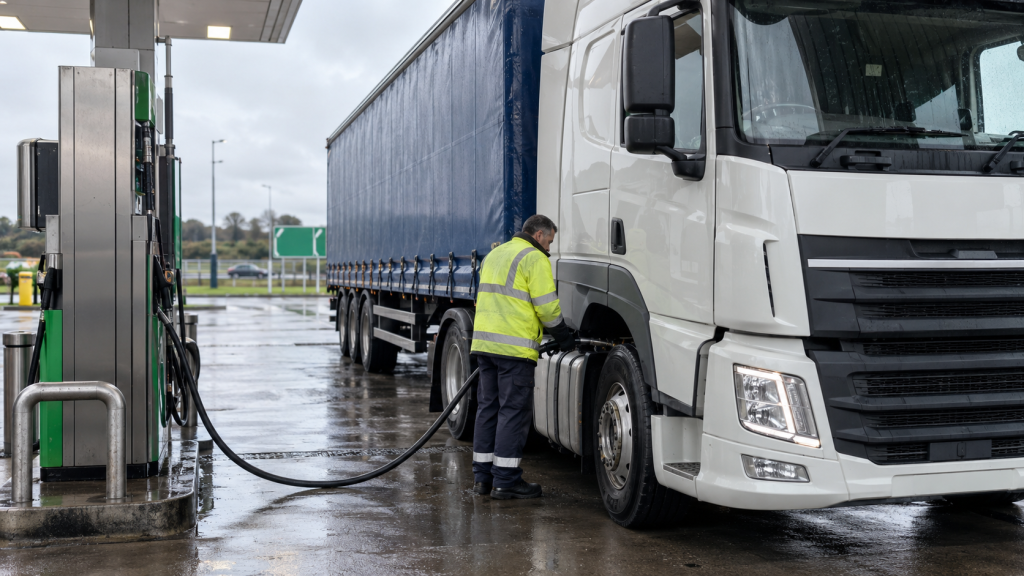
Hydrotreated Vegetable Oil (HVO) deserves a much bigger role in Ireland’s road-haulage sector — not as a replacement for electrification, but as a practical bridge between today’s diesel fleet and tomorrow’s zero-emission transport system.
Ireland’s HGV industry faces a difficult reality: thousands of trucks are already on the road, many travel hundreds of kilometres every day, and replacing them with electric or hydrogen vehicles will take considerable time, investment and infrastructure.
HVO offers an immediate alternative.
1. It can reduce the carbon footprint of existing trucks
HVO is a renewable diesel produced from feedstocks such as used cooking oil, waste fats and other eligible waste/residue materials. Unlike conventional biodiesel, it is chemically very similar to fossil diesel and can be used as a drop-in replacement in approved engines. The Department of Transport describes HVO as a renewable diesel that can replace diesel at higher concentrations without the technical issues associated with some biodiesel blends.
Depending on the feedstock and certification, HVO can deliver very substantial lifecycle greenhouse-gas reductions compared with fossil diesel. Some suppliers quote reductions of up to 90%, but the actual saving depends heavily on the feedstock and its sustainability credentials.
That distinction is important: the Irish haulage industry should demand properly certified, traceable HVO rather than simply accepting a “green fuel” label.
2. The biggest advantage: no new fleet required
This is probably HVO’s strongest argument for Irish hauliers.
Moving a fleet to battery-electric HGVs can mean:
- purchasing new vehicles;
- installing high-powered charging infrastructure;
- upgrading grid connections;
- changing depot operations;
- managing charging times;
- considering payload and range implications.
With HVO, the proposition is considerably simpler:
Keep the truck. Keep the driver. Keep the route. Keep the fuel infrastructure — change the fuel.
For an operator with a fleet of Euro VI diesel trucks, HVO can therefore provide an emissions-reduction pathway without waiting for the next generation of HGV technology.
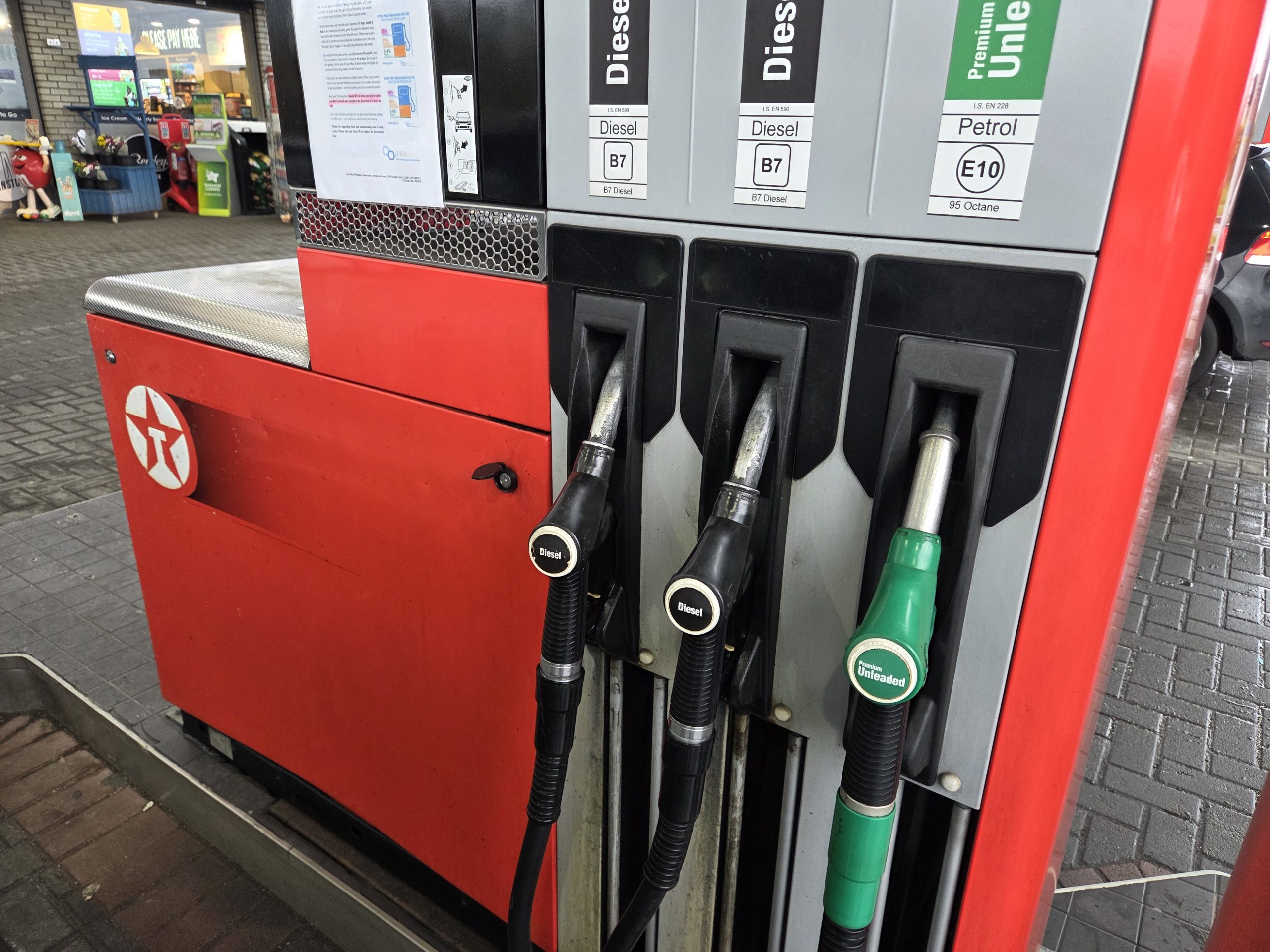
The fuel can also be stored and distributed through conventional diesel infrastructure, subject to the appropriate equipment and fuel specifications.
3. It is particularly relevant to long-distance haulage
Ireland’s geography creates a particular challenge.
A rigid truck making local deliveries is one thing. A tractor unit travelling from Cork to Dublin, Belfast, Liverpool or continental Europe is another.
Long-distance HGVs require:
- high energy density;
- rapid refuelling;
- long range;
- minimal downtime;
- predictable performance.
HVO retains the fundamental advantages of a liquid fuel: fill the tank and get back on the road.
That makes it particularly attractive for operators where vehicle utilisation is critical.
4. HVO can be introduced gradually
Irish hauliers don’t necessarily have to make an overnight switch.
An operator could start with:
10 trucks → HVO trial → measure consumption → calculate carbon saving → expand the programme.
The fleet could then progressively increase its HVO usage as availability improves.
That is important because the transition to lower-carbon transport does not have to be an all-or-nothing decision.
5. It can help companies meet customer demands
Large manufacturers, retailers and logistics companies are increasingly asking their transport suppliers to demonstrate reductions in Scope 3 emissions.
For a haulier, saying:
“Our trucks are powered by certified renewable HVO”
is considerably more meaningful than simply promising that the company intends to become greener sometime in the future.
It provides a measurable intervention that can be incorporated into a company’s sustainability reporting and customer discussions.
6. Ireland is already moving in this direction
The Irish Government’s Renewable Transport Fuel Policy 2025–2027 explicitly recognises HVO as one of the renewable fuels that can contribute towards Ireland’s transport decarbonisation objectives. The policy targets at least B20-equivalent renewable content in diesel by 2030 and forecasts significant transport-emissions savings.
There is also evidence that HVO is already being deployed in Irish commercial fleets. For example, An Post reported that 95% of its HGVs had switched to HVO as part of its emissions-reduction programme.
That makes HVO more than a theoretical proposition.
But there are legitimate objections
The case for HVO shouldn’t be oversold.
Cost is the obvious issue. If HVO costs substantially more than diesel, a haulier operating on tight margins cannot simply absorb the difference.
There is also the question of feedstock availability and sustainability. HVO cannot be treated as an unlimited replacement for every litre of diesel currently consumed. Waste-based and residue-based feedstocks are finite, and their use needs robust sustainability certification.
The Irish Department of Transport’s own 2025 assessment is particularly important here. It concluded that HVO could have a role as a transitional fuel for decarbonising the HGV sector, but also highlighted limitations around feedstock availability, policy design and the cost of supporting large-scale deployment.
So the argument shouldn’t be:
“HVO is the answer to everything.”
It should be:
“HVO is one of the most practical tools available to reduce emissions from the existing HGV fleet while the industry transitions to genuinely zero-emission technologies.”
The bigger argument
Ireland should avoid treating the HGV transition as a competition between diesel, HVO, battery-electric and hydrogen.
Different technologies will suit different applications.
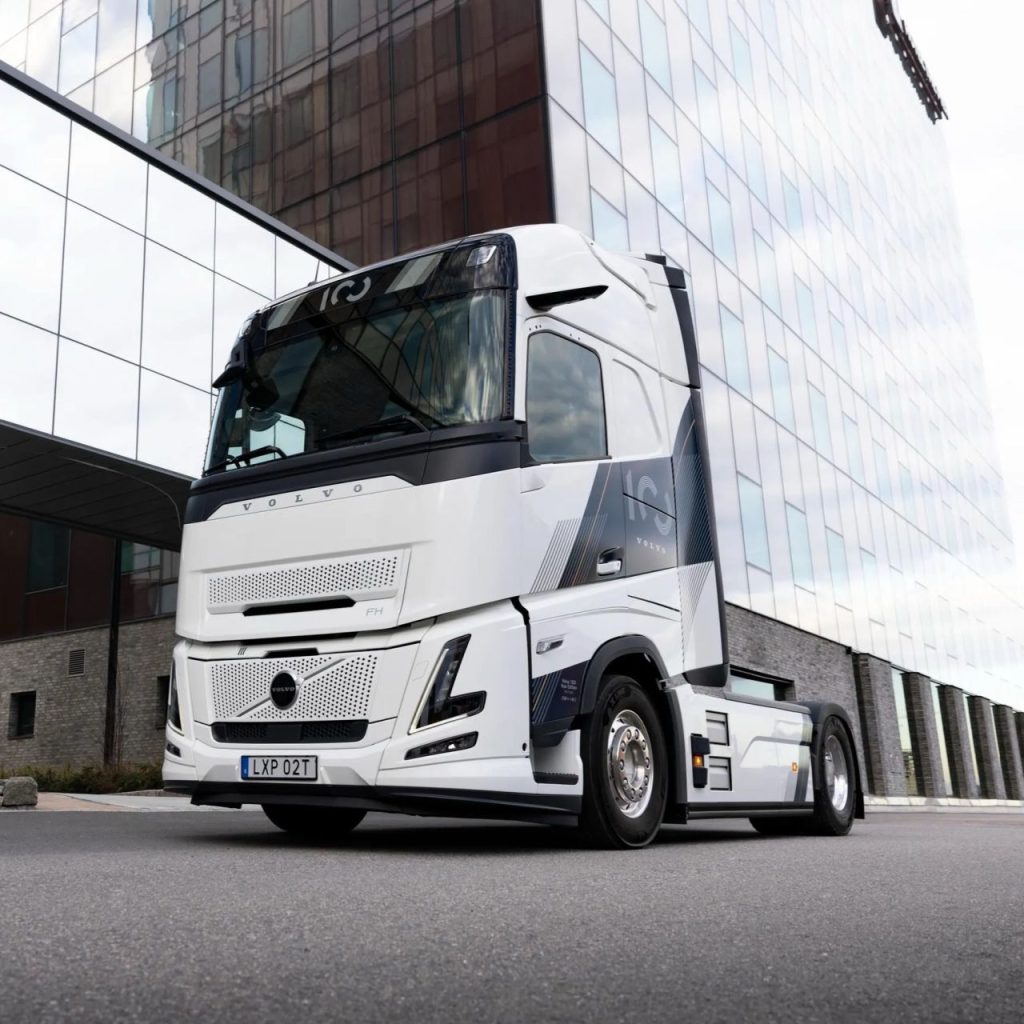
Battery-electric is likely to become increasingly important for certain regional and urban operations. Other technologies may emerge for long-distance heavy transport.
But Ireland cannot replace its entire HGV fleet overnight.
HVO gives the existing fleet a route to substantially lower lifecycle emissions today.
And that is perhaps its strongest selling point.
We don’t need to wait until every HGV in Ireland is electric to start reducing emissions from Irish haulage.
The trucks already exist.
The depots already exist.
The drivers already exist.
The routes already exist.
The fuel infrastructure already exists.
HVO allows the industry to start decarbonising what it has today while investing in what it will need tomorrow.
The sensible Irish policy therefore isn’t HVO versus electrification.
It is:
HVO now + electrification where practical + other zero/low-carbon fuels where appropriate.