The International Road Transport Union (IRU) and EU Transport Commissioner Apostolos Tzitzikostas have discussed how upcoming transport measures align with day-to-day operational realities across the sector.
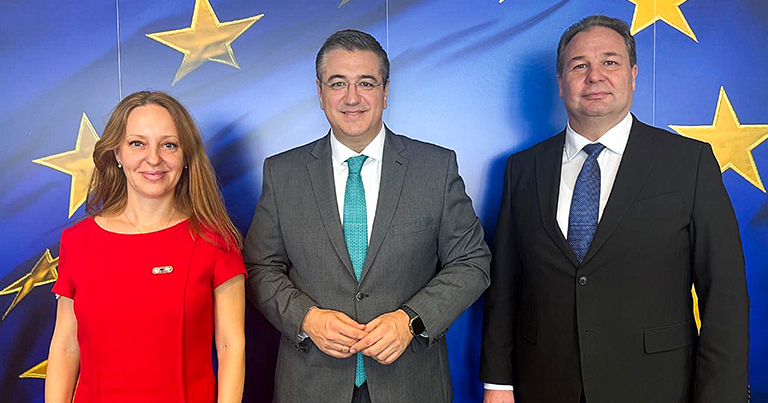
IRU’s President, Radu Dinescu, and its EU Director, Raluca Marian, have held an in-depth exchange with European Commissioner for Sustainable Transport and Tourism Apostolos Tzitzikostas on several major files currently moving through the EU system, including decarbonisation measures, workforce initiatives, and infrastructure planning.
With key proposals approaching critical stages, the meeting offered an opportunity to share operators’ practical experience and highlight where implementation challenges are most acute.
IRU President Radu Dinescu said, “This discussion comes at a crucial moment for our sector. With several major transport files now moving forward, it is essential that policies remain workable for operators and enable safe, efficient and sustainable mobility across the EU.”
“Our sector is navigating profound transitions, from decarbonisation to workforce and infrastructure challenges, and needs regulatory clarity as well as practical, implementable solutions,” he added.
The discussion sought to ensure that day-to-day operational conditions are fully understood as the EU enters a decisive phase of its transport agenda.
Topics covered included the availability of charging infrastructure, the transition of corporate fleets, Europe’s widening driver shortage and solutions such as the urgent need to modernise the Driver Training Directive, and the sector’s role in military mobility.
“Commissioner Tzitzikostas has been in office for just one year, yet his grasp of the sector’s realities, from the practical implications of decarbonisation to the chronic and growing driver shortage, is already remarkably deep. This gives us confidence,” said IRU EU Director Raluca Marian.
“We look forward to working closely with him and his team to build a stronger, more competitive and resilient EU road transport sector, anchored in real operational needs,” she concluded.